
EVISTR Digital Voice Recorder
4.2Editor score
64GB memory capacity
Voice activation support
Long battery life
This guide compares the top ten handheld recorders for journalists focusing on audio quality, battery life, and portability to help you capture every moment.
Journalists need reliable tools to capture clear audio in any environment. A good handheld recorder ensures your interviews and field notes sound professional and crisp for later editing.
We evaluated ten top models based on sound quality, ease of use, and durability. Our selection includes budget options and premium units suited for serious reporting needs.
Each pick highlights key features and ideal use cases for reporters. Prices and availability change often so verify details before purchasing to ensure you get the best deal.
4.2Editor score
4.2Editor score

4.7Editor score
This side-by-side comparison highlights the core specifications of each selected model to help you decide which recorder fits your reporting style.




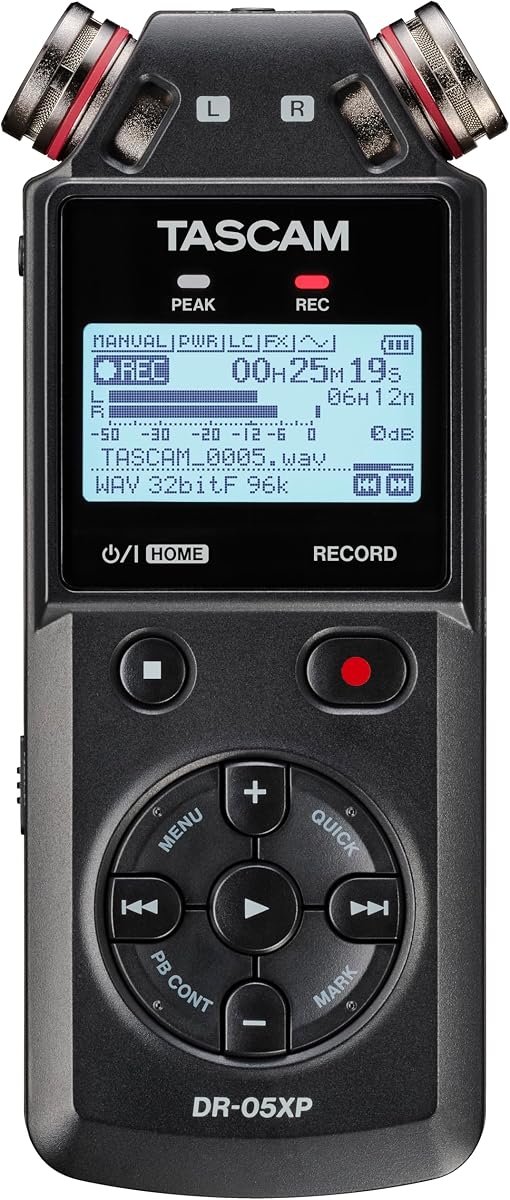
The TASCAM DR-05XP stands out as a top choice for journalists needing reliable audio capture. It offers 32-bit float recording which prevents clipping even in unpredictable loud environments.
We may earn a commission when you buy through this link, at no additional cost to you.
Its USB-C interface allows direct connection to computers for quick file transfers. The built-in omnidirectional microphones capture sound clearly from all directions ensuring no voice is missed.
While it runs on standard AA batteries which are convenient, you must buy them separately. The lack of an included SD card means you need to have one ready before starting your recording session.
For reporters who need a balance of professional audio quality and portability, this device is highly recommended. Its ability to handle high sound pressure levels makes it versatile for various field conditions.
This technology allows you to capture audio without worrying about gain settings since it records at a level that accommodates sudden loud noises without distortion.
Connecting to your laptop or tablet becomes seamless with the USB-C port enabling fast data transfer and device power for extended use in the field.
We may earn a commission when you buy through this link, at no additional cost to you.
The Zoom H5 is a powerhouse for journalists who need advanced audio capabilities. Its interchangeable capsule system lets you swap microphones to suit different recording scenarios like interviews or ambient sound.
We may earn a commission when you buy through this link, at no additional cost to you.
With four-track simultaneous recording you can capture multiple sources at once. The XLR inputs allow connection to external microphones providing professional flexibility for complex field setups.
The higher cost reflects its robust build and feature set. However mastering all the functions may require some time and practice compared to simpler dedicated voice recorders.
Investing in the H5 pays off for professionals who demand top-tier audio quality and flexibility. It is an excellent tool for journalists covering events where sound dynamics vary widely.
This unique feature allows you to tailor the recording hardware to your specific needs by swapping out microphone capsules for different directional patterns.
These inputs support professional external microphones and instruments giving you the option to upgrade your sound source without changing the entire recorder.
We may earn a commission when you buy through this link, at no additional cost to you.
The EVISTR L357 offers an affordable solution for journalists needing basic recording capabilities. It features 64GB of storage which allows for thousands of hours of continuous audio capture without external cards.
We may earn a commission when you buy through this link, at no additional cost to you.
Voice activation helps save battery and storage by recording only when sound is detected. The PCM noise reduction ensures that the voices captured are clear and distinct from background noise.
While the build is plastic and lighter than professional units it remains durable for everyday use. The interface is simple which means you can start recording quickly without navigating complex menus.
This recorder is ideal for entry-level reporters or those needing a backup device. Its large memory and voice activation make it practical for long interviews or field note taking.
This feature conserves battery life and storage space by automatically starting and stopping recording based on the presence of sound in the environment.
The generous storage capacity means you can go days or weeks without needing to offload files which is crucial for reporters on extended assignments.
We may earn a commission when you buy through this link, at no additional cost to you.
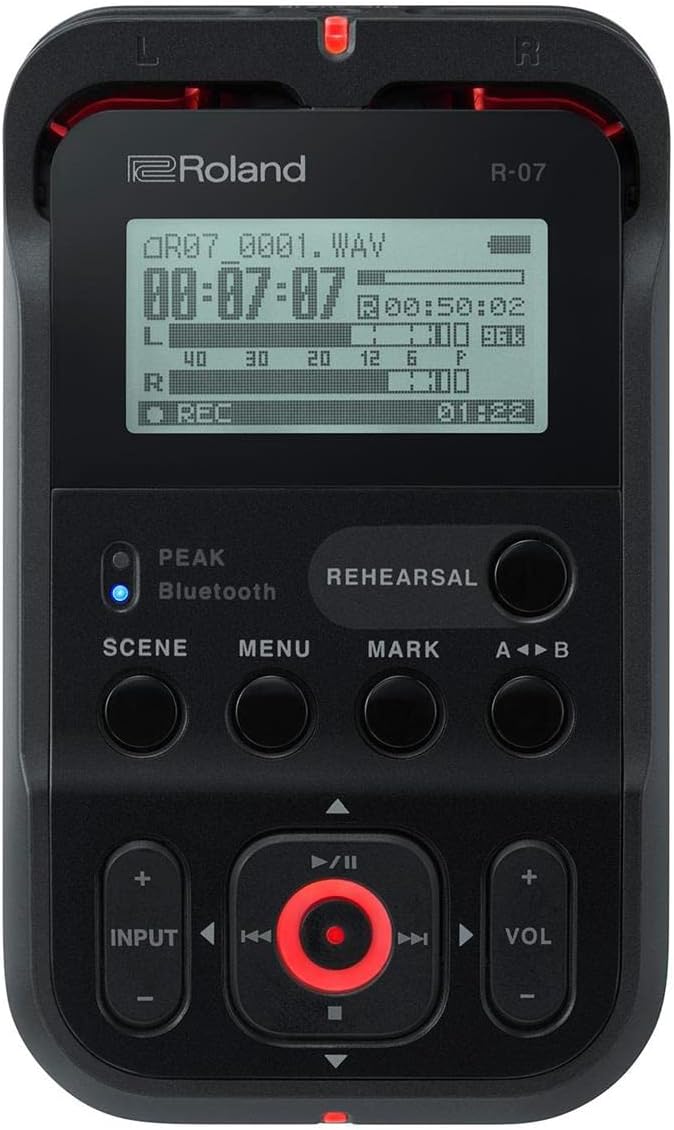
The Roland R-07 provides high-resolution audio in a very portable package. Its Bluetooth connectivity allows you to control settings and monitor audio wirelessly using your smartphone or speaker.
We may earn a commission when you buy through this link, at no additional cost to you.
Simultaneous recording saves audio in both MP3 and WAV formats. This dual backup ensures you have a high-quality file for editing and a smaller file for quick sharing.
The display screen is clear but relatively small which can make menu navigation slightly tricky. Also the lack of an external microphone input limits flexibility for specific field situations.
Despite these minor drawbacks the R-07 is a solid choice for on-the-go reporting. Its battery life and wireless features make it convenient for quick interviews and ambient sound capture.
Wireless control lets you adjust recording parameters from a distance making it easier to set up interviews without handling the device directly.
Recording in two formats simultaneously gives you immediate access to shareable audio while preserving a high-quality version for later production work.
We may earn a commission when you buy through this link, at no additional cost to you.
The Tonfarb digital recorder emphasizes simplicity and speed. With a one-click record feature you can start capturing audio instantly without navigating through menus which is vital during spontaneous events.
We may earn a commission when you buy through this link, at no additional cost to you.
It includes 64GB of internal storage and password protection to secure sensitive files. The large screen makes navigation easy even in bright outdoor conditions where visibility is key.
While it offers PCM quality and noise reduction it lacks some advanced features found in higher-end models. The build is functional but not as rugged as professional field recorders.
For journalists needing a straightforward reliable device for daily note taking and interviews this is a good option. Its security features and capacity make it useful for storing important records.
This design choice ensures you never miss a moment by allowing you to start recording with a single button press regardless of the device status.
Secure your sensitive interview data with a password lock preventing unauthorized access to your recordings and personal memos.
We may earn a commission when you buy through this link, at no additional cost to you.
The Tascam DR-40 is a respected device known for its high-quality audio preamps. It supports four-track recording allowing you to layer audio for complex field productions.
We may earn a commission when you buy through this link, at no additional cost to you.
It features built-in microphones and external inputs making it adaptable for different recording needs. The USB interface lets it work as an audio interface with your computer.
One drawback is that it does not run on standard batteries and requires external power or USB power for use away from an outlet. This limits mobility compared to AA battery models.
Despite the power limitation its sound quality and track flexibility make it valuable for journalists producing podcasts or multi-track interviews. It delivers professional results when connected to a power source.
The preamplifiers in this unit ensure clean signal amplification reducing noise and hiss for pristine audio capture during interviews.
Connect to your computer to use the unit as an external sound card allowing direct digital recording without intermediate steps.
We may earn a commission when you buy through this link, at no additional cost to you.
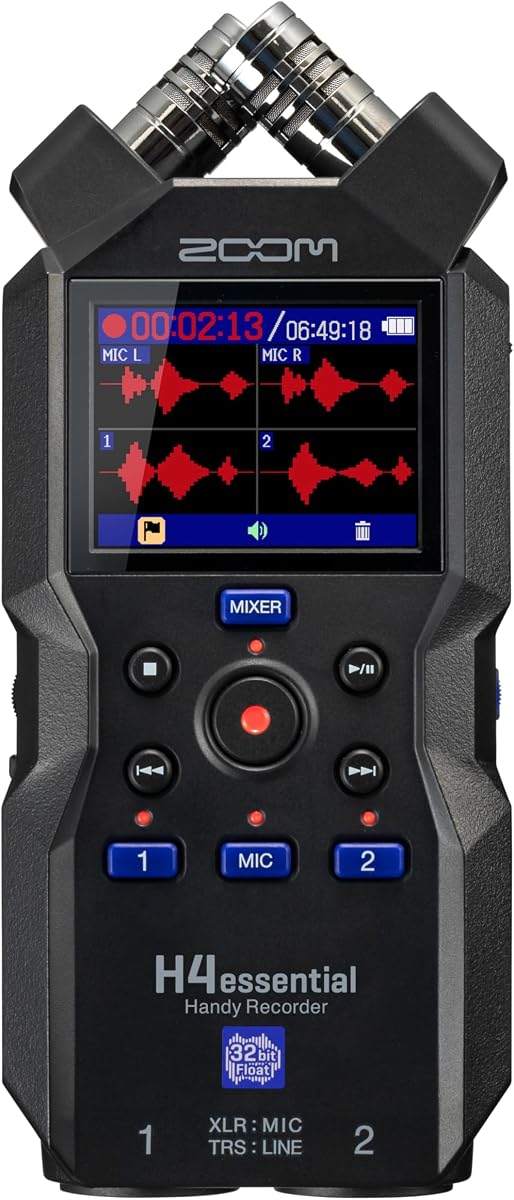
The Zoom H4 Essential is designed to be user-friendly with spoken menu guidance. This accessibility feature helps visually impaired users or anyone needing clear instructions to operate the device effectively.
We may earn a commission when you buy through this link, at no additional cost to you.
It supports two XLR inputs for professional microphones and can record directly to an SD card or stream via USB-C. This hybrid functionality supports versatile workflows in the field.
Battery life is decent but not as long as some AA-powered models. The basic screen requires close reading which might be challenging in low light or bright sun.
For journalists seeking an accessible and versatile recorder this unit offers a great balance. The spoken menus ensure you can set up quickly without guessing button functions.
This unique feature announces menu options aloud making the device accessible to visually impaired users and simplifying navigation for all users.
Connect professional microphones for superior sound quality capturing voices with clarity and precision during critical interviews.
We may earn a commission when you buy through this link, at no additional cost to you.
The Pocket AI Voice Recorder goes beyond simple audio capture by offering automatic transcription and summarization. This turns hours of audio into readable notes saving journalists significant time.
We may earn a commission when you buy through this link, at no additional cost to you.
You can attach it to your phone via MagSafe for seamless hands-free use. The battery lasts four days allowing extended use without constant charging during busy news cycles.
Some advanced AI features require a subscription which may add to the long-term cost. The device also relies on internet connectivity for full transcription functionality which might not always be available.
For journalists focused on efficiency and note-taking this device is a modern solution. The transcription features allow you to focus on the interview while the device handles the logging.
The built-in AI transcribes spoken words into text automatically providing a written record of your interviews and meetings.
Attach the device to your iPhone or compatible phone for easy mounting and hands-free operation during interviews.
We may earn a commission when you buy through this link, at no additional cost to you.
The Zoom H1 Essential is designed for simplicity and portability. It captures clear stereo audio suitable for interviews and ambient sound while remaining small enough to fit in a pocket.
We may earn a commission when you buy through this link, at no additional cost to you.
It connects via USB-C and works as a high-quality microphone for your computer. This dual purpose makes it easy to record digital interviews or stream audio directly.
One limitation is the lack of an SD card slot meaning you must transfer files via USB or rely on internal memory limits. It also does not support external power sources.
For journalists needing a compact backup or secondary recorder this is an excellent choice. Its simplicity ensures you can focus on the story rather than technical setup.
Its small form factor allows you to carry it everywhere ensuring you are always ready to record unexpected sound or interviews.
Use it as a desktop mic by connecting to your PC which simplifies remote interviews and voiceover work.
We may earn a commission when you buy through this link, at no additional cost to you.
The Zoom H2 Essential features three built-in microphones with nine selectable patterns. This versatility lets you adjust the audio capture to suit different environments and interview styles.
We may earn a commission when you buy through this link, at no additional cost to you.
It uses 32-bit float recording to prevent clipping and includes Bluetooth sync for multiple units. The audio menus are available in seven languages making it accessible globally.
Battery life is moderate so you may need spare batteries for long days. The display is simple which keeps costs down but might require closer inspection to read settings.
For journalists needing flexible recording patterns and reliable digital protection this unit delivers well. Its accessibility features and multi-unit sync offer unique advantages for group coverage.
Switch between mic configurations to capture wide stereo or focused mono sound depending on your specific recording needs.
This technology records audio at a high dynamic range ensuring you never lose important sound due to clipping or distortion.
We may earn a commission when you buy through this link, at no additional cost to you.
Selecting the right handheld recorder involves balancing audio quality, portability, and specific features for your reporting style.
High fidelity audio is crucial for interviews and field reports. Look for recorders that support high sample rates and bit depths to ensure clear sound.
Prioritize models with good preamps and noise reduction to capture clean voices in noisy environments.
Check if the built-in microphones are omnidirectional or stereo. Some models allow swapping capsules or using external mics for better directionality.
Versatile microphone patterns help you capture specific sounds without unwanted background noise.
Internal memory or SD card support determines how long you can record. Journalists often need to record for hours without swapping cards.
Ensure the device supports high capacity cards to avoid running out of space during long assignments.
Long-lasting batteries are essential for field work. AA batteries are convenient but rechargeable options reduce long-term costs.
Check battery runtime estimates to ensure the device lasts through your typical reporting schedule.
USB-C ports allow fast data transfer and device charging. Bluetooth control adds convenience for remote setup and monitoring.
Choose a model with connection types that match your workflow and existing equipment.
A lightweight and compact design makes it easier to carry the recorder everywhere. Bulky devices can distract from your work.
Prioritize ergonomics and size to ensure comfort during extended use.
Simple menu navigation and clear file naming help organize your recordings. Time stamps and auto naming are useful features.
Look for software or app integration that simplifies transferring and organizing audio files.
Field work can expose devices to rough conditions. A sturdy build protects internal components from damage.
Select a unit with quality construction to withstand travel and daily handling.
Always check battery levels before recording to avoid losing important audio. Charge the device fully if using rechargeable packs.
Position the recorder carefully during interviews to capture clear voices. Keep it away from wind or loud background noises.
Regularly clean the device surface and check ports for dust. Store it in a protective case when not in use.
The best choice depends on your needs. The TASCAM DR-05XP offers excellent quality and value while the Zoom H5 provides professional features.
Most models support SD cards for additional storage. Check your specific device requirements as some have internal memory only.
Battery life varies but many recorders offer 10 to 20 hours on standard AA batteries. Rechargeable models may have different durations.
Most handheld recorders cannot directly record phone calls. You may need a separate adapter or app for that purpose.
Yes most models connect via USB or USB-C to computers. Some also offer wireless transfer options for convenience.
Built-in mics are sufficient for most interviews. External mics can improve quality in very noisy environments.
We reviewed ten top handheld recorders offering various features for different needs. From budget options to premium units there is something for every reporter.
Focus on audio quality and battery life when prioritizing your choice. These factors ensure you capture clear sound and last through long shifts.
Remember to check current prices and availability before buying. Conditions change quickly so verify details to secure the best deal.