
Siraya Tech Tenacious Flexible Resin
4.7Editor score
Soft rubber-like texture
Fast rebound elasticity
Excellent resin additive
This guide compares the top flexible resin for 3D printing options available in October 2026 for performance, flexibility, and reliability.
Finding the right flexible resin for 3D printing is essential for creating durable parts that bend without breaking. These materials mimic rubber or TPU and are ideal for gaskets, grips, and shock-absorbing components.
We evaluated leading products based on flexibility, toughness, print speed, and user feedback. Our list covers resins suitable for various LCD and SLA printers while balancing performance with ease of use for makers.
Each pick highlights specific strengths like impact resistance or low odor. Remember that availability and stock vary by retailer so check current listings before purchasing to ensure you get the latest batch quality.
4.7Editor score
4.7Editor score
4.2Editor score
This side-by-side comparison highlights key specifications and strengths of the top flexible resins to help you choose the best material for your specific printing needs.



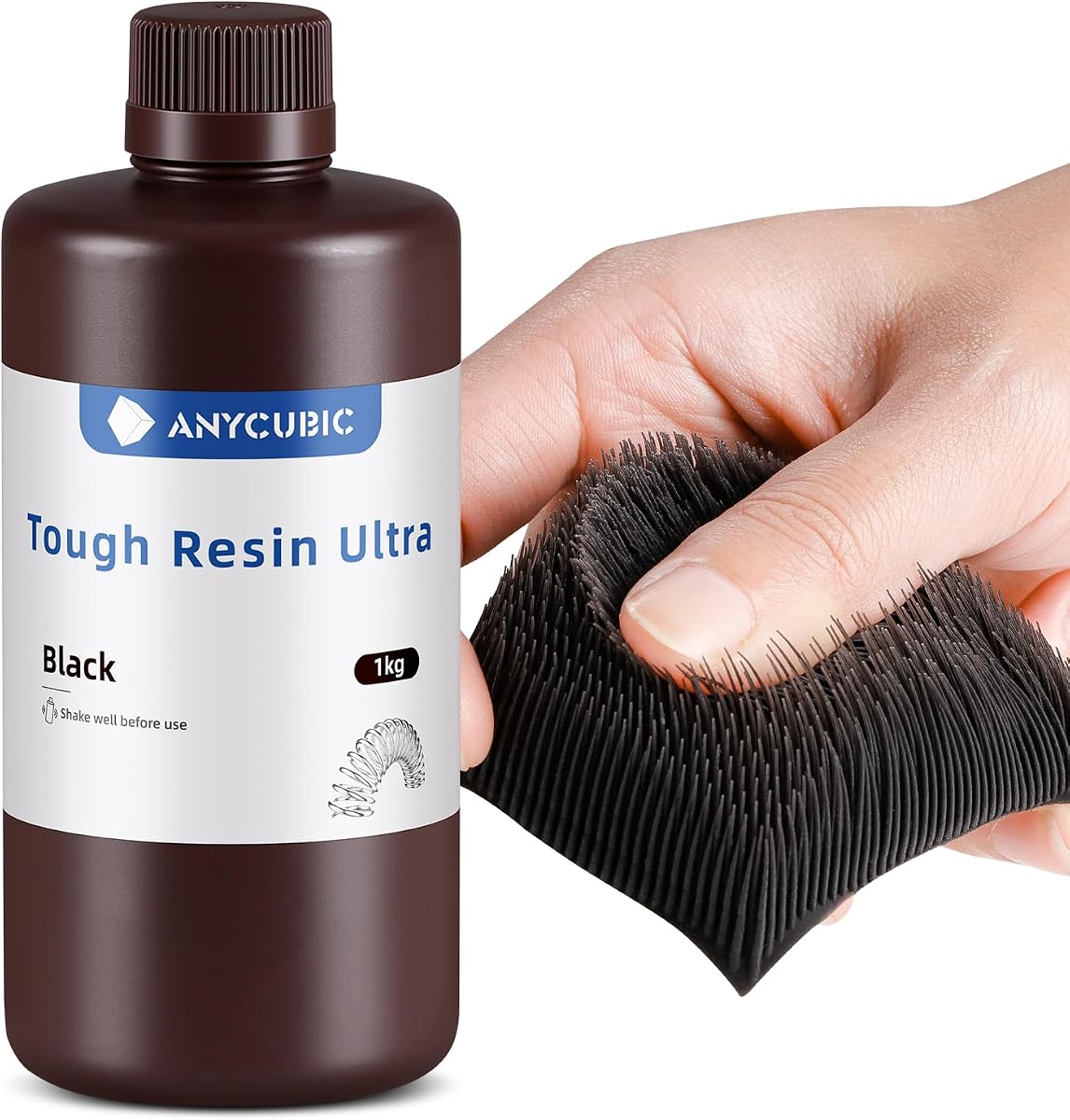
The ANYCUBIC Ultra Tough Resin stands out with a 4.7 rating for its outstanding toughness and resilience. It is designed to recover its shape quickly after external forces deform it which is rare in standard resins.
We may earn a commission when you buy through this link, at no additional cost to you.
Its flexibility allows for seamless movement in articulated models and the skin-safe surface is ideal for wearables like earphone covers. It blends well with other resins to boost durability without complicating the workflow.
While mixing colors might affect the final tone slightly the product maintains its strength and does not soften under humidity. This trade-off is acceptable given the enhanced durability and reliability for functional parts.
Buy this if you need a reliable flexible resin for models that endure stress. It offers a balanced mix of elasticity and precision making it a top choice for makers in November 2026.
This resin withstands external forces and recovers quickly ensuring parts remain intact even after drops or compression.
The cured material feels non-irritating on the skin making it safe for direct contact items like cosplay props and wearable accessories.
We may earn a commission when you buy through this link, at no additional cost to you.
Siraya Tech Tenacious Flexible Resin offers a rubber-like softness and quick rebound with a 4.7 rating. It is significantly softer than the original tenacious formula making it ideal for dynamic prints.
We may earn a commission when you buy through this link, at no additional cost to you.
Its high impact resistance means drops do not cause deformations or cracks in your models. It also serves as an excellent additive to enhance toughness in other resins without requiring complex mixing.
The small 500g size may require bulk purchases for large farms and it is not suited for rigid parts. However the flexibility and durability benefits far outweigh the cost for soft component projects.
Choose this for projects needing resilience and flexibility like gaskets and grips. It is an affordable option that delivers high performance for makers needing reliable flexible parts in 2026.
This resin withstands extreme bending and compression while returning to shape quickly ensuring dynamic parts function as intended.
Even a small addition of this resin can significantly enhance the impact resistance of other materials expanding your printing capabilities.
We may earn a commission when you buy through this link, at no additional cost to you.
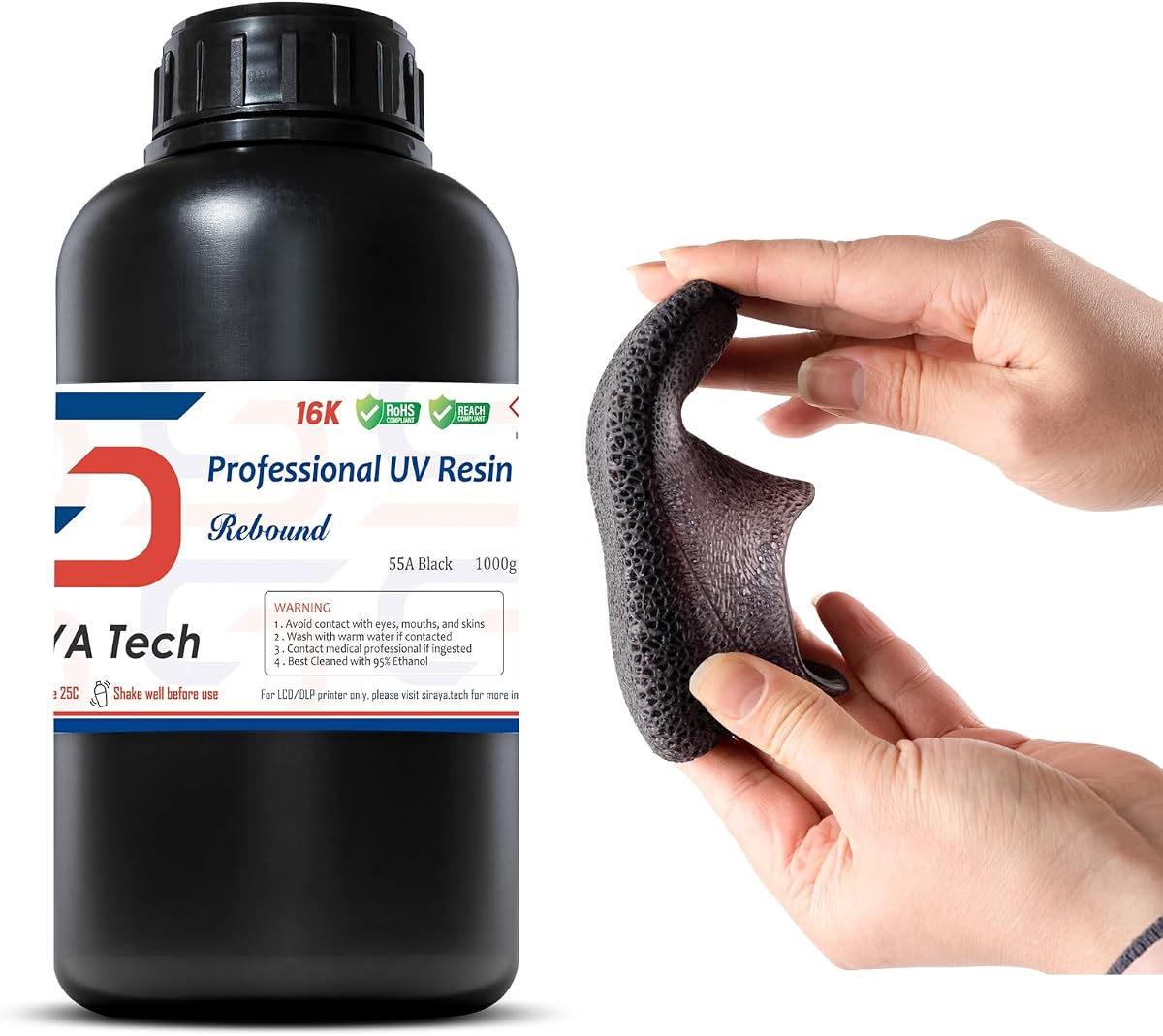
Siraya Tech Rebound 55A provides significantly faster rebound than standard elastic resins with a 4.2 rating. It is softer than Tenacious Flex but maintains excellent compression properties for shock-absorbing components.
We may earn a commission when you buy through this link, at no additional cost to you.
It prints on standard LCD and DLP printers and cleans with standard alcohol methods avoiding complex A/B mixing. This makes it accessible for rapid prototyping of items like seals and industrial gaskets.
Long-term performance testing is still ongoing and the price point is higher than average options. However for applications requiring quick shape recovery and elasticity it offers distinct advantages.
Use this for prototypes needing rapid elasticity and compression recovery like protective equipment and gaskets. It is a premium choice for makers prioritizing rebound performance over cost in 2026.
This resin recovers its shape faster than standard elastic options ideal for applications needing quick response after compression or impact.
Unlike other elastomers it requires no special mixing or cleaning steps allowing it to work with standard printing and cleaning workflows.
We may earn a commission when you buy through this link, at no additional cost to you.
Superflex 3D Printer Resin offers a balanced 80A hardness with a 4.4 rating. It prints 50um layers in just 1.7 seconds which is fast for flexible materials and saves on electricity time.
We may earn a commission when you buy through this link, at no additional cost to you.
With 100% elongation at break it simulates rubber or TPU for prototypes needing cushioning and shock absorption. Properly cleaned and cured prints pass the ISO 10993-5 safety test.
The 500g size may require frequent ordering for large farms and post cure is essential for safety compliance. This trade-off is acceptable given the speed and safety certification for functional prototypes.
Choose this for projects needing speed and safety certification like medical or industrial prototypes. It delivers a reliable balance of softness and strength for makers in 2026.
Superfast printing capabilities enhance productivity by at least 40 percent allowing farms to output more parts in less time.
This resin simulates rubber or TPU perfectly making it ideal for hard flexible prototypes that need shock absorption and cushioning.
We may earn a commission when you buy through this link, at no additional cost to you.
ANYCUBIC Tough Resin 2.0 has upgraded flexural strength and a 4.6 rating. It is less prone to fracture when printing miniature components and thin models offering high precision and minimal shrinkage.
We may earn a commission when you buy through this link, at no additional cost to you.
The low-odor formulation reduces volatile organic compounds making the printing environment calm and comfortable. Models resist peeling and stress marks even after drops or cyclic vibrations.
The grey color may not suit aesthetic needs and toughness varies based on part geometry. However for industrial and functional parts this resin offers a reliable balance of strength and detail.
Use this for high-strength model production needing precision like industrial spare parts. It is a robust choice for makers valuing durability and clarity in 2026.
This resin has undergone a comprehensive upgrade in flexural strength making it less prone to fracture when printing thin models.
Featuring a low-odor and non-irritating composition it creates a calm printing environment suitable for home and studio use.
We may earn a commission when you buy through this link, at no additional cost to you.
SUNLU Flexible 3D Printer Resin offers 70A hardness and 135% elongation at break with a 3.5 rating. It balances softness and strength for durable prototypes that withstand drops without breaking.
We may earn a commission when you buy through this link, at no additional cost to you.
The resin has a smooth non-sticky surface finish and low shrinkage for accurate sizes. Its leak-proof bottle design protects against damage during transport and it is compatible with most LCD printers.
It has a lower rating due to aromatic odor and potential brittleness. However the high elongation and impact resistance make it a viable option for specific functional parts requiring flexibility.
Choose this for high elongation needs where budget and availability matter. It offers a practical solution for makers needing flexible parts with reliable size accuracy in 2026.
This resin simulates rubber or durable flexible prototypes offering a perfect balance of softness and strength for various needs.
Compatible with 99 percent of printers on the market it works well with LCD DLP and SLA systems.
We may earn a commission when you buy through this link, at no additional cost to you.
SUNLU High Toughness Resin provides elongation five times higher than standard resins with a 4.7 rating. It makes models unbreakable and durable improving quality for structural parts and solid models.
We may earn a commission when you buy through this link, at no additional cost to you.
Low viscosity leads to shorter curing times and minimal shrinkage reduces distortion. The low-odor formula offers a comfortable environment and the resin is compatible with most LCD DLP and SLA printers.
The grey color might not suit all aesthetic requirements and proper curing is essential for stability. However the durability and accuracy benefits make it a strong choice for structural applications.
Use this for structural parts and solid models needing durability. It delivers crisp details and high toughness for makers seeking reliable results in 2026.
Long-lasting toughness and elongation five times higher than regular standard resin make your 3D printed models unbreakable.
Low viscosity and high flowability result in shorter curing time allowing you to achieve best-in-class accuracy and vivid detail.
We may earn a commission when you buy through this link, at no additional cost to you.
ELEGOO Tough Resin features a Shore hardness of 84.7D with a 4.5 rating. It offers excellent flexibility and strong impact resistance making it suitable for tools functional prototypes and hangers.
We may earn a commission when you buy through this link, at no additional cost to you.
The cured resin has a fine texture and resists brittleness and corrosion even in high humidity. It is non-irritating with low odor providing a comfortable environment for high-quality production.
The high hardness value means it may be stiffer than soft rubber resins for some applications. However for durable parts needing resilience this resin delivers strong performance.
Choose this for tools and engineering prototypes needing resilience. It balances toughness with flexibility for makers producing functional parts in 2026.
Excelling in flexibility and extraordinary resilience it withstands tension and stress recovering quickly after external forces.
It has high-strength physical properties and can withstand certain impacts making it suitable for tools and functional parts.
We may earn a commission when you buy through this link, at no additional cost to you.
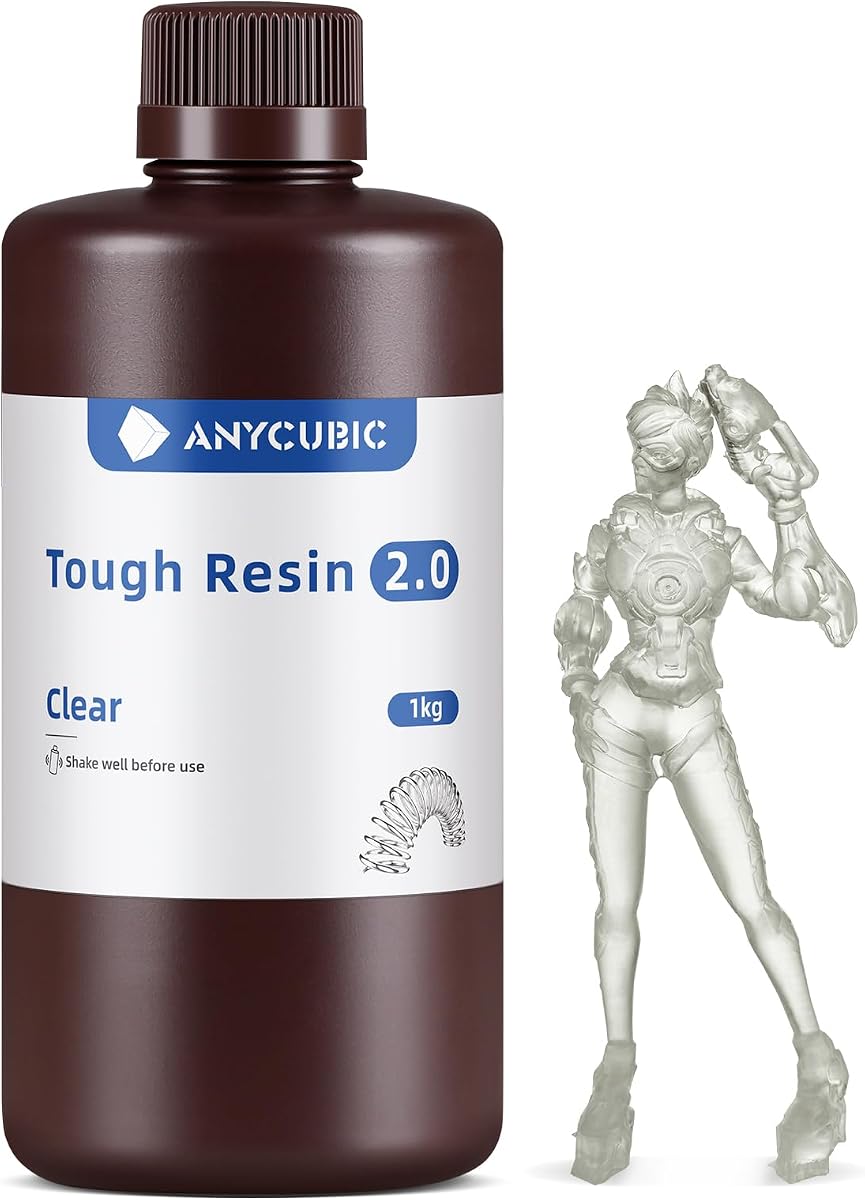
ANYCUBIC Tough Resin 2.0 Clear offers significant enhancement in flexural strength with a 4.6 rating. It provides superior toughness and exceptional stretch reducing breakage in delicate components.
We may earn a commission when you buy through this link, at no additional cost to you.
The minimal odor composition and low shrinkage ensure high precision and a serene printing environment. This clear version is versatile for industrial applications and equipment compatibility.
Clear resins may require extra care to avoid yellowing and handling. However the high precision and flexibility make it a valuable choice for transparent functional parts.
Use this for clear flexible models needing precision and durability. It is a reliable choice for makers producing transparent parts in 2026.
This resin has achieved a significant enhancement in flexural strength reducing the likelihood of breakage in delicate components.
It ensures high-precision prints with minimal shrinkage making it ideal for detailed industrial applications.
We may earn a commission when you buy through this link, at no additional cost to you.
This upgraded tough resin simulates rubber with 90A hardness and a 4.4 rating. It is foldable and bendable without breaking offering strong tear resistance and good bending resistance.
We may earn a commission when you buy through this link, at no additional cost to you.
With high elongation it handles repeated stress well for items like gaskets and shoe soles. It delivers crisp accurate prints and a low-odor formula for a comfortable workshop experience.
The 90A hardness makes it tougher than softer rubber resins and ventilation is advised. However for durable parts needing resilience it performs reliably.
Choose this for durable parts needing rubber-like toughness. It is a strong choice for makers producing end-use parts in 2026.
With 90A Shore hardness this resin can be folded and bent repeatedly without breaking offering strong tear resistance.
It works great on most LCD and DLP printers handling shock-absorbing components and cosplay props alike.
We may earn a commission when you buy through this link, at no additional cost to you.
Selecting the right flexible resin depends on your specific project requirements and printer setup.
Shore hardness determines how soft or hard the printed part will feel. Lower numbers like 55A are softer and more rubber-like while higher numbers like 80A to 90A offer more structure and durability.
Match the hardness to your application needs such as soft grips or firm gaskets.
Elongation at break measures how much the material can stretch before snapping. Flexible resins often offer 100% to 135% elongation which ensures parts do not fracture under stress.
Look for higher elongation values if your part will face repeated bending.
Impact resistance is the ability to withstand drops or blows without cracking. Many flexible resins are designed to absorb shock making them ideal for functional parts.
Check product descriptions for terms like impact-resistant or toughness.
Flexible resins require proper post-curing to achieve their final properties and safety compliance. Always follow manufacturer instructions for UV exposure and cleaning to ensure the resin reaches its full potential.
Use a curing station and gloves to protect yourself and the print.
Ensure the resin wavelength matches your printer typically 405nm for most LCD and SLA systems. Some resins work best with specific printer setups or firmware versions so verify before buying.
Compatible resins save time and prevent print failures due to mismatched settings.
Flexible resins can vary in odor and safety profile. Look for low-odor formulations and check for certifications like ISO 10993-5 if you plan to make items that touch skin.
Proper ventilation is still recommended even with low-odor options.
Some flexible resins can be mixed with other types to boost toughness or modify properties. This offers flexibility in customizing your material without buying new bottles.
Test mixtures on a small scale before committing to a full print.
Resin bottles range from 500g to 1kg. Larger bottles are more cost-effective but require proper storage to prevent curing in the bottle.
Choose a size that matches your production needs and storage capacity.
Shake the bottle thoroughly before pouring to ensure even consistency. Pour gently into the resin tank to avoid introducing air bubbles which can cause print defects.
Print with appropriate exposure times as flexible resins may require adjustments compared to standard resins. Always start with manufacturer recommended settings and tweak gradually based on your printer.
Clean prints with isopropyl alcohol and allow them to cure fully under UV light. Store the resin bottle in a cool dark place to maintain stability and prevent premature curing.
Yes flexible resin is ideal for functional parts like gaskets and shock absorbers. It offers durability and elasticity that standard resins lack allowing parts to bend without breaking.
Use a scraper carefully to remove prints and clean with isopropyl alcohol. Avoid bending prints too hard before curing to prevent tearing or cracking.
You can mix flexible resin with standard resin to add toughness but results may vary. Always test mixtures on small parts to ensure the properties meet your needs.
Exposure times vary by brand but typically range from 1 to 3 seconds per layer. Start with manufacturer recommendations and adjust gradually for best results.
No flexible resins use standard isopropyl alcohol cleaning. However ensure prints are fully cured to prevent soft or sticky surfaces.
Store flexible resin in a cool dark place away from sunlight and heat. Keep the bottle tightly sealed to prevent exposure to air which can degrade the material.
Sticky prints often result from under-curing or exposure issues. Ensure you follow proper UV curing times to achieve a dry non-sticky finish.
Flexible resin typically lasts 12 to 18 months if stored correctly. Check expiration dates and store properly to extend usability.
The top picks like ANYCUBIC Ultra Tough and Siraya Tech Tenacious offer excellent flexibility and resilience for a range of projects. These products balance toughness with ease of use making them reliable choices.
Prioritize your specific needs such as hardness and elongation when selecting a resin. Understanding these properties helps you avoid failure and produce durable parts.
Check current stock and batch listings before buying to ensure you receive the latest quality. Prices and availability change so staying updated ensures the best experience.