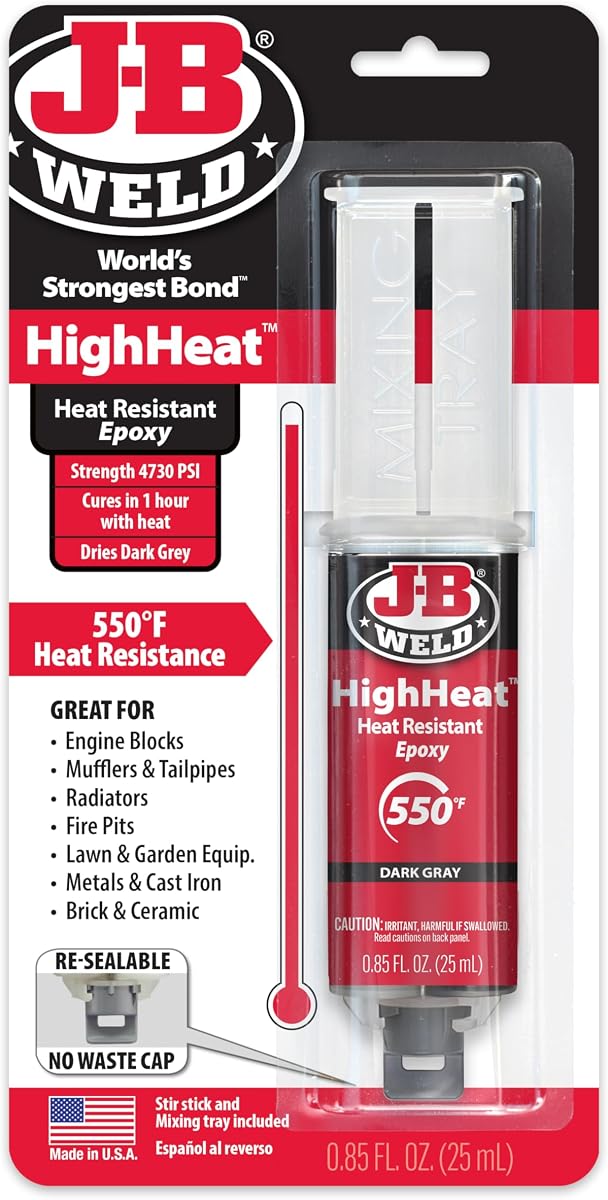
J-B Weld High Heat Epoxy
4.6Editor score
Two-part epoxy system
Sets in one hour at room temp
Chemical and fuel resistant bond
This guide compares the top ten heat resistant adhesive options for high temperature repairs in ovens, fireplaces, and industrial equipment to help you choose
Finding the right heat resistant adhesive can be challenging when you need to seal gaps in high temperature environments. Whether you are repairing an oven, maintaining a fireplace, or fixing industrial equipment, choosing the wrong product can lead to failure and safety hazards.
We have analyzed ten top rated products based on their temperature ratings, bonding strength, flexibility, and ease of application. Our comparison includes silicones, epoxies, and specialized pastes designed to withstand extreme heat without cracking or losing their seal over time.
Each pick below highlights specific use cases and performance characteristics to help you make an informed decision. Please note that product availability and pricing can change frequently, so always verify current details before making your final purchase.
4.6Editor score

4.6Editor score

4.6Editor score
The following table provides a side-by-side comparison of all ten products to help you quickly identify the best option for your specific high temperature repair needs.


This high temp silicone sealant stands out as a top performer for general high temperature sealing tasks. With a rating of 4.6 stars, users appreciate its ability to maintain strength even in extreme conditions ranging from freezing to over 500 degrees Celsius.
We may earn a commission when you buy through this link, at no additional cost to you.
The adhesive features an advanced heat resistant formula that ensures stable performance over long periods. It remains elastic after curing, which allows it to withstand vibration and thermal expansion without cracking or failing at the seam.
While it offers impressive durability, users should note that surface preparation is key for the best bond. The smell during curing is manageable but requires adequate ventilation to ensure safety during application in enclosed spaces.
For anyone needing a reliable seal for ovens or fireplaces, this product delivers exceptional performance. Its ease of use and quick cure time make it a practical choice for both DIY repairs and professional maintenance tasks.
The formula is engineered to withstand temperatures from negative 50 degrees Celsius to 550 degrees Celsius without losing integrity or sealing power.
Unlike rigid adhesives, this sealant remains flexible after curing, allowing it to absorb thermal expansion and vibration without cracking.
We may earn a commission when you buy through this link, at no additional cost to you.
J-B Weld High Heat Epoxy is a classic choice for users seeking a strong and lasting repair at an affordable price. With 4.6 stars, it is trusted for its ability to bond metals and withstand high heat environments like engines and grills.
We may earn a commission when you buy through this link, at no additional cost to you.
This two-part system forms a permanent bond with significant strength rated at 4730 PSI. It sets quickly at room temperature but can be accelerated further with heat, making it versatile for urgent repair needs.
The lack of flexibility means it is best suited for rigid applications where movement is minimal. Mixing the parts is a required step, which can be slightly more involved than tube sealants but ensures a robust connection.
If you need a cost effective solution for structural high heat repairs, this epoxy is an excellent option. Its resistance to fuel and chemicals makes it particularly valuable for automotive and machinery maintenance projects.
The epoxy creates a permanent bond with a strength of 4730 PSI, ensuring it holds up under significant mechanical stress and heat.
Curing time can be reduced to just one hour by exposing the bond to 250 degrees Fahrenheit, speeding up the repair process.
We may earn a commission when you buy through this link, at no additional cost to you.
Rutland Clear High Temp Silicone Sealant offers a premium solution for those needing a clear, professional grade gasket maker. With a rating of 4.6 stars, it is known for its reliability in automotive and industrial applications where appearance matters.
We may earn a commission when you buy through this link, at no additional cost to you.
This sealant resists harsh chemicals like gasoline, oil, and transmission fluid, which often cause standard silicones to fail. The clear formula cures to a durable seal that does not crack or shrink, maintaining integrity under thermal stress.
While the price is higher than standard options, the quality and chemical resistance justify the investment for critical applications. Users must allow full cure time to achieve the maximum strength and chemical resistance properties of the sealant.
For mechanics or enthusiasts working on engines or high visibility repairs, this product delivers outstanding results. Its ability to replace traditional gaskets while offering flexibility makes it a top choice for complex mechanical assemblies.
The advanced formula resists gasoline, oil, and transmission fluid, ensuring it maintains integrity in harsh chemical environments.
This product is trusted by professionals for its durability and consistency, making it suitable for heavy duty engine and valve cover gaskets.
We may earn a commission when you buy through this link, at no additional cost to you.
This high temperature glue is engineered for environments requiring exceptional heat resistance up to 650 degrees Celsius. With 4.4 stars, it is popular for sealing gaps in grills and ovens where extreme heat and moisture are present.
We may earn a commission when you buy through this link, at no additional cost to you.
The sealant remains elastic after curing, which helps prevent cracks during thermal cycling. It is waterproof and moisture proof, ensuring a tight seal that prevents heat or smoke leakage from appliances or outdoor equipment.
The surface dries quickly in 15 minutes, but full cure takes 24 hours, which requires patience before subjecting the bond to heat. Proper surface preparation is necessary to ensure the adhesive adheres firmly to the material.
For users needing a robust seal for high heat appliances, this glue provides reliable performance. Its combination of flexibility and high temperature tolerance makes it suitable for a wide range of household and industrial repairs.
Engineered for extreme environments, this sealant withstands temperatures up to 650 degrees Celsius without degrading or losing strength.
It provides effective waterproof and moisture resistant protection, making it ideal for sealing gaps in humid or outdoor high heat environments.
We may earn a commission when you buy through this link, at no additional cost to you.
This 100ml sealant is designed for precision sealing in appliances like microwaves and range hoods. With 4.2 stars, it is valued for its white-to-translucent finish that allows for easy application and a clean final look.
We may earn a commission when you buy through this link, at no additional cost to you.
The precision nozzle helps direct the adhesive into narrow seams and hard-to-reach gaps effectively. It cures to a semi-translucent finish, which blends better with appliance surfaces than dark or bright colored sealants.
While the temperature range is lower at 300 degrees Celsius, it is sufficient for most household appliance repairs. The included scraper helps spread the material evenly, though users should test a small area first to ensure compatibility.
For detailed work on glass panels or metal edges in appliances, this sealant is a practical choice. Its controlled application tools and clean finish make it ideal for repairs where aesthetics are important.
Applies white for visibility but cures to a semi-translucent finish, ensuring a clean look around appliance seams and repair areas.
The precision nozzle and included scraper allow for smooth application into narrow seams and hard-to-reach gaps for better sealing.
We may earn a commission when you buy through this link, at no additional cost to you.
J-B Weld ExtremeHeat Paste is a metallic compound designed for repairs on iron, steel, and metal components in extreme heat. With 4.2 stars, it is a favorite for exhaust manifolds and mufflers where temperatures can exceed 1000 degrees Fahrenheit.
We may earn a commission when you buy through this link, at no additional cost to you.
Once cured, this paste is stronger than steel and can be drilled, machined, or sanded to fit specific repair needs. It is non-flammable and contains no volatile solvents, making it safer to store and use in workshops.
The paste consistency means it is less suitable for small gaps but ideal for filling cracks or holes in heavy metal parts. It is formulated to withstand the harsh conditions of automotive and industrial exhaust systems effectively.
If you are repairing high temperature metal components that require a solid bond, this paste is a strong option. Its ability to be machined after curing offers flexibility for custom fitting and finishing the repair.
Once fully cured, the metallic compound can be drilled, machined, or sanded, allowing for custom fitting and finishing of the repair.
This paste is non-flammable and contains no volatile organic compounds, ensuring safer storage and use in high heat environments.
We may earn a commission when you buy through this link, at no additional cost to you.
J-B Weld Red High Temp RTV is a popular choice for automotive gasket making with a high rating of 4.7 stars. It is designed for mechanical assemblies with continuous temperatures up to 550 degrees and intermittent up to 650 degrees.
We may earn a commission when you buy through this link, at no additional cost to you.
This product is sensor safe, meaning it will not cause false readings in modern engine systems, which is crucial for performance vehicles. It forms a tough, waterproof seal that resists weathering and does not shrink or crack over time.
The red color provides clear visibility during application but may stain light surfaces if not cleaned promptly. Users should allow the product to cure fully to achieve maximum strength and weather resistance properties.
For automotive repairs involving oil pans or exhaust manifolds, this sealant delivers legendary performance. Its durability and specific automotive formulation make it a reliable option for maintaining vehicle integrity under heat.
This sealant is designed to be sensor safe, ensuring it does not cause false readings in modern engine monitoring systems.
The sealant resists weathering and does not shrink or crack, ensuring a long-lasting bond for outdoor and engine components.
We may earn a commission when you buy through this link, at no additional cost to you.
Rutland Clear High Temp Silicone Sealant is a versatile option for bonding various composite surfaces in engine environments. With 4.6 stars, it is used to replace traditional paper gaskets with a flexible bond for transmission pans and water pump housings.
We may earn a commission when you buy through this link, at no additional cost to you.
The clear formulation is fuel resistant, allowing it to maintain integrity in harsh chemical environments where standard silicones might fail. It is made in the USA and is a trusted solution for mechanics and DIY enthusiasts alike.
While it is designed for specific gasket applications, it can also serve as a general sealant for small gaps in high heat areas. Users should ensure surfaces are clean and dry for the best adhesion and seal.
For those needing a high quality gasket glue for engine or maintenance work, this product is highly effective. Its clear finish and resistance to automotive fluids make it a top choice for professional grade repairs.
The sealant resists gasoline, oil, and transmission fluid, maintaining integrity in chemical environments where standard silicones often fail.
It bonds effectively to metal, aluminum, and composite surfaces, making it ideal for various engine and mechanical applications.
We may earn a commission when you buy through this link, at no additional cost to you.
This Sodium Silicate adhesive is a specialized product for industrial refractories and ceramic fiber blankets. With 4.4 stars, it is used in applications requiring temperatures up to 2000 degrees Fahrenheit where standard adhesives would not survive.
We may earn a commission when you buy through this link, at no additional cost to you.
It dries to a clear solid form and is water-based, making it easier to handle than some chemical based industrial glues. The viscosity is similar to maple syrup, allowing for controlled application on ceramic boards and other refractories.
Because it is a specialized industrial product, it may be less suitable for general household repairs. It is important to allow the solution to dry fully to achieve its maximum heat resistance and solid form.
For furnace, kiln, or high heat industrial repairs, this adhesive is an essential tool. Its ability to bond ceramic fibers at extreme temperatures ensures structural integrity in demanding thermal environments.
This solution is designed to withstand extreme temperatures up to 2000 degrees Fahrenheit, making it suitable for furnace and kiln applications.
As a water glass solution, it dries to a clear solid form and is easier to handle compared to other industrial adhesives.
We may earn a commission when you buy through this link, at no additional cost to you.
This clear oven heat resistant glue is designed for electrical equipment and appliances like microwaves and induction cookers. With 4.6 stars, it is appreciated for its fast-curing formula that is tack dry in just five minutes.
We may earn a commission when you buy through this link, at no additional cost to you.
It withstands temperatures up to 570 degrees Fahrenheit, making it suitable for a variety of household appliances. The clear finish helps it blend in with glass panels or metal edges for a neat repair.
While it dries quickly to touch, full cure takes 6 to 8 hours, which is standard for silicone-based sealants. The pointed nozzle makes application easy, and the adhesive is waterproof for moisture-resistant repairs.
For users needing a quick and clean repair for microwave or oven seals, this glue is a strong contender. Its combination of speed, clarity, and heat resistance makes it a practical choice for appliance maintenance.
This sealant uses a fast-curing formula that is tack dry in just five minutes, allowing for quick handling of the repaired area.
The clear finish ensures it blends well with glass panels and metal edges, providing a neat appearance after the repair is complete.
We may earn a commission when you buy through this link, at no additional cost to you.
Selecting the right adhesive requires understanding your specific temperature needs and the materials you are bonding. Consider the following factors to ensure you pick a product that will provide a safe and lasting seal.
The temperature rating is the most critical specification to check before purchasing. Ensure the product can withstand the maximum heat your appliance or equipment will reach during operation. Some products are rated for continuous heat while others are for intermittent spikes.
Always choose an adhesive with a rating higher than your expected operating temperature to provide a safety margin.
Different adhesives bond better with specific materials like metal, glass, ceramic, or plastic. Review the product description to confirm it adheres well to the surfaces you need to seal. Some epoxies are better for rigid metal while silicones work well on glass.
Verify compatibility with your specific materials to avoid bond failure or surface damage over time.
Cure time affects how long you must wait before using the repaired item. Some products offer a quick tack dry time but require hours or days to reach full strength. If you need a fast turnaround, look for products with accelerated cure options.
Plan your repair around the cure time to ensure the bond is fully set before exposing it to heat or stress.
Flexibility is important for applications where materials expand or contract due to heat changes. Rigid adhesives might crack under thermal cycling while flexible silicones absorb the movement. Check if the product remains elastic after curing.
Choose a flexible adhesive for joints or gaps that experience temperature fluctuations to prevent cracking.
If your repair is in an area exposed to fuels, oils, or cleaning chemicals, select an adhesive with chemical resistance. Standard sealants may degrade when exposed to harsh fluids. Look for specific claims about resistance to gasoline or transmission fluids.
Ensure the product is rated for the chemicals present in your environment to maintain long-term integrity.
Consider how the product comes packaged and how it is applied. Syringes or precision nozzles help with detailed work while tubes or bottles may be better for larger gaps. Ease of application can save time and effort during repair.
Select a format that matches your skill level and the size of the repair you need to perform.
For visible repairs, the finish of the adhesive can matter. Some cure clear while others are black or red. Transparent sealants blend better with glass or light-colored surfaces for a cleaner look after the work is complete.
Pick a finish that matches your aesthetic needs if the repair area will be visible after completion.
Buying from a well-known brand often ensures consistent quality and reliable performance. Trusted manufacturers usually test their products rigorously and provide clear instructions. Check reviews and ratings to gauge real-world performance.
Prioritize established brands with positive feedback to reduce the risk of product failure in critical applications.
Prepare the surfaces by cleaning them thoroughly to remove dust, grease, or old sealant. A clean and dry surface ensures the adhesive bonds properly and lasts longer under heat stress. Use a degreaser if necessary for metal or glass parts.
Apply the adhesive in a thin, even layer to the gap or seam you are sealing. Follow the manufacturer's instructions for the correct amount and technique to ensure even coverage without excess mess. Use a nozzle or scraper if included in the package.
Allow the adhesive to cure fully before exposing it to heat or heavy use. Do not rush the curing process as early exposure can weaken the bond. Once cured, inspect the seal regularly for signs of wear or cracking over time.
These adhesives range from 500 degrees Fahrenheit to over 2000 degrees Fahrenheit depending on the product type. Silicones generally handle up to 550 degrees while specialized pastes and sodium silicates handle much higher temperatures for industrial use.
Yes, but you must use high temp silicone rated for appliance use. Standard silicone may contain toxic chemicals that can release when heated. Look for food-safe or oven-safe rated products for interior repairs to ensure safety.
Most high temp adhesives do not require a primer for clean and dry surfaces. However, some metals might benefit from a primer to ensure the strongest bond. Check the product instructions for specific surface preparation recommendations.
Cure time varies from a few hours to 24 hours depending on the product and conditions. Some epoxies set in one hour but require 24 hours for full strength. Always check the specific cure time before using the repaired item.
Some adhesives can be painted once fully cured, but others are designed to remain flexible or clear. Check the product details to see if painting is compatible. Painting may affect the heat resistance properties of the sealant in some cases.
Only use sealants that are explicitly rated for microwave or appliance use. Standard adhesives can release fumes or degrade in microwave heating. Look for products designed for electronic or microwave equipment to ensure safety.
Choosing the right adhesive depends on your specific temperature needs and the materials you are working with. The products reviewed offer a range of options from budget friendly epoxies to industrial grade pastes.
Prioritize temperature rating and flexibility to ensure your repair withstands thermal cycling without cracking. Always follow preparation and curing instructions for the best results and longest lifespan of the seal.
Check current product details and availability before purchasing since pricing and stock can change quickly. With the right choice, you can safely and effectively repair high heat equipment at home or work.