
SVBONY Laser Collimator for Newtonian Marca Telescope Alignment
4.5Editor score
Removable adapter included
Solid metal body
Triple cemented lens
Achieving sharp celestial views requires precise optical alignment in Newtonian telescopes. A laser collimator for telescope alignment ensures the primary and secondary mirrors are perfectly aligned for optimal performance.
We compared ten top-rated collimators based on build quality, calibration stability, and ease of use. Our analysis covers budget models, premium options, and bundles designed for specific observing needs.
Each pick highlights unique strengths like self-centering adapters or adjustable brightness levels. Prices and availability change frequently so verify current details before purchasing your preferred alignment tool.
4.5Editor score

4.5Editor score
4.7Editor score
As an Amazon Associate we earn from qualifying purchases.
The following comparison table details the key specifications and features of each collimator to help you decide which tool fits your telescope setup and budget requirements best.
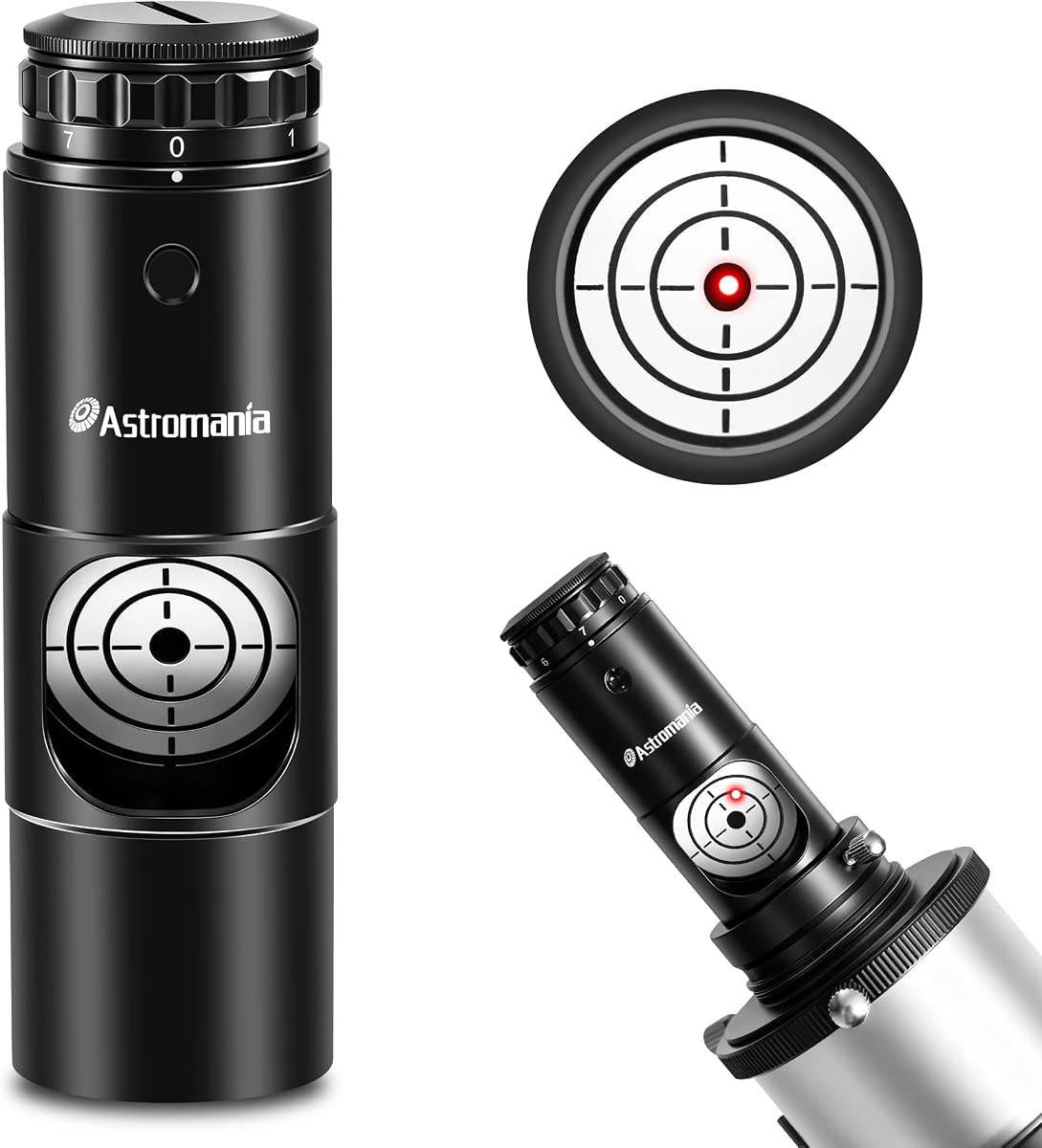


The Astromania Laser Collimator stands out as a top choice for Newtonian telescope owners seeking reliable alignment. With a 4.5 star rating, users appreciate its ability to fit both 1.25 inch and 2 inch focusers thanks to the removable adapter.
We may earn a commission when you buy through this link, at no additional cost to you.
Its design features a red laser beam with seven brightness levels allowing you to see the beam clearly in various lighting conditions. The premium metal construction ensures durability while the Class 3R safety standards keep eye protection in mind during use.
While it offers exceptional value some users note that frequent recalibration might be needed after heavy transport. The included battery ensures you can start using it right away though replacement batteries are standard CR2032 cells found easily online.
This tool is ideal for astronomers who want a balance of price and performance. It simplifies the collimation process significantly compared to traditional tools making it a strong recommendation for both beginners and experienced observers.
The removable adapter allows this unit to work with both standard 1.25 inch and larger 2 inch focusers without requiring a second device.
Seven brightness levels let you adjust the laser intensity to suit bright indoor rooms or dark observing skies effectively.
We may earn a commission when you buy through this link, at no additional cost to you.
This 1.25 inch specific model offers an excellent entry point for telescope owners who do not need 2 inch adapter capabilities. It retains the core quality of the Astromania line including the durable metal body and clear instructions.
We may earn a commission when you buy through this link, at no additional cost to you.
The seven brightness levels provide flexibility during collimation sessions ensuring the beam is visible even in bright rooms. Users find that it helps them get sharper views quickly without requiring complex adjustments or additional tools.
The compact design fits comfortably in your hand making it easy to maneuver within the focuser tube. It requires just one CR2032 lithium battery which is included to help you start aligning your optics immediately.
If you own a standard 1.25 inch focuser this tool delivers reliable results at a very competitive price. It is a practical choice for those prioritizing affordability without sacrificing essential collimation features.
Its small size allows you to carry it anywhere making it perfect for travel to dark sky sites or storage in a compact kit.
Precision engineering ensures consistent results every time helping maintain the accuracy needed for high quality astronomical observations.
We may earn a commission when you buy through this link, at no additional cost to you.
SVBONY is known for offering high quality optics at accessible prices and this laser collimator is a prime example. The triple cemented lens helps improve the stability of the red dot reducing jitter during use.
We may earn a commission when you buy through this link, at no additional cost to you.
You can switch between 1.25 inch and 2 inch focusers easily with the included adapter. This makes it a versatile option if you plan to upgrade your telescope setup in the future without buying a new collimator.
The solid metal body provides a reassuring feel that suggests longevity and resistance to wear. Users appreciate that it allows for accurate collimation in a few minutes saving time compared to manual methods.
For anyone seeking a budget friendly solution that does not compromise on core performance this model is highly recommended. It simplifies the process of getting clearer images and sharper views from your reflector telescope.
The removable adapter means you can use this tool even if you upgrade from a 1.25 inch to a 2 inch focuser later.
A triple cemented lens ensures the red beam remains steady making it easier to line up the primary mirror accurately.
We may earn a commission when you buy through this link, at no additional cost to you.
This bundle combines the utility of a laser collimator with a super wide angle eyepiece for visual observation. It is designed for those who want to enjoy broad field views while ensuring their optics are properly aligned.
We may earn a commission when you buy through this link, at no additional cost to you.
The 62 degree aspheric eyepiece provides maximum detail and definition across the entire field of view. This feature delivers an unforgettable lost in space feeling for lunar and star cluster observations without extra cost.
Safety is maintained with less than 1mW output complying with Class I laser safety standards. The laser still offers seven brightness levels to adapt to different light conditions during alignment sessions easily.
It is a great choice for visual observers who want an all-in-one package. While it costs more than a standalone collimator the addition of a high quality eyepiece adds significant value to the purchase.
The 62 degree apparent field of view gives you that immersive experience when looking at star clusters or nebulae.
With less than 1mW output this unit meets strict safety standards ensuring safe use during your astronomy sessions.
We may earn a commission when you buy through this link, at no additional cost to you.
The Alstar laser collimator provides a straightforward solution for Newtonian telescope alignment. It features three openings for adjustment arranged at 120 degrees which allows for fine tuning of the beam direction.
We may earn a commission when you buy through this link, at no additional cost to you.
The side window with a disk oriented at 45 degrees helps you see if the laser is reflected back on itself. This visual confirmation simplifies the process of checking your alignment accuracy without needing a second pair of hands.
Detailed instructions in German and English make it accessible even for newcomers to amateur astronomy. The red laser beam with seven brightness levels ensures visibility in different light environments during setup.
This tool is reliable for users who want a dedicated collimator for their 1.25 inch focuser. It offers good build quality and clear guidance to help you get the most out of your telescope.
Use the side window to see if the laser reflects back on itself confirming accurate alignment of your telescope.
Step by step instructions help beginners understand exactly how to adjust their telescope using this laser unit.
We may earn a commission when you buy through this link, at no additional cost to you.
This model from Alstar combines versatility with standard collimation features. It includes a removable 2 inch adapter making it suitable for a wide range of Newtonian and reflector telescopes.
We may earn a commission when you buy through this link, at no additional cost to you.
The triple cemented lens provides stable beam projection which is crucial for precise collimation. Users find that the 7 brightness levels allow for amazing alignment in dark and day conditions alike.
The front emission opening and 45-degree side window with central hole allow accurate reflection monitoring. This design simplifies the task of verifying alignment without needing extra equipment or assistance.
It is a solid option for those who need a single tool that handles both 1.25 and 2 inch systems. The metal construction ensures long-lasting performance for regular observing use.
Work with all standard 1.25 inch focusers and reflector telescopes with the included removable 2 inch adapter.
Triple cemented lens technology ensures the laser beam remains steady for accurate reflection monitoring.
We may earn a commission when you buy through this link, at no additional cost to you.
This bundle includes a cell phone adapter that allows you to capture images through your telescope. The clamping feature has an adjustable locking mechanism with a steel bolt to secure your device firmly.
We may earn a commission when you buy through this link, at no additional cost to you.
It fits eyepiece diameters from 25 to 48mm and is compatible with most smartphones including iPhone and Galaxy models. High density EVA pads protect your phone from scratches during use.
The laser collimator itself remains a core component with its metal construction and brightness levels. Having both tools in one package makes setup smoother for those interested in astrophotography.
It is an excellent option for smartphone users who want to share views of the sky. Just note it does not fit 2 inch eyepieces so ensure compatibility with your existing telescope gear.
The adjustable locking mechanism and steel bolt ensure your phone stays secure while imaging through the eyepiece.
High density EVA pads prevent scratches on your phone while it is attached to the telescope for capture.
We may earn a commission when you buy through this link, at no additional cost to you.
This bundle combines a laser collimator with a precision machined Cheshire eyepiece for comprehensive alignment. The Cheshire part fits Newtonian and SCT telescopes and provides a clear bright mirror with sighting hole.
We may earn a commission when you buy through this link, at no additional cost to you.
Since the Cheshire does not need batteries it is a reliable backup option during the day. You can align your secondary mirror easily using the fine crosshairs provided for accurate positioning.
The laser component maintains the 7 brightness levels and 2 inch adapter versatility found in other SVBONY models. This ensures you have tools for both day and night alignment needs in one package.
With a 5.0 rating this bundle offers exceptional value for serious reflector owners. It covers multiple alignment techniques helping you achieve the sharpest views possible from your telescope.
The Cheshire eyepiece works without batteries making it a dependable tool for daytime secondary mirror alignment.
Having both a laser and Cheshire in one bundle ensures you have options for all types of collimation tasks.
We may earn a commission when you buy through this link, at no additional cost to you.
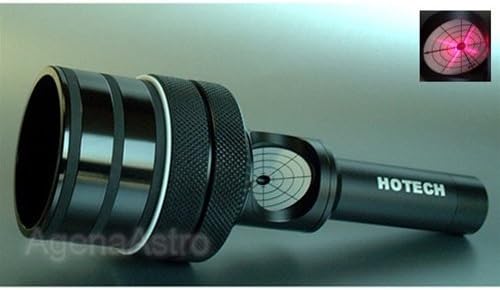
The HoTech SCA Laser Collimator separates itself from other tools with its innovative self-centering adapter technology. This addresses the slop issue common in other collimators that can destroy precision during alignment.
We may earn a commission when you buy through this link, at no additional cost to you.
The mechanism allows precise and repeatable installation in all brands of 1.25 inch and 2 inch telescope focusers. This ensures the laser collimator sits perfectly on axis without off-axis installation errors.
It includes a CR123 battery and manuals for Newtonian SCT and Star collimation. Users find that the patented adapter technology makes it a true precision instrument for demanding optical tasks.
For those who need the highest accuracy possible this tool is worth the investment. It solves the fundamental problems found in standard collimators ensuring your telescope performs at its best.
The patented SCA adapter ensures precise and repeatable installation in all brands of telescope focusers.
Unlike standard collimators the HoTech SCA eliminates the slop in the adapting mechanism between tool and focuser.
We may earn a commission when you buy through this link, at no additional cost to you.
The Ocal Pro V4.0 is an electronic collimator designed to elevate your astronomy experience with software guided calibration. It offers factory-centered pixel-level accuracy ensuring you start with optimal baseline alignment.
We may earn a commission when you buy through this link, at no additional cost to you.
It is compatible with smartphones and provides built-in calibration circles for quick optical axis adjustments. The all-in-one design makes it perfect for field adjustments and mobile astronomy setups without extra tools.
Each unit comes with software guidance to enable precise pixel-level accuracy for adjustments. This technology simplifies the complex task of alignment for users who prefer digital assistance over manual guessing.
This tool is ideal for modern astronomers seeking high-precision alignment with smart features. It is especially useful for those who use Schmidt Cassegrain telescopes alongside Newtonians for versatility.
Built-in software guides you through calibration circles to enable precise adjustments and better alignment accuracy.
Each unit is factory-centered to pixel-level precision ensuring you start with optimal accuracy for your telescope.
We may earn a commission when you buy through this link, at no additional cost to you.
Choosing the right collimator depends on your telescope type budget and desired precision level. Here are key factors to consider before making your purchase.
Check if your telescope uses a 1.25 inch or 2 inch focuser. Many collimators come with removable adapters allowing you to use one tool for both sizes. Ensure the product specifies support for your specific focuser diameter.
Always verify the adapter details in the product description to guarantee it fits your tube securely without wobbling.
Look for collimators with multiple brightness settings. A beam that is too bright may wash out in daylight while one that is too dim may be hard to see in light pollution.
Seven levels of brightness are common and provide flexibility for both indoor and outdoor alignment sessions.
Metal bodies are generally more durable than plastic ones. Anodized aluminum resists wear and tear ensuring the tool lasts through many observing seasons.
A solid metal construction also helps maintain calibration over time as it is less prone to bending or shifting.
High quality collimators retain their alignment for longer periods. Some budget models may drift out of alignment after bumps or temperature changes.
Premium units like the HoTech SCA use special adapters to ensure the laser stays centered even if the focuser has slop.
The best collimator should allow single-person calibration. Features like side windows for beam verification make it easier to adjust the primary mirror without assistance.
Clear instructions in your language are also crucial for beginners learning the alignment process.
Ensure the laser meets safety standards such as Class 3R or Class I. This protects your eyes while using the device.
Output power should typically be under 5mW to ensure safe handling during your sessions.
Check which batteries are required. Most units use standard CR2032 cells which are easy to find in stores.
Having the battery included in the package saves time and ensures you can use the tool immediately upon arrival.
Bundles may include eyepieces or phone adapters for imaging. Consider if you need these extras or prefer a dedicated collimator.
Advanced models offer electronic calibration systems for users who want smartphone guided adjustments and high precision.
Insert the collimator into the telescope focuser ensuring it fits snugly. If you have a 2 inch adapter use it for 2 inch tubes.
Turn on the laser and adjust brightness to see the beam clearly. Look for the red dot on the secondary mirror and ensure it aligns with the primary mirror's center spot.
Store the unit in a padded case when not in use to prevent bumps that could cause misalignment. Keep the lens clean and dry to maintain beam clarity.
Yes, a laser collimator is essential for Newtonian reflector telescopes to achieve sharp images. Without proper alignment the optical axis will be off resulting in blurry views. It simplifies the process compared to older tools.
It is best to collimate every time you set up your telescope for observing. Even small bumps during transport can shift the mirrors out of alignment and ruining your view.
If your focuser supports 2 inch eyepieces then yes, having the adapter allows you to use the collimator in that larger size. It adds versatility without needing to buy a second unit.
Yes, adjusting the brightness level higher helps you see the laser beam in daylight. However, Cheshire eyepieces are often used for daytime alignment as they rely on ambient light.
Most standard collimators use a CR2032 coin cell battery which is included in the package. It is easy to find replacements at any local store.
This could indicate that your primary mirror needs adjustment or the collimator itself is misaligned. Adjust the primary mirror screws until the dot centers on the reflection.
Higher priced models often have better stability and self-centering adapters that reduce error. If you want the highest precision for imaging they are worth the investment.
Check if the beam is straight and bright without flickering. If it hits the center of the secondary mirror and reflects back on itself it is working correctly.
The Astromania and SVBONY options provide excellent value for most users needing reliable alignment tools. For premium needs the HoTech SCA offers unmatched precision with its self-centering adapter.
Prioritize collimators that match your focuser size and have adjustable brightness levels. A good tool saves time and ensures your telescope delivers the sharpest views possible.
Prices and availability change frequently so always check the current details before purchasing. Verify the latest specs to ensure the model you choose meets your specific requirements.