ANCEL BA101
4.5Editor score
Multi standard support
One handed operation
4 in 1 protection
This guide compares the top lithium ion battery testers for accuracy and features to help you choose the right diagnostic tool for your vehicles.
Finding the right lithium ion battery tester ensures your vehicles stay reliable on the road. A good tester provides accurate health readings and prevents unexpected breakdowns during critical moments.
We compared ten leading battery testers based on accuracy, compatibility, ease of use, and safety features. Each model offers unique benefits for different vehicle types and testing needs.
Every pick shows key specifications, pros, cons, and ideal use cases. Note that product availability and pricing may change over time so verify details before purchasing.
4.5Editor score

4.5Editor score

4.5Editor score
The following table summarizes the key technical specifications and capabilities of each battery tester to help you make an informed comparison decision.


The ANCEL BT410 stands out as a top choice for diagnosing lithium ion and lead acid batteries with exceptional precision and versatility.
We may earn a commission when you buy through this link, at no additional cost to you.
It supports both 12V and 24V systems while providing clear health readings through state of charge and internal resistance metrics.
Users may find the lack of wireless data transmission a slight limitation for those wanting remote monitoring or automated logging.
This tester is ideal for fleet managers and vehicle owners seeking reliable diagnostics across diverse automotive and marine applications.
The device handles both traditional lead acid and modern lithium ion chemistries making it suitable for hybrid or electric vehicles.
Generated QR codes allow users to easily share detailed test data with mechanics or keep digital records for future maintenance.
We may earn a commission when you buy through this link, at no additional cost to you.
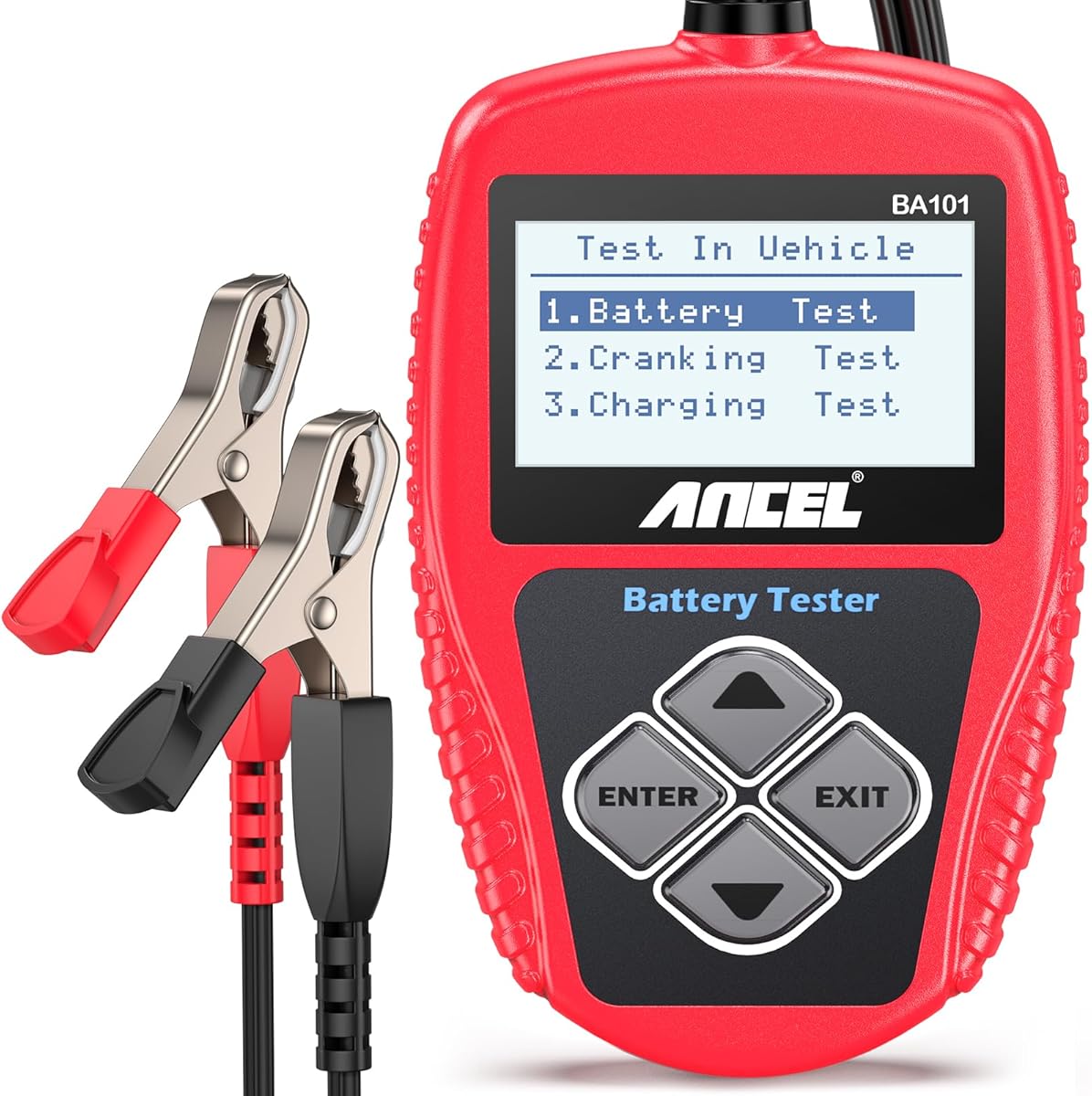
The ANCEL BA101 offers an affordable entry point for essential battery health checks without sacrificing core diagnostic accuracy or usability.
We may earn a commission when you buy through this link, at no additional cost to you.
It features a precision smart chip that delivers dependable readings for state of health and state of charge across multiple battery standards.
While it lacks lithium compatibility and 24V support it remains a solid option for standard 12V automotive maintenance tasks.
This model suits DIY enthusiasts and home mechanics who need a reliable and inexpensive tool for routine vehicle battery inspections.
Supports global standards like JIS EN DIN SAE and IEC ensuring accurate testing for batteries from various manufacturers worldwide.
Built in reverse polarity short circuit overcurrent and overvoltage protection safeguards the tester and vehicle during accidental misconnections.
We may earn a commission when you buy through this link, at no additional cost to you.
This compact module is designed specifically for testing 18650 lithium ion cells providing detailed capacity and internal resistance measurements in one unit.
We may earn a commission when you buy through this link, at no additional cost to you.
It supports four simultaneous channels allowing users to analyze multiple cells at once for efficient sorting or quality control purposes.
The lack of an integrated power supply means it requires external integration or a battery source to operate during discharge tests.
Hobbyists and technicians working with laptop batteries or power banks will find this tool invaluable for verifying cell performance and longevity.
Testing four cells simultaneously saves time compared to sequential methods especially when evaluating batches of new or used cells.
The screen shows voltage current power and capacity instantly helping users track discharge curves without external monitoring equipment.
We may earn a commission when you buy through this link, at no additional cost to you.
The ANCEL BT310 bridges the gap between cost and capability by supporting both 12V and 24V systems along with lithium ion chemistry.
We may earn a commission when you buy through this link, at no additional cost to you.
Its ability to store previous test reports enables users to track battery degradation over time without needing external software or apps.
The clear LCD screen provides five distinct health outcomes removing ambiguity about whether a battery needs replacement or recharge.
This tester is well suited for owners of commercial vehicles or recreational vehicles who need dependable diagnostics for larger battery systems.
Retrieving past battery cranking and charging reports allows for trend analysis to detect weakening batteries before complete failure occurs.
A reinforced silicone outer layer protects the unit from drops and bumps making it durable for busy garage or roadside environments.
We may earn a commission when you buy through this link, at no additional cost to you.
The TOPDON BT100 delivers rapid and precise results in a tiny form factor that fits easily into a glove box or center console.
We may earn a commission when you buy through this link, at no additional cost to you.
Its three-color LED indicators provide immediate visual feedback about battery health without requiring users to interpret complex numerical data.
Since it draws power from the battery under test it remains lightweight and eliminates the need for internal batteries or external charging.
This unit is perfect for drivers who want a simple and space saving tool to keep on hand for unexpected starting issues or inspections.
The device only powers on when properly connected reducing the risk of electrical shorts or accidental activation in a vehicle.
Separate health cranking and charging tests isolate specific electrical system faults so users can identify root causes accurately.
We may earn a commission when you buy through this link, at no additional cost to you.
The RC Cellmeter 7 is a highly portable tool ideal for checking individual cell voltages in multi cell battery packs used in drones or RC vehicles.
We may earn a commission when you buy through this link, at no additional cost to you.
It displays the total voltage as well as the highest lowest and voltage gap between cells to quickly identify imbalances that could cause failure.
Without a load testing capability it focuses on voltage checks making it a supplement rather than a full replacement for heavy duty testers.
RC hobbyists and field technicians will appreciate its minimal footprint and ability to deliver critical voltage data in under a minute.
Knowing the voltage gap between highest and lowest cells helps users balance packs before discharge to prevent damage or overheating.
Supports NiCd NiMH LiPo LiFe and Li-ion so users can test various battery types found in modern electronic and hobby applications.
We may earn a commission when you buy through this link, at no additional cost to you.
The FOXWELL BT705 is a professional grade tester designed for mechanics and serious DIYers who require detailed diagnostics for 12V and 24V systems.
We may earn a commission when you buy through this link, at no additional cost to you.
Its guided testing workflow walks users through each step with clear prompts ensuring accurate data entry and consistent results across multiple tests.
The included hard carrying case keeps the unit and accessories organized and protected making it ideal for mobile repair or fleet maintenance.
This model is recommended for professionals who need durable reliable equipment with advanced features like long cables and high visibility displays.
A 5.9 foot cable lets the user sit in the driver seat to start the engine while viewing results without needing a second person.
Step by step instructions on the color screen simplify the process reducing errors caused by incorrect battery type or rating entry.
We may earn a commission when you buy through this link, at no additional cost to you.
The BT705 Plus builds on the original BT705 with a faster processor and refined algorithms to deliver results significantly quicker under load.
We may earn a commission when you buy through this link, at no additional cost to you.
It performs three core tests battery cranking and charging in any sequence allowing flexible diagnostics tailored to specific vehicle symptoms.
The absence of lithium ion testing might limit its use for hybrid or electric vehicle applications compared to other models in this review.
Mechanics and fleet managers will value its speed and durability for high volume testing environments where efficiency and reliability are critical priorities.
Enhanced processing reduces test wait times improving throughput in busy shops or when diagnosing multiple vehicles in a day.
Users can choose the order of battery cranking and charging tests to isolate faults without restarting the entire diagnostic workflow.
We may earn a commission when you buy through this link, at no additional cost to you.
The Magnetic Tester offers a versatile solution for checking household and small lithium ion batteries like AA AAA and button cells with a unique magnetic slot.
We may earn a commission when you buy through this link, at no additional cost to you.
It supports a wide range of chemistries including NiMH Alkaline and Li-ion making it suitable for diverse electronics and remote control needs.
While not designed for automotive or 12V applications it excels at verifying the charge level of small batteries found in daily use devices.
Households and remote owners will find this tool convenient for quickly identifying weak batteries before devices stop working unexpectedly.
A magnetic slider secures the battery firmly in place allowing one-handed testing without worrying about contact slipping or battery dropping.
The internal battery recharges via USB-C providing long life without needing disposable internal batteries or frequent external power sources.
We may earn a commission when you buy through this link, at no additional cost to you.
The La Crosse 911 simplifies battery checking with a three step process that allows anyone to test standard AA AAA C D 9V and button cells.
We may earn a commission when you buy through this link, at no additional cost to you.
It features a clear digital display that indicates strength levels eliminating guesswork about whether a battery is still usable for critical devices.
Lacking detailed voltage readings it focuses on pass or fail indications which is sufficient for general household maintenance tasks.
This tool is ideal for families or office environments where quick and easy verification of common battery types is required frequently.
Select voltage range insert battery and slide tray closed for a reading minimizing effort and time during routine battery checks.
The visual strength indicator shows if a battery is full low or empty so users can replace or recharge as needed.
We may earn a commission when you buy through this link, at no additional cost to you.
Selecting the right battery tester requires evaluating compatibility accuracy and features that match your specific testing needs.
Ensure the tester supports your vehicle voltage such as 12V 24V or 6V to avoid damage or inaccurate readings. Many units only support 12V so check before buying if you have heavy duty trucks or boats.
Match voltage range to your vehicle needs to ensure safe and accurate testing.
Some testers handle only lead acid while others include lithium ion or LiFePO4. If you have a hybrid or electric vehicle verify lithium compatibility.
Choose a unit that explicitly supports your battery chemistry for precise diagnostics.
Look for high precision chips with accuracy above 99% to ensure reliable health ratings. Poor accuracy can lead to unnecessary replacements or missed failures.
Prioritize models with smart chips for consistent and trustworthy results.
Reverse polarity short circuit and overcurrent protection prevent damage to both tester and vehicle. These features are critical for DIY users.
Select testers with multiple protection layers for safer operation.
Color LCDs or backlit screens improve visibility in bright sunlight or dark garages. Clear displays reduce reading errors.
Opt for high contrast screens to ensure easy data interpretation.
Longer cables like 5.9 feet or 800mm allow testing without moving to the battery. This aids one person diagnostics.
Choose extended cables for convenience and flexibility.
Advanced models store test history or generate QR codes for sharing. This helps track battery health trends over time.
Use units with data features for long term monitoring.
A reinforced case and warranty like one year or more ensure long term value. Quality clamps also affect performance and safety.
Invest in durable units with strong warranty support for reliability.
Before testing ensure the battery terminals are clean and the vehicle is off to prevent voltage spikes. Connect the red clamp to positive and black to negative securely.
Follow the on screen prompts to enter battery rating and type. Wait for the test to complete and read the displayed health status.
Store the tester in a cool dry place and avoid dropping the clamps. Periodically clean the clamps to maintain good electrical contact.
Many modern testers support both chemistries but older models may only work with lead acid. Always check manufacturer specifications for compatibility.
State of health indicates overall battery condition and degradation while state of charge reflects current energy level. Both metrics help diagnose issues.
No most testers work on in vehicle batteries without disconnecting cables. Ensure the engine is off before starting the test.
Loose clamp connections incorrect battery rating entries or extreme temperatures can cause inconsistencies. Clean terminals and verify settings.
Advanced models include alternator tests to check charging voltage. Basic testers may only measure battery health and cranking.
They often cost more due to advanced sensors and algorithms. However they are essential for modern electric or hybrid vehicles.
The ANCEL BT410 leads with dual battery support and QR reporting making it our top pick. The BA101 offers affordability for budget conscious buyers.
Prioritize accuracy and safety features when selecting a tester to avoid damage and ensure reliable results across your fleet.
Verify current product details and pricing on Amazon as availability and offers can change over time.