
SONICAKE EQ Pedal, 10-Band Equalizer Guitar Bass Effects Pedal – Tone Group
4.4Editor score
100% Analog 10-Band Equalizer
15dB adjustable gain range per band
True Bypass Circuit for clean signal path
Discover the top Bass Equalizer Pedal options for 2026. We compare features, sound quality, and build to help you choose the perfect tone shaping tool.
Finding the right Bass Equalizer Pedal can transform your sound significantly. Whether you play rock, funk, or jazz, precise tone control is essential. A good pedal offers flexible frequency bands and durable construction to handle live performances and studio sessions alike.
We have evaluated ten leading models based on band count, boost cut range, and build quality. Each option serves different needs, from budget-friendly units to professional grade gear. Our analysis focuses on real-world usability and tonal clarity for bass guitarists.
Every pick highlights key strengths and potential limitations to guide your decision. Prices may vary over time, so check current listings before buying. Use this guide to find the equalizer that best fits your specific musical style and budget requirements.
4.4Editor score

4.6Editor score

4.6Editor score
This side-by-side comparison highlights key specifications across all ten selected models. Look at band counts, frequency ranges, and build materials to understand how each pedal stands out in the market today for bass tone shaping.




The BOSS GEB-7 is a classic choice for bassists seeking a dedicated seven-band graphic equalizer. It receives a strong rating due to its full range response, making it compatible with modern five and six-string instruments. Its versatility shines in electric-acoustic applications where precise tonal shaping is required for natural sound reproduction.
We may earn a commission when you buy through this link, at no additional cost to you.
This pedal allows you to sculpt your sound with precision using its seven frequency bands. The level control knob is particularly useful, functioning as either a boost or a cut pedal depending on your needs. This dual functionality means you can push your signal for solos or tame it for rhythm parts without changing pedals.
While it performs excellently, keep in mind that some frequency ranges are optimized for guitar which might slightly affect deep bass tones. Additionally, the analog level knob may not offer the precise digital control some modern players expect. However, these are minor trade-offs for such a rugged and versatile pedal.
If you need a reliable workhorse that handles various bass types and acoustic setups, this is the top recommendation. It is ideal for gigging musicians who value durability and straightforward tone shaping. The BOSS five-year warranty further ensures peace of mind for long-term use.
Ensures accurate tonal reproduction for five and six-string basses without signal loss.
The level control knob doubles as a volume booster or attenuator for dynamic control.
We may earn a commission when you buy through this link, at no additional cost to you.
The SONICAKE EQ Pedal offers an impressive eleven bands of control at a budget-friendly price point. With a 4.4 rating, it stands out as a highly accessible option for players who need detailed tone shaping without breaking the bank. The analog design ensures a warm, natural sound that complements bass tones well.
We may earn a commission when you buy through this link, at no additional cost to you.
Its ten independent frequency bands allow for precise adjustments across the sonic spectrum. The adjustable gain range of plus or minus fifteen dB gives you significant headroom to boost lows or cut harsh highs. True Bypass circuit keeps the signal path clean when the pedal is off, preserving your core tone.
On the downside, you will need to purchase a separate 9V power supply which adds to the initial cost. Some users note that the sliders can feel a bit loose compared to premium models. However, for the price, the functionality and sound quality remain hard to beat.
This pedal is perfect for beginners or gigging bassists who need multiple bands but have limited budget. It works great with guitar and bass alike. If you need a versatile EQ that fits easily on your board, this is a smart buy.
Provides granular control over your sound with ten adjustable frequency bands.
Ensures your original tone remains intact when the pedal is disengaged.
We may earn a commission when you buy through this link, at no additional cost to you.
The Donner EQ Seeker is built to withstand the rigors of regular use with its solid aluminium-alloy design. Rated 4.4 stars, it offers a fully functional ten-band equalizer that works well for both guitar and bass. Its compact size makes it a great addition to crowded pedalboards.
We may earn a commission when you buy through this link, at no additional cost to you.
This unit focuses on delivering a transparent tone by using a True Bypass design. This means your signal remains fully intact without popping or buzzing when the effect is off. The sliders provide a 15 dB boost and cut range, giving you plenty of room to shape your sound.
One limitation is the lack of an included power adapter, so you must budget for that separately. The sliders also do not have LED indicators, which might make them hard to see on dark stages. Despite this, the build quality and sound transparency are strong points.
If you need a sturdy, no-frills EQ pedal that delivers clean sound, this is a reliable choice. It suits players who prioritize construction quality and tone purity. For home or live use, it offers great value and performance.
High-quality aluminum alloy casing ensures longevity and road readiness.
True Bypass switching preserves your instrument's original sound.
We may earn a commission when you buy through this link, at no additional cost to you.
The Rowin Bass Equalize Pedal stands out for its incredibly small footprint and simple design. Rated 4.2 stars, it features a five-band graphic EQ that covers essential frequencies for bass. This makes it an ideal choice for players who want quick adjustments without cluttering their board.
We may earn a commission when you buy through this link, at no additional cost to you.
It offers a wide 18dB adjustable range across bands like 62.5Hz to 4kHz. This flexibility allows you to tighten the low-end or boost mids effectively. The sturdy aluminum construction ensures it can handle frequent use, and the True Bypass feature keeps your tone clear when off.
The main trade-off is the limited five-band range which might not offer enough detail for complex tone shaping. Also, there is no separate master output level knob beyond the internal gain settings. However, for basic EQ needs, it remains a solid and compact option.
If you need a tiny pedal for a specific frequency tweak on the fly, this is perfect. It is great for pedalboard spaces that are tight or for minimalists. It provides good value for its size and utility.
One of the smallest EQ pedals available for saving board space.
18dB boost and cut allows significant tone changes per band.
We may earn a commission when you buy through this link, at no additional cost to you.
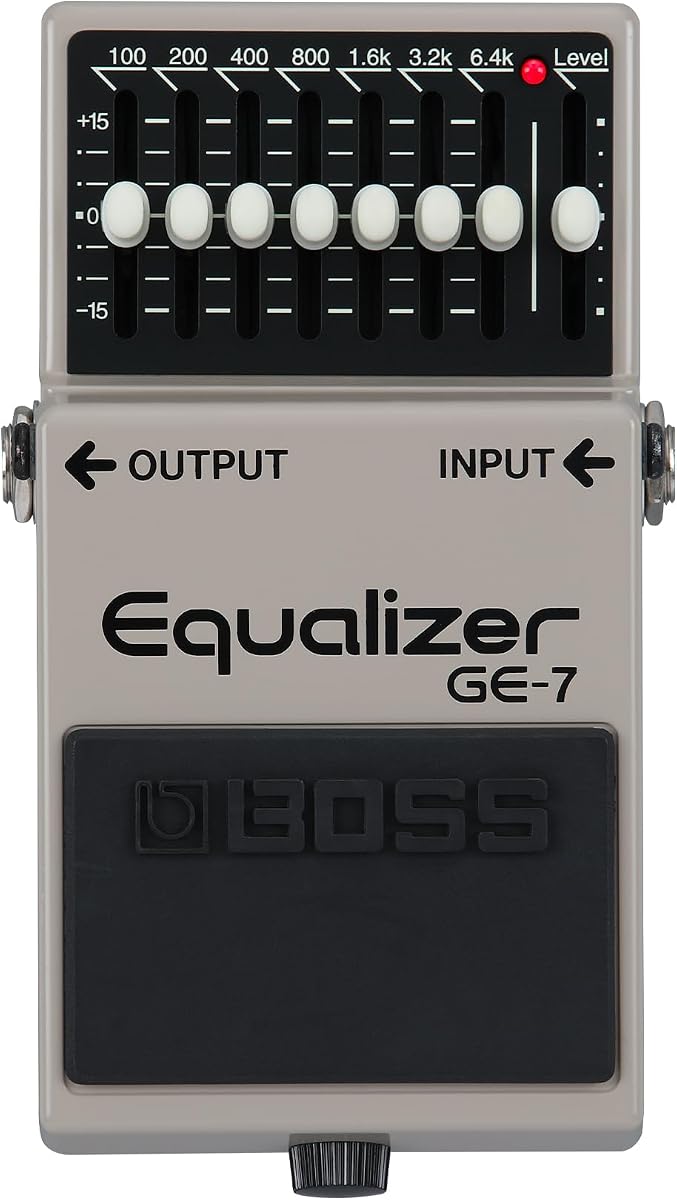
The BOSS GE-7 is a high-rated compact graphic equalizer designed specifically for guitarists. With a 4.8 rating, it is known for its precision and reliability. While not exclusively for bass, its frequency ranges can still be adapted for specific guitar-like bass tones or mid-range cuts.
We may earn a commission when you buy through this link, at no additional cost to you.
This pedal offers seven bands with a maximum 15dB boost or cut per band, allowing deep tonal sculpting. The included level slider lets you balance overall volume, making it useful as a boost pedal too. The guitar-optimized frequencies ensure clarity in the mix for lead instruments.
Bassists might find some frequency bands less optimal for low-end shaping compared to dedicated bass units. The price point is also higher than basic alternatives. However, if you play a bass that cuts through like a guitar, this offers excellent control and quality.
If you need a versatile EQ for mixed bands or solo guitar-like bass playing, this is a top pick. It ensures your instrument stands out with clarity. The five-year warranty adds significant value for long-term users.
Frequencies like 100 Hz and 6.4 kHz tailored for guitar clarity.
Adjust overall volume to balance the signal or add a boost.
We may earn a commission when you buy through this link, at no additional cost to you.
The STRICH 10-Band EQ Pedal combines high-quality aluminum construction with a compact footprint. Rated 4.2 stars, it is designed for musicians who value durability and portability. The ten independent frequency bands plus a master band offer versatile sound shaping for various instruments.
We may earn a commission when you buy through this link, at no additional cost to you.
Each band allows for up to 12dB of gain or attenuation, providing a wide adjustment range. The sliders glide smoothly, allowing for precise tweaks during performance. Its True Bypass design ensures signal integrity without unwanted noise, keeping your tone clean and professional.
It requires a separate 9V power adapter, which is not included in the package. The gain range is slightly less than the 15dB or 18dB found on some rivals. However, for a portable unit that maintains solid build quality, these are acceptable trade-offs.
If you need a durable pedal that fits easily in a travel bag and delivers clean tone, this is ideal. It suits touring musicians who need reliability. The aluminum shell ensures it can withstand accidental drops on the road.
High-quality aluminum ensures long service life even with drops.
Ten independent bands allow nuanced tonal adjustments.
We may earn a commission when you buy through this link, at no additional cost to you.
This bass EQ Pedal targets electric bass players with dedicated frequency centers for precise shaping. Although it lacks a rating, it highlights a robust 18dB gain control range. This wide range allows for aggressive tone shaping suitable for rock, metal, and funk genres.
We may earn a commission when you buy through this link, at no additional cost to you.
The pedal features five essential frequency bands ranging from 62.5Hz to 4kHz. This covers the fundamental lows and bright highs required for slap bass or mix presence. Its ultra-compact design ensures it does not consume valuable real estate on your pedalboard.
Without current ratings, it is harder to gauge long-term reliability compared to established brands. Additionally, you must buy a power adapter separately. But if you need a rugged metal pedal for specific genre needs at a lower cost, it presents a viable option.
If you play in a band requiring distinct tonal shifts for different songs, this pedal offers the necessary control. It is built to handle rough live performances. Consider checking community reviews for further user feedback.
Centers like 125Hz and 1kHz ensure precise bass tone adjustments.
Perfect for rock, metal, and jazz style tonal shifts.
We may earn a commission when you buy through this link, at no additional cost to you.
The Bass EQ Seeker provides a simple five-band EQ with a useful master level slider. Rated 3.9 stars, it serves as a budget-friendly entry point for players needing basic tone control. The True Bypass design ensures your signal remains intact without noise when off.
We may earn a commission when you buy through this link, at no additional cost to you.
It offers a full metal shell which contributes to durability during regular use. The master level slider allows you to adjust the output volume easily without extra pedals. Clear indicator lights help you see the pedal state even in dark environments.
However, the lower rating suggests some potential issues with build quality or usability. You will also need to purchase a power adapter separately. If you want a basic EQ with a level slider and clear visual feedback, this is a potential choice.
This pedal fits well for practice sessions or casual gigs where cost is a factor. It offers essential control without complexity. Just be sure to factor in the power supply cost when buying.
Adjust overall output volume directly on the pedal for easy control.
LED lights show the working state for better visibility.
We may earn a commission when you buy through this link, at no additional cost to you.
The MXR Ten Band EQ is a premium pedal known for its professional features and robust design. Rated 4.6 stars, it is highly regarded for its ability to handle complex signal routing. Its 10-band EQ provides exceptional precision for detailed sound shaping.
We may earn a commission when you buy through this link, at no additional cost to you.
A standout feature is its 18-volt operation which delivers increased headroom for cleaner signal processing. The two outputs allow you to run separate signal chains, making it ideal for complex pedal setups. High visibility LEDs ensure you can see the status even in bright outdoor stages.
The main drawback is the premium price and larger physical size compared to basic units. It is an investment that pays off if you need advanced control and reliability. This makes it suitable for studio and professional live applications.
If you require a high-end EQ for a versatile pedalboard, this is the top pick. It provides flexibility and headroom that budget pedals cannot match. For serious musicians, it justifies the higher cost.
Provides increased headroom for cleaner sound with less distortion.
Run two separate signal chains for complex effects routing.
We may earn a commission when you buy through this link, at no additional cost to you.
The EROK EQ Pedal offers a versatile two-in-one solution with EQ and boost in one unit. Rated 4.3 stars, it allows precise tone shaping across 31.25Hz to 16kHz. The independent boost function helps your instrument cut through dense band mixes effectively.
We may earn a commission when you buy through this link, at no additional cost to you.
It features dual footswitches allowing standalone EQ, standalone boost, or both combined. This flexibility supports different modes for live solos or rhythm passages. The sturdy aluminum alloy housing ensures durability, and LED indicators help with visibility on dark stages.
However, the dual functionality adds complexity that might not be needed for simple tone shaping. It also requires a separate power adapter which adds to the cost. Despite this, the multi-function approach offers significant utility for active performers.
If you need a boost pedal and EQ in one space-saving box, this is an excellent choice. It suits players who need dynamic control for solos. The reliable low-noise circuit ensures clean operation during transmission.
Switch between EQ, Boost, or both for flexible performance modes.
Advanced circuit design eliminates unwanted hum and noise.
We may earn a commission when you buy through this link, at no additional cost to you.
Choosing the right equalizer depends on your specific tone needs and budget. We break down key factors to consider before making your purchase.
The number of bands determines how precisely you can shape your tone. Five-band units offer basic control for low and mid frequencies, while ten-band units allow detailed adjustments across the spectrum. If you need specific frequency targeting for cutting through a mix, more bands are generally better.
Choose a higher band count for professional recording and precise live mixing. Basic players can often rely on fewer bands.
A wider boost and cut range gives you more dynamic control over your sound. Models offering 18dB allow for aggressive tone shaping, while 12dB or 15dB covers most standard needs. Ensure the range is sufficient to tighten lows or boost highs as required.
Look for pedals that offer at least 15dB if you need strong tone modifications without overdriving your signal.
Pedals are subject to physical stress, so sturdy construction is vital. Aluminum alloy casings provide excellent shock resistance and durability for touring. Avoid plastic housing if you plan to use the pedal frequently on stage.
Prioritize full metal shells and solid internal components for longevity and reliability over time.
True Bypass ensures the signal remains clean when the pedal is off, preventing tone loss in long signal chains. Buffered pedals can help with signal integrity in very long cable runs. Decide based on your pedalboard length and signal needs.
For most bass setups, True Bypass is preferred to maintain natural tone purity.
Ensure the pedal covers the frequency range relevant to your instrument. Bass guitars benefit from lower frequency control like 62.5Hz, while guitars need higher frequency bands. Some pedals are optimized for specific instruments.
Check if the frequency centers match the tonal needs of your specific bass setup.
Most pedals require a 9V power adapter which is often not included. Verify the power requirements before buying to avoid unexpected costs. Some models are battery-powered which adds convenience.
Always check if an adapter is included to save on extra expenses.
Compact pedals save valuable space on crowded pedalboards. However, larger units may have more knobs or better build quality. Measure your board space to find a pedal that fits without crowding.
Prioritize compact designs if your board is already full with other effects.
Reputable brands often offer warranties that cover defects. Look for brands like BOSS that provide five-year warranties for peace of mind. This protection ensures you are covered for accidental issues.
Choose brands with strong support networks to ensure long-term satisfaction and reliability.
Connect your bass to the input jack of the pedal and route the output to your amplifier. Ensure the pedal is powered on and the bypass is engaged if you want to test the signal path without EQ effects applied.
Start by setting all sliders to the neutral position and listen to your natural tone. Gradually adjust specific bands to cut unwanted frequencies or boost desired ones for your mix. Avoid extreme settings that might introduce noise or distortion.
Store your pedal in a dry environment and avoid leaving it in extreme temperatures. Clean the metal casing occasionally with a dry cloth to prevent dust buildup. Proper care extends the life and performance of the unit significantly.
A bass equalizer pedal allows you to sculpt your instrument's sound by adjusting specific frequency bands. It helps you cut through a mix, remove muddiness, or add clarity to your tone. This tool is essential for both studio recording and live performances.
For basic tone shaping, a 5-band EQ is often sufficient to manage lows and highs. However, if you need precise control over mid-frequencies for a specific mix, a 10-band unit offers greater flexibility and detail.
Yes, you can use a guitar EQ on bass, but the frequency ranges may not match optimal bass frequencies. Dedicated bass EQs cover lower frequencies like 62.5Hz which are crucial for deep bass tones.
True Bypass means the signal path bypasses the internal circuitry when the pedal is off. This preserves your original tone and prevents unwanted noise or signal loss during transmission.
Most pedals require a 9V center negative DC power supply which is often not included. Check the product specs to ensure you have the correct adapter before purchasing.
Yes, many EQ pedals have a level slider that functions as a boost or cut for your overall output. This allows you to push your signal for solos without changing pedals.
Many models feature full aluminum alloy shells designed to withstand touring rigors. Look for sturdy construction and metal casings to ensure the pedal can handle accidental drops and heavy use.
A 5-band pedal has fewer components and a simpler circuit design compared to 10-band units. This reduction in parts and complexity lowers the manufacturing cost and price.
We have reviewed ten excellent options ranging from budget-friendly to premium professional choices. The BOSS GEB-7 leads as the top overall pick with its reliable performance and full range response. Budget-conscious players will find the SONICAKE EQ offers incredible value.
When making your decision, prioritize band count and frequency range based on your specific musical needs. Build quality and power requirements are also critical factors to consider for long-term use. Choose the model that fits your pedalboard and tone goals best.
Remember that prices may fluctuate over time so always check current listings before buying. Use this guide to find the perfect tool for refining your bass sound today. With the right EQ pedal, you can achieve the tone you dream of.