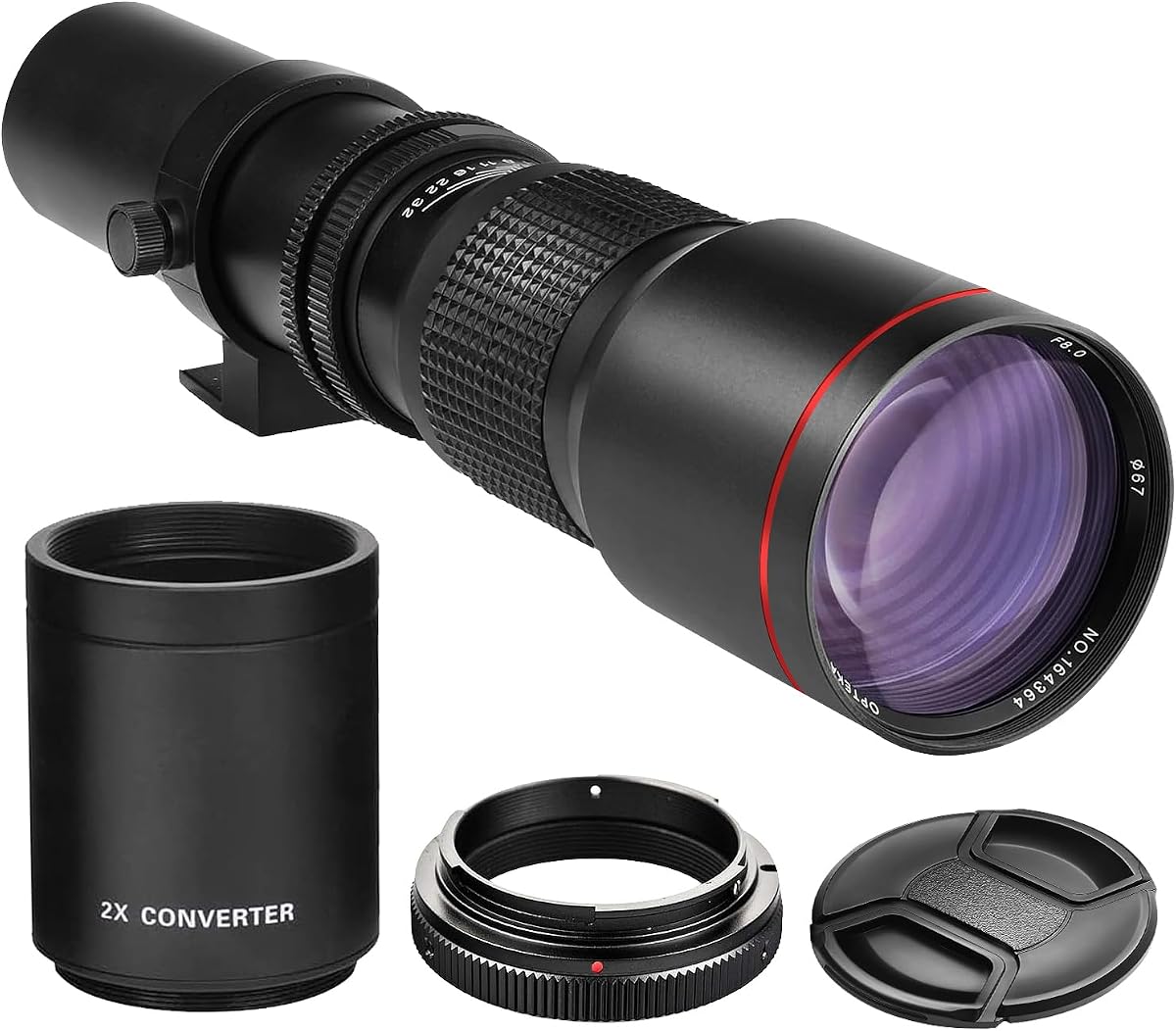
High-Power 500mm/1000mm f/8 Manual Telephoto Lens
4.0Editor score
Manual focus control
1000mm max reach with converter
Lightweight portable design
Compare top rated Camera Lens for Long Distance Wildlife for wildlife photography, featuring detailed reviews and specs to help you choose the ideal telephoto
Capturing wildlife from a safe distance requires specialized optics that can magnify subjects without compromising image quality. A good lens balances reach, aperture, and stabilization to ensure sharp photos even in challenging outdoor conditions.
This guide evaluates ten leading telephoto lenses based on optical performance, build quality, autofocus speed, and handling. We analyzed specifications and user feedback to identify options suitable for various camera systems and skill levels.
Each selection highlights key strengths and potential trade-offs to help you find the right tool for your needs. Note that availability and pricing may fluctuate over time, so verify current details before purchasing your next lens.
4.0Editor score
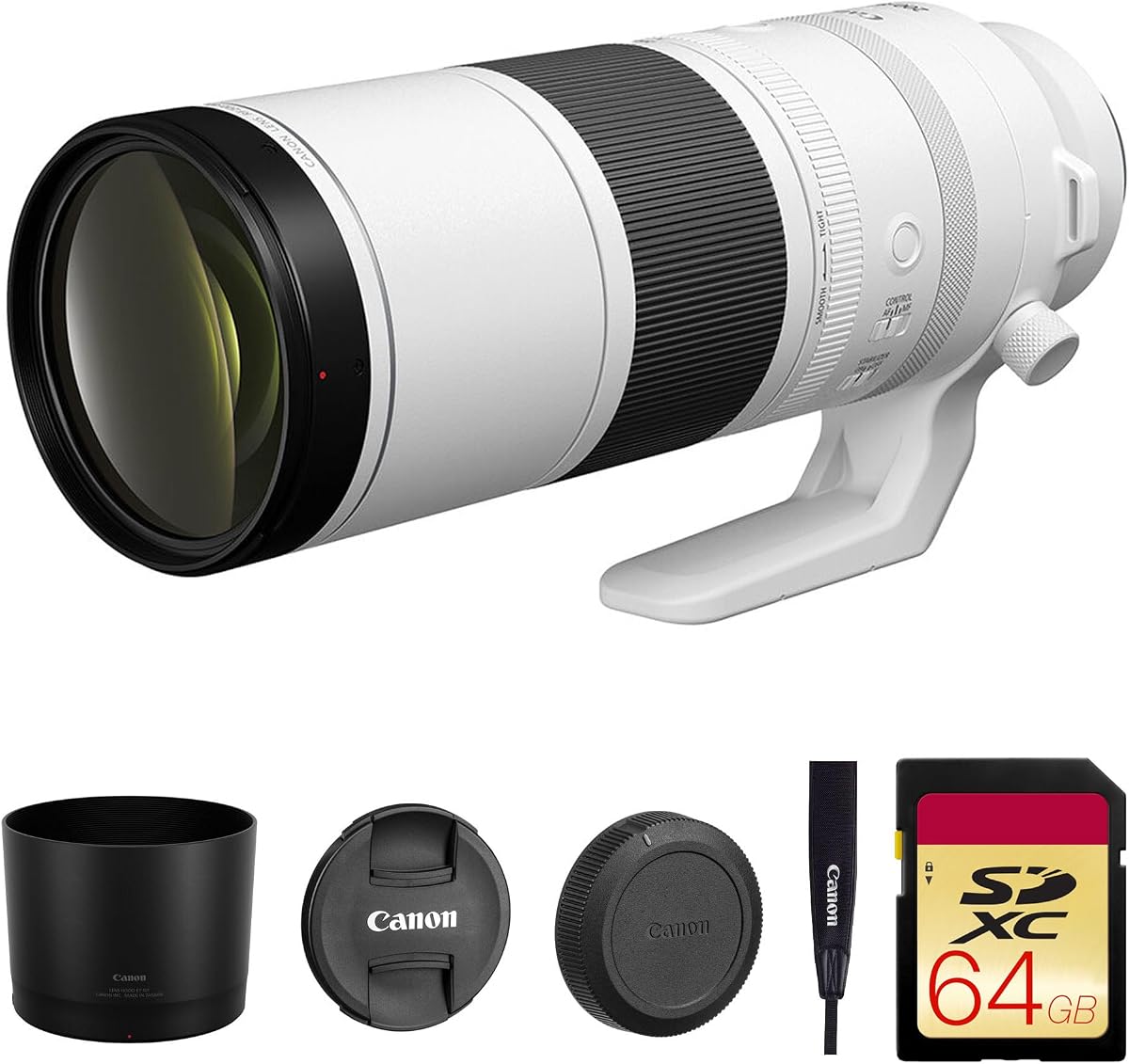
4.7Editor score

4.0Editor score
The following table provides a side-by-side overview of all ten lenses evaluated in this guide, highlighting key specifications and features to assist your decision-making process.



The Canon RF 200-800mm lens stands out as a top choice for wildlife photographers seeking extreme reach without excessive weight. Rated highly by users, it offers a versatile zoom range that covers everything from distant birds to large mammals effectively.
We may earn a commission when you buy through this link, at no additional cost to you.
Its built-in image stabilization is a standout feature, allowing for sharp handheld shots even at 800mm. The fast USM autofocus system ensures you can track moving subjects with confidence, while the compact design makes it ideal for travel and outdoor adventures.
While the variable aperture limits low-light performance compared to prime lenses, the optical quality remains excellent throughout the zoom range. This trade-off is acceptable for most wildlife scenarios where mobility and reach take priority over constant maximum aperture.
Photographers using Canon EOS R series cameras should consider this lens for its balance of performance and portability. It represents a significant upgrade for enthusiasts looking to capture distant subjects with clarity and ease.
The 800mm maximum focal length provides unparalleled access to shy wildlife without disturbing natural behaviors.
Designed specifically for the RF mount, this lens leverages advanced optical designs for high image quality.
We may earn a commission when you buy through this link, at no additional cost to you.
This lens brings cutting-edge telephoto technology to mirrorless users, offering an 800mm reach in a manageable package. It is engineered to deliver professional results while remaining comfortable enough for prolonged handheld use in the field.
We may earn a commission when you buy through this link, at no additional cost to you.
The ability to pair with RF extenders extends its versatility further, allowing photographers to push beyond 800mm when needed. The optical design ensures clarity across the zoom range, minimizing aberrations that often plague super-telephoto lenses.
Shooting at the telephoto end requires steady hands or tripod support despite the lightweight build. However, for photographers prioritizing mobility during long treks, this lens offers a compelling balance of reach and convenience.
Ideal for wildlife and sports photographers using Canon EOS R bodies, it combines modern autofocus performance with robust optical construction. It is a strong contender for those seeking the latest in telephoto innovation.
Autofocus speed and accuracy are optimized for moving subjects, ensuring consistent focus lock.
Extenders allow for greater magnification while maintaining compatibility across the zoom range.
We may earn a commission when you buy through this link, at no additional cost to you.
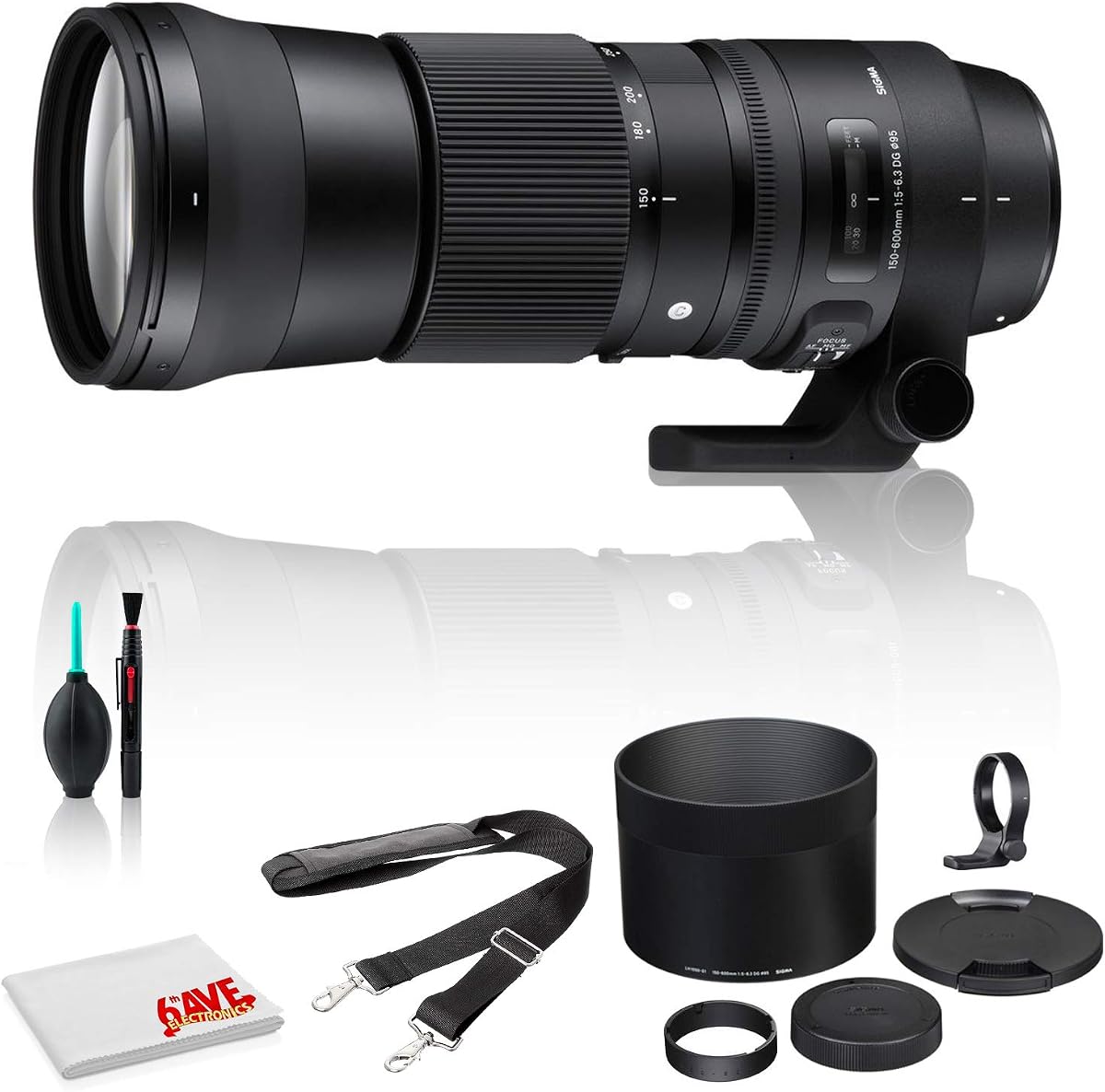
For DSLR shooters on a budget, this Sigma lens delivers impressive reach and optical quality. It serves as a reliable workhorse for capturing wildlife without requiring a complete camera system upgrade.
We may earn a commission when you buy through this link, at no additional cost to you.
The inclusion of an optical stabilizer is crucial for maintaining sharpness at long focal lengths. Its hyper sonic motor provides responsive autofocus, which is adequate for most birding and animal photography needs.
While it lacks the compactness of newer mirrorless lenses, it remains a robust choice for tripod-based photography. The bundle includes essential accessories, making it a complete package for new enthusiasts.
Wildlife photographers using Canon EOS DSLRs will find this lens offers significant value. It balances performance and cost effectively, making high-end telephoto photography more accessible.
One FLD and three SLD elements minimize aberrations for clear, detailed images.
The included cleaning kit ensures your lens stays protected and performs well over time.
We may earn a commission when you buy through this link, at no additional cost to you.
This manual lens offers an accessible way to try long-distance photography without a major investment. It is best suited for static subjects or photographers willing to learn manual focusing techniques for creative control.
We may earn a commission when you buy through this link, at no additional cost to you.
The 2X teleconverter doubles the effective focal length, providing a groundbreaking 1000mm reach. Multi-coated optical glass ensures reasonable clarity, though performance depends heavily on user technique and lighting.
While autofocus is absent, the manual precision allows for exact focus placement, which can be advantageous for macro wildlife shots. It is a durable companion for rugged outdoor use.
Beginners or budget-conscious hobbyists will appreciate the low barrier to entry. It provides a practical introduction to telephoto limitations and strengths before upgrading to more advanced gear.
Manual aperture and focus settings let you tailor exposure and sharpness manually.
Robust construction withstands the rigors of travel and outdoor shooting environments.
We may earn a commission when you buy through this link, at no additional cost to you.
As a flagship EF lens, this model delivers professional-grade performance for wildlife and sports photographers. Its optical construction ensures sharp, high-contrast images that meet the demands of commercial or editorial work.
We may earn a commission when you buy through this link, at no additional cost to you.
The ring-type USM motor provides fast and quiet autofocus, essential for tracking elusive animals. The included filter kit adds value by offering protection and creative options in various lighting environments.
While heavier than mirrorless equivalents, the rotating tripod collar enhances balance and stability for long sessions. The option to add teleconverters extends its reach to 640mm equivalent on APS-C bodies.
DSLR users seeking top-tier image quality should consider this lens. It remains a reliable tool for serious photographers who require consistent results in dynamic shooting scenarios.
One fluorite and one Super UD element reduce aberrations for superior clarity.
Panning stabilization mode supports continuous tracking of moving subjects effectively.
We may earn a commission when you buy through this link, at no additional cost to you.
This lens offers an extraordinary 1600mm reach, ideal for capturing subjects that are incredibly far away. While it demands manual control, the flexibility of a zoom range from 420mm to 1600mm provides unique possibilities.
We may earn a commission when you buy through this link, at no additional cost to you.
The 2X teleconverter allows photographers to push the focal length to a whooping 1600mm. This capability is unmatched by standard autofocus lenses, making it a niche choice for distant wildlife or celestial wonders.
Handling such a long lens requires a stable setup, preferably a sturdy tripod. However, for those seeking maximum magnification without investing in professional super-telephoto primes, this manual option is compelling.
It is best suited for patient photographers willing to work without autofocus. The results can be striking when conditions are favorable and focus is precise.
The 1600mm capability brings distant subjects closer than ever thought possible.
Start at 420mm and extend further depending on the shooting scenario and converter.
We may earn a commission when you buy through this link, at no additional cost to you.
Designed for photographers prioritizing portability, this lens offers a 100-400mm range in a tiny package. It leverages modern RF mount advantages to deliver high image quality without bulk.
We may earn a commission when you buy through this link, at no additional cost to you.
Optical stabilization provides up to 5.5 stops of correction, making handheld shooting viable even at 400mm. The Nano USM autofocus system ensures fast, smooth operation suitable for both stills and video.
While the 400mm reach is less than super-telephoto options, it covers most general wildlife and travel photography needs. It is an excellent second lens for those carrying multiple bodies.
Canon EOS R users will find this lens complements their system perfectly. It offers a practical balance of performance and size for adventurers who value mobility.
Up to 5.5 stops of shake correction allows for sharp handheld photos.
Nano USM technology ensures smooth and quiet focus transitions.
We may earn a commission when you buy through this link, at no additional cost to you.
This classic lens provides a straightforward introduction to telephoto photography. Its lightweight build makes it easy to carry, while the 75-300mm range covers essential focal lengths for casual wildlife shooting.
We may earn a commission when you buy through this link, at no additional cost to you.
The smooth zooming mechanism allows for quick framing adjustments. While it lacks image stabilization, using fast shutter speeds or a tripod can mitigate shake at longer focal lengths.
For budget-conscious photographers, it offers decent quality for the price. It is best used in good lighting conditions where the aperture and optics perform optimally.
Ideal for hobbyists who want to experiment with zoom without breaking the bank. It serves as a solid stepping stone toward more advanced telephoto gear.
Improved mechanism makes zooming smoother for precise framing.
Weighing only 16.8 ounces, it is easy to carry during long outings.
We may earn a commission when you buy through this link, at no additional cost to you.
For Nikon shooters, this super-telephoto zoom offers exceptional reach at a reasonable price. It is a favorite for birding and wildlife photography due to its balance of length and optical quality.
We may earn a commission when you buy through this link, at no additional cost to you.
The Vibration Reduction system provides up to 4.5 stops of stabilization, aiding handheld performance. The Silent Wave Motor ensures rapid and accurate autofocus, critical for tracking moving animals.
The bundle includes a filter kit and cleaning tools, adding value to the purchase. Its electromagnetic aperture mechanism ensures stability during continuous shooting.
Nikon users seeking a versatile lens for distant subjects should consider this option. It is a robust choice that delivers professional results in various field conditions.
F/5.6 remains consistent across the zoom range for predictable exposure.
Vibration Reduction minimizes camera shake for sharper handheld images.
We may earn a commission when you buy through this link, at no additional cost to you.
Certified renewed lenses offer a practical way to acquire quality optics at a lower cost. This model provides the same optical performance as new units, making it ideal for those on a tight budget.
We may earn a commission when you buy through this link, at no additional cost to you.
It retains the smooth zoom mechanism and reliable autofocus of the original. The 75-300mm range is versatile for everyday use, and the lightweight body makes it easy to transport.
While not brand new, renewed products are inspected to ensure functionality. This provides peace of mind for buyers who want savings without compromising on essential features.
For photographers seeking entry-level telephoto reach, this renewed lens is a smart choice. It allows you to explore wildlife photography without a significant upfront investment.
Renewed items provide savings without sacrificing essential optical quality.
Works seamlessly with a wide range of Canon SLR cameras.
We may earn a commission when you buy through this link, at no additional cost to you.
Selecting the right telephoto lens involves considering several key factors that impact performance and usability in the field.
Focal length determines how close distant subjects appear. For wildlife, lenses starting at 200mm or 300mm are recommended, with 600mm or 800mm being ideal for small birds. Ensure the lens provides enough reach without requiring excessive cropping later.
Aperture controls light intake and depth of field. Larger maximum apertures like f/4 allow better low-light performance but are heavier. Variable aperture lenses like f/6.3-9 are lighter but require higher ISO settings in shade.
Optical stabilization is critical for handheld telephoto shooting. Look for lenses offering at least 4 stops of correction to counteract camera shake. Some modern lenses offer enhanced stabilization when paired with IBIS cameras.
Fast and accurate autofocus is essential for moving animals. Motor types like USM or SWM provide quick focus acquisition. Ensure compatibility with your camera's AF points and tracking systems for best results.
Outdoor use exposes lenses to dust and moisture. Professional series lenses often feature weather sealing and robust construction. Lightweight designs are preferred for hiking, while tripod collars improve stability for heavy optics.
Ensure the lens matches your camera's mount system. DSLR EF mounts differ from RF mirrorless or Nikon F mounts. Some lenses are designed for specific brands, so verify system compatibility before purchasing.
Telephoto lenses vary widely in price. Set a budget and weigh features like stabilization and aperture against cost. Renewed or older models can offer good value for beginners starting their collection.
Check if the lens accepts extenders to boost reach. A good teleconverter can double focal length without changing lenses. Also consider filter sizes and hood compatibility for protection and lighting control.
Clean your lens regularly with a soft brush and microfiber cloth. Store it in a dry place to prevent condensation and keep the optics safe from scratches and dust.
For bird photography, a focal length of at least 400mm is recommended. Lenses offering 600mm to 800mm provide superior reach for small birds. Ensure your lens has fast autofocus and good stabilization for crisp results.
While lighter lenses can be handheld, a tripod or monopod is highly recommended for focal lengths over 400mm. It ensures stability and sharpness, especially in low light or when using slow shutter speeds.
Teleconverters can extend reach by 1.4x or 2x without buying a new lens. They are cost-effective but may reduce image quality and speed. Choose ones designed for your specific lens to minimize impact.
Use a rocket blower to remove dust before wiping. Apply lens fluid to a microfiber cloth, not directly to the glass. Avoid harsh chemicals and store the lens in a protective case when not in use.
Mirrorless cameras offer faster AF and IBIS which are advantages for wildlife. They are lighter and support modern RF lenses better. However, DSLRs with EF lenses still provide excellent performance and value.
Entry-level manual lenses can be under 200 dollars, while professional options exceed 2000 dollars. Decide based on your experience level. Beginners might start with affordable zooms before upgrading to premium optics.
Yes, with the appropriate adapter, manual lenses can work on mirrorless systems. You lose autofocus but gain precise control. Ensure the adapter maintains electronic communication for aperture control.
Before finalizing your purchase, verify availability and current pricing. Wildlife photography is rewarding, and the right lens enhances the experience by bringing distant subjects into clear focus.