
Intraoral Camera USB Dental Camera
4.0Editor score
Affordable price point
Dual capture buttons
Plug and play setup
Modern dental practices rely heavily on accurate diagnostics and clear patient communication. A high quality dental camera serves as an essential tool for capturing detailed intraoral images that help dentists identify issues early and explain treatment plans effectively to patients.
We evaluated ten leading dental camera models to determine which ones offer the best value and performance for professionals. Our analysis focused on image resolution, software integration capabilities, ergonomic design, and ease of use to ensure you find a reliable device for your clinic.
Each selection below highlights specific strengths ranging from budget friendly options to premium wireless systems. Please note that product availability and pricing can change frequently so we recommend verifying current details before making your final purchase decision for your practice.
4.0Editor score

4.5Editor score

4.0Editor score
As an Amazon Associate we earn from qualifying purchases.
The following table provides a side by side overview of the key specifications and features for each dental camera model reviewed in this guide to help you compare options quickly.


The DY-50 Intraoral Camera stands out as a top choice for professionals seeking reliable imaging without excessive cost. It offers crystal clear pictures that integrate seamlessly with a vast array of North American imaging software solutions. Its ergonomic design ensures comfortable handling during long procedures.
We may earn a commission when you buy through this link, at no additional cost to you.
This camera supports over fifty different software platforms including Dexis and Eaglesoft which is a significant advantage for clinics with existing digital workflows. The included driver ensures the capture button functions directly within these applications without needing extra hardware. The lens features an anti-fog coating to maintain clarity in moist oral environments.
While the camera performs exceptionally well its compatibility is limited to the listed software options. If your practice uses a niche system outside this list you may need to rely on the camera's own software instead. The wired USB connection is standard but lacks the freedom of wireless setups found in newer models.
For most dental offices needing a dependable high quality camera the DY-50 offers the best balance of features and integration. It is highly recommended for practitioners who want clear images and straightforward workflow integration without complex setup processes or ongoing maintenance fees.
The extensive list of supported software ensures this camera fits into most existing clinic workflows without requiring costly upgrades to your digital management system.
Its lightweight and ergonomic build reduces hand fatigue during multiple patient exams throughout the day making it practical for high volume practices.
We may earn a commission when you buy through this link, at no additional cost to you.
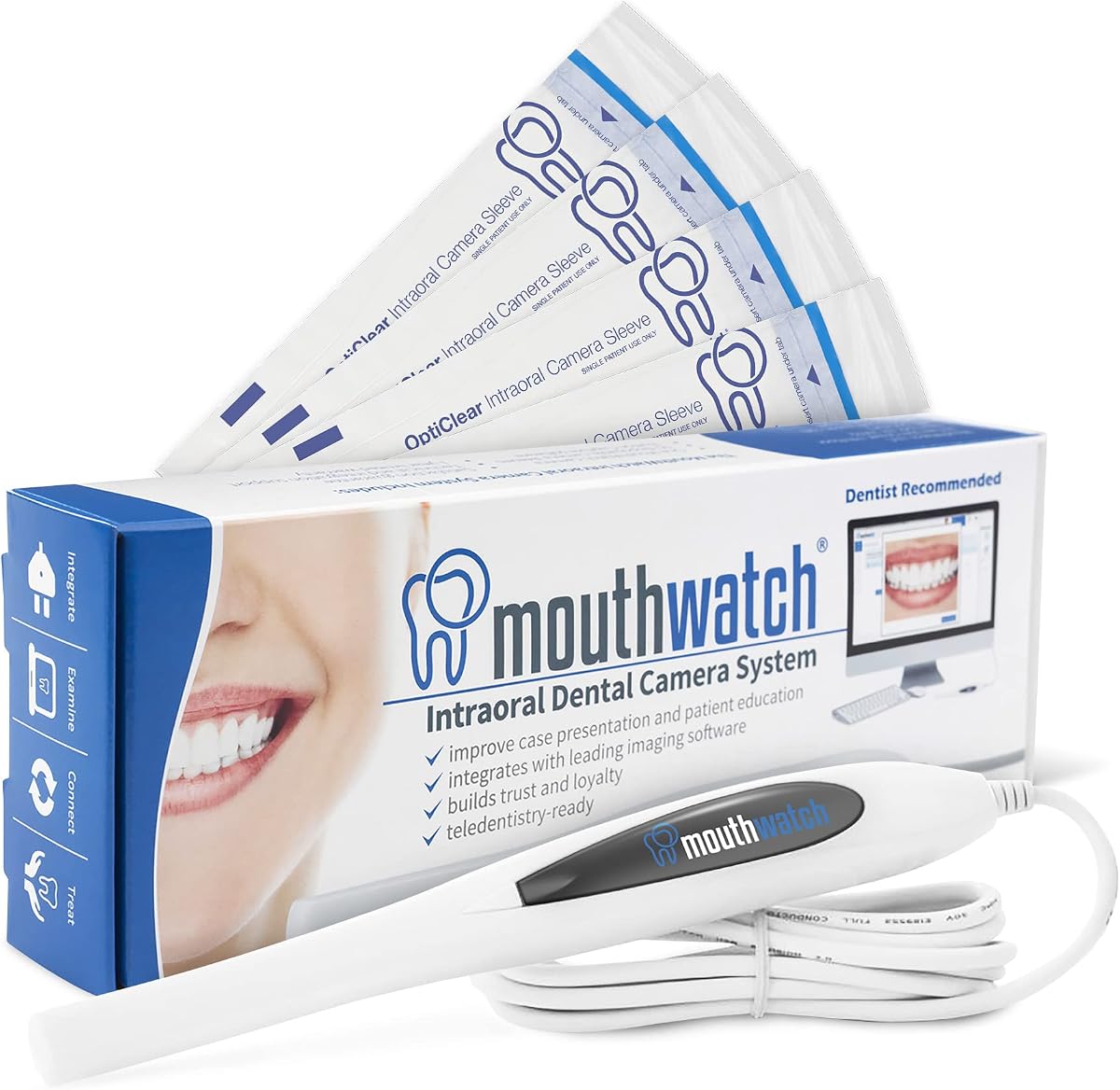
The MouthWatch Intraoral Camera is designed to help dental professionals communicate effectively with patients through clear visual evidence. It captures well-illuminated images without lag which facilitates case acceptance by allowing patients to see exactly what the dentist sees. The device is lightweight at only thirty one grams.
We may earn a commission when you buy through this link, at no additional cost to you.
Its fixed focal distance of four to forty five millimeters eliminates the frustration of auto-focus hunting which can delay procedures. The single button operation allows for quick capture without needing a mouse or keyboard ensuring smooth workflow during busy appointments. Included software supports major solutions like Eaglesoft and Dexis.
One potential drawback is the fixed focal range which might not suit all clinical scenarios requiring extreme close ups or wider views. While the price is higher than some competitors the reliability and support package justify the investment for many clinics. Lifetime customer support adds significant value.
This camera is ideal for practices prioritizing patient communication and ease of use. It is a strong choice for those who want to minimize technical interruptions during exams and maintain a professional pace throughout the day.
Clear visual feedback helps patients understand treatment needs more effectively leading to higher acceptance rates for recommended dental procedures and care plans.
The combination of fixed focus and one-button capture reduces the time spent on image setup allowing dentists to see more patients daily without rush.
We may earn a commission when you buy through this link, at no additional cost to you.
The DARYOU DY-60 Camera offers a unique zoom feature that allows for detailed examination of specific dental areas. It provides 720P HD resolution with four times zoom which is useful for showing patients close up details of cavities or cracks. The device connects via USB and works with major dental software.
We may earn a commission when you buy through this link, at no additional cost to you.
Like other models in this range it includes a capture button driver to ensure seamless integration with platforms like Dexis and Eaglesoft. This eliminates the need for additional foot pedals or hardware setups. The software compatibility list is extensive covering many common clinic management systems.
While the zoom adds versatility the resolution is lower than the 13MP sensors found in more advanced models. This may limit its use for very high detail tasks or large format printing. However for general diagnostic purposes it performs well within its class.
This camera is a good fit for clinicians who need zoom capability without a significant budget increase. It is recommended for practices looking to upgrade from older cameras while maintaining compatibility with existing software infrastructure.
The 4X zoom feature allows clinicians to focus on specific problem areas making it easier to identify small defects that might otherwise be missed.
Broad compatibility ensures that the camera can be adopted into various clinic environments without needing to change existing digital workflows or software licenses.
We may earn a commission when you buy through this link, at no additional cost to you.
This Wireless Intraoral Camera represents a significant upgrade in operational flexibility with its wireless transmission technology. It features a 13MP HD sensor that delivers crisp detailed images for thorough observations of teeth and gum conditions. The included wireless charging base ensures the device is always ready for use.
We may earn a commission when you buy through this link, at no additional cost to you.
Eight integrated LED beads provide uniform illumination inside the mouth preventing dark corners during inspections. The anti-fog coating and dustproof construction ensure reliability in moist environments common in dental settings. The connection is stable with minimal freezing or lag issues.
Managing battery life adds a step to your workflow compared to wired models. While the USB receiver allows for computer connection the wireless aspect depends on consistent signal strength. This can be a consideration in rooms with heavy electronic interference.
For modern clinics seeking a high-tech solution that enhances patient experience this wireless camera is an excellent choice. It is best suited for practices that can accommodate charging routines and value the mobility it provides during examinations.
Removing cables allows dentists to move freely around the patient chair improving ergonomics and reducing the risk of accidental pulls during procedures.
The 13MP sensor captures minute details that are crucial for accurate diagnoses and for demonstrating oral health issues clearly to patients.
We may earn a commission when you buy through this link, at no additional cost to you.
The ProDENT HD Intraoral Camera PD760 is built to work reliably across multiple Windows versions from seven to eleven. It features an auto-off function when placed in its holder which helps extend the lifespan of the LED lights. The USB connection is straightforward and requires no complex setup.
We may earn a commission when you buy through this link, at no additional cost to you.
The included ProDENT CAPTURE app facilitates seamless communication between the hardware and various dental software platforms. This ensures that the capture button works efficiently with systems like Dexis and Eaglesoft without manual configuration. Support is available via email and phone for integration help.
While effective the camera relies on its proprietary app which might add a layer of software management. The design is practical but lacks the advanced features found in premium wireless models. It is a solid mid-range option for stable performance.
This camera is recommended for clinics that need a dependable device with broad Windows compatibility. It is a safe choice for practices prioritizing longevity and straightforward integration over cutting-edge wireless features.
Supporting a wide range of Windows versions ensures that this camera can be used even as offices upgrade their computer systems over time.
The auto-off feature when the camera is docked helps reduce power consumption and extends the service life of the internal lighting components.
We may earn a commission when you buy through this link, at no additional cost to you.
This Intraoral Camera offers a compelling budget option with a 13MP CMOS sensor that delivers sharp oral pictures. Its six millimeter lens tip is slim enough to reach back molars and interdental gaps with ease. The dual control buttons allow for flexible one-click capture during examinations.
We may earn a commission when you buy through this link, at no additional cost to you.
The magnetic holder automatically turns off the lights when the camera is not in use which helps prolong the service life of the LEDs. It operates directly via the computer USB port requiring no extra drivers or power sources. This simplicity makes it ideal for quick setups.
While the price is very attractive the build quality may not be as robust as higher-end models. It is designed for daily check-ups and personal monitoring rather than heavy industrial use. The slim lens is a major advantage for patient comfort.
For students home users or clinics looking to expand capacity without overspending this camera is an excellent choice. It provides necessary high resolution imaging at a price point that allows for multiple units.
The 6mm tip design ensures that patients can open their mouths slightly comfortably reducing strain during longer examination sessions.
Plug and play compatibility means you can start taking images immediately after connecting to your computer without waiting for complex software installations.
We may earn a commission when you buy through this link, at no additional cost to you.
This 13MP USB Dental Camera features a high resolution sensor that provides detailed images for accurate examinations. It comes with six high brightness white light LEDs that ensure optimal illumination during procedures. The dual button design allows for flexible operation from either side of the probe.
We may earn a commission when you buy through this link, at no additional cost to you.
The magnetic holder automatically turns off the LEDs when the camera is hung up which saves energy and extends lifespan. It claims compatibility with all dental software on the market which makes it a versatile choice for various clinic setups. The USB 2.0 power requirement means no external power is needed.
While it offers wide software support it does not include advanced features like zoom or wireless transmission. The focus range is standard for most exams but may not suit highly specialized needs. The design is practical and efficient for daily use.
This camera is a good general purpose tool for clinics needing a reliable imaging device without niche features. It is recommended for offices that prioritize straightforward operation and broad software integration.
The promise of compatibility with all dental software simplifies the procurement process by ensuring the camera will fit into any existing digital workflow.
Automatic light shut off when the device is docked reduces unnecessary power drain and maintains the LEDs longevity for regular clinical use.
We may earn a commission when you buy through this link, at no additional cost to you.
This Intraoral Camera stands out with its built-in capture software and diagnostic tools that can analyze captured images. The five millimeter ultra thin probe maximizes patient comfort during exams. Anti-shake technology ensures that the images remain clear and steady without blur during procedures.
We may earn a commission when you buy through this link, at no additional cost to you.
The diagnostic software can automatically identify and mark oral conditions helping to improve assessment accuracy. It is designed to integrate seamlessly with major imaging solutions like Eaglesoft and Dexis with over fifty integrations available. The focus range of five to fifty millimeters covers standard exam needs.
While the software offers valuable features it may require some time to configure and learn effectively. The reliance on specific diagnostic features might not be necessary for all practices. However the clarity and ease of use are significant benefits.
This camera is recommended for clinics looking to enhance patient communication with visual diagnostics. It is an excellent choice for practices that value software assistance in identifying oral health issues.
The built-in analysis tools can help identify potential issues quickly aiding in faster decision-making and more informed patient discussions.
Anti-shake technology ensures that every image captured is sharp and usable reducing the need for retakes during examinations.
We may earn a commission when you buy through this link, at no additional cost to you.
This 13MP Intraoral Camera features a highly compact 4.8mm ultra-thin lens that is comfortable for most patients. It captures clear detailed images and real-time video of teeth and gums ensuring optimal illumination. The front and back capture buttons support flexible left and right hand operation.
We may earn a commission when you buy through this link, at no additional cost to you.
The magnetic bracket automatically turns off the LED light when the camera is hung up which helps save energy. It connects via a standard USB 2.0 controller cable without needing complex settings. Compatibility is broad enough for most dental imaging software.
While the lens design is a major plus the software integration details are less specified than other models. This might require verification with your specific software provider before purchase. The high resolution sensor ensures quality images however.
For practices prioritizing patient comfort this camera is a strong contender. It is suitable for daily exams where ease of insertion and high clarity are primary requirements.
The ultra-thin lens allows for comfortable insertion even for patients with sensitive mouths or limited jaw opening.
Dual capture buttons allow clinicians to use the device with their preferred hand positioning improving efficiency and reducing strain.
We may earn a commission when you buy through this link, at no additional cost to you.
This 1920P HD Oral Endoscope offers a high-resolution magnified view of internal surfaces for detailed inspection. It connects via a 3-in-1 connector supporting USB Type-C and Micro USB for various devices. The six adjustable LED lights ensure every corner is well-lit for inspection.
We may earn a commission when you buy through this link, at no additional cost to you.
The IP67 water-resistant rating allows for safe surface rinsing after each use which simplifies maintenance. It supports OTG-enabled Android devices and computers making it versatile for mobile setups. The shadow-free illumination provides a consistent experience for viewing detailed surfaces.
Note that it is not compatible with iPhone or iPad systems which limits use in Apple-centric environments. The connection stability depends on OTG functionality which can vary between Android devices. It is better suited for flexible inspection tasks than specialized clinic software.
This tool is recommended for general visual inspections or mobile practices needing a rugged camera. It is ideal for those who need a universal visual aid across multiple platforms without dedicated dental software integration.
The universal connector allows connection to a wide range of Android devices and computers making it flexible for on-the-go use.
Water resistance ensures the camera can be cleaned easily after use maintaining hygiene standards without complex protocols.
We may earn a commission when you buy through this link, at no additional cost to you.
Choosing the right dental camera involves considering several technical and practical factors to ensure it meets your clinic's specific needs.
Image resolution is critical for capturing detailed views of teeth and gums that aid in accurate diagnosis. Higher resolution sensors like 13MP provide clearer images which help in identifying small cracks or decay. Look for cameras with anti-fog lenses to maintain clarity in moist environments.
Prioritize models with high resolution sensors and anti-fog coating for consistent performance.
Most dental practices rely on specific management software like Eaglesoft or Dexis for storing and viewing patient images. Ensure the camera supports your existing system to avoid workflow disruptions. Many cameras offer drivers or apps to facilitate integration with multiple platforms.
Verify that the camera works seamlessly with your current dental management software before purchasing.
A lightweight and ergonomic design reduces hand fatigue during long clinical sessions. Cameras weighing around 30 to 40 grams are generally comfortable for extended use. Look for designs that allow easy handling and capture button placement.
Choose a lightweight camera to ensure comfort and reduce strain during daily use.
Connectivity can be wired via USB or wireless depending on your preference for mobility. USB models are simpler and require no battery charging but limit movement. Wireless cameras offer freedom but require charging management and stable signal.
Decide between wired simplicity and wireless flexibility based on your practice's workflow needs.
A thin lens tip like 4.8mm or 6mm helps in reaching posterior areas without causing discomfort. Some models offer zoom features for detailed examination of specific areas. A wide field of view helps in capturing larger sections of the oral cavity.
Select a slim lens design to improve patient comfort during intraoral examinations.
Built-in LED lights are essential for brightening the dark interior of the mouth for clear imaging. Cameras with multiple LEDs ensure shadow-free views which are crucial for accurate diagnosis. Automatic light-off features help save power and extend bulb life.
Look for cameras with multiple bright LEDs and automatic power-saving light features.
Some cameras include extra tools like diagnostic software or anti-shake technology for enhanced imaging. Capture buttons that work directly in software improve workflow efficiency. Consider features that align with your specific clinical procedures and patient communication goals.
Evaluate extra features like diagnostic tools or anti-shake tech based on your practice requirements.
Prices vary widely from budget-friendly to premium wireless models. Higher cost often brings better build quality and advanced features. Balance your budget against the essential features needed for your clinic's operations and growth.
Invest in a camera that offers the best balance of cost and essential features for your practice.
To begin using your dental camera connect it to your computer via USB or ensure the wireless connection is stable. Install any necessary drivers or software provided with the device to enable capture button functionality in your dental management system.
During exams ensure the camera probe is cleaned and sterile before inserting it into the patient's mouth. Use the capture button to take images and save them directly to the patient's chart. Adjust lighting as needed to get clear views of all areas.
After use clean the camera lens with a soft cloth and disinfect the probe according to hygiene standards. If wireless store the camera on its charging base. For wired models place it in the holder to turn off lights automatically and conserve power.
Most dental cameras are designed to work with a wide range of popular dental software like Eaglesoft and Dexis. However compatibility varies by model and you should check the specific list of supported programs before purchasing to ensure it fits your system.
Yes dental cameras are designed with durable materials that allow for easy cleaning. Many have waterproof or water-resistant heads that can be wiped down or rinsed. Always follow the manufacturer guidelines to maintain hygiene and device longevity.
With proper care a dental camera can last several years of daily clinical use. The lifespan depends on build quality and how often it is handled. Regular maintenance and careful cleaning help extend the life of the device.
Yes many dental cameras can be used for telehealth consultations by capturing high resolution images or videos. These files can be shared securely with other professionals for remote diagnosis. Ensure your software supports secure file transfer for compliance.
A resolution of at least 13MP is recommended for clear detailed dental imaging. Higher resolutions allow for better visibility of small details which is vital for accurate diagnosis. Look for models that offer high quality sensors without distortion.
If your camera fails to connect check the USB port and cable for damage or try a different port. Ensure the latest drivers are installed on your computer. If wireless verify that the charging base is active and the signal is strong.
In summary selecting the right dental camera depends on your specific needs for software integration image quality and budget. The DY-50 model offers excellent value with broad compatibility while the Wireless option provides modern flexibility for advanced practices.
Prioritize features like resolution lens ergonomics and software support to ensure the camera enhances your workflow. Consider how the device fits into your daily routine and whether wireless capabilities are worth the added cost for your team.
Remember to verify current availability and compatibility with your specific systems before purchasing. Prices and stock can change frequently so checking the latest details will help you make the best decision for your practice.