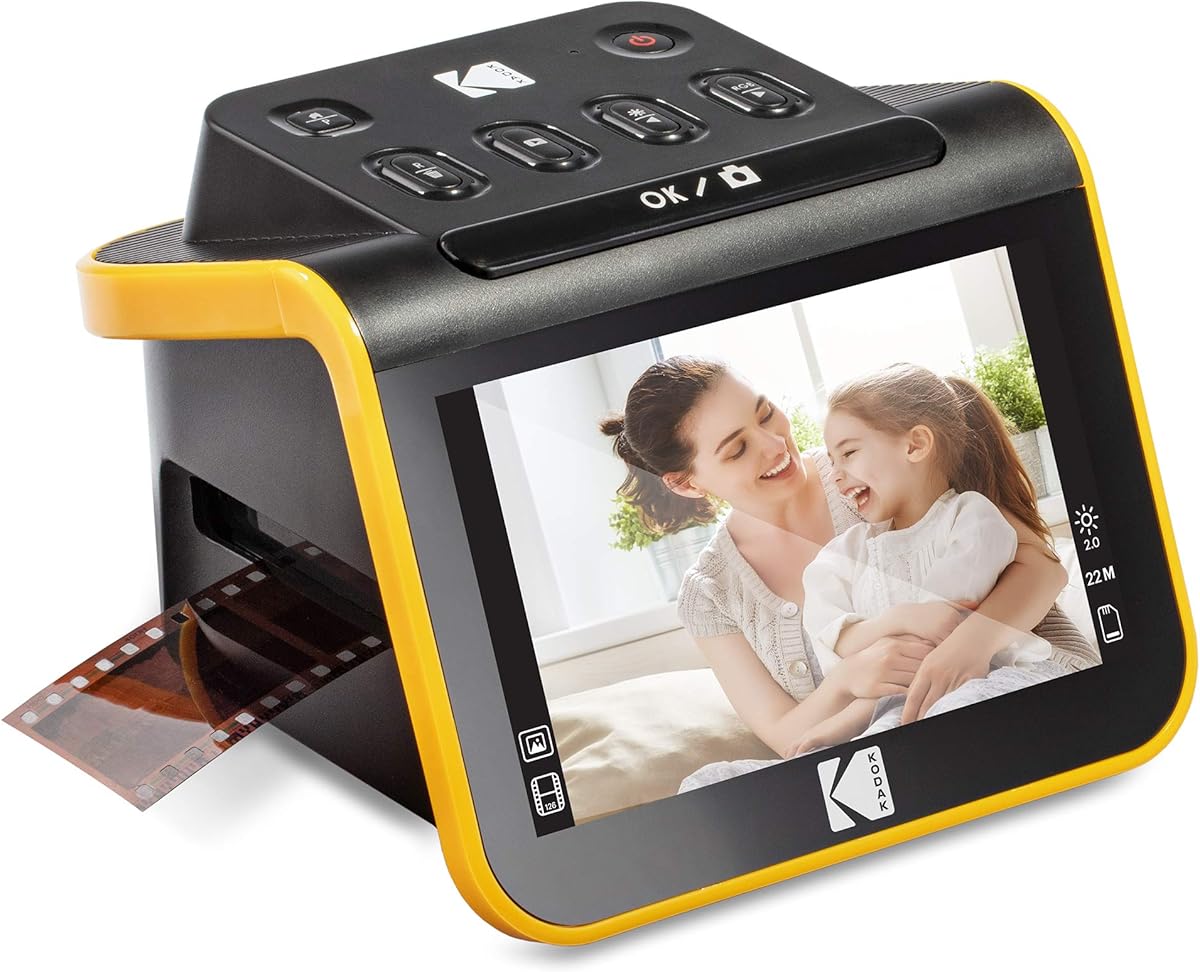
KODAK Slide N Scan Film & Slide Scanner
4.3Editor score
Built-in LCD screen
Supports multiple film types
Direct SD card output
Preserving your physical memories requires a high quality flatbed scanner for film and slides. These devices capture fine details and colors from old negatives or transparencies accurately. Choosing the right model ensures your digital archives remain vibrant for years to come.
We evaluated ten leading scanners based on resolution, ease of use, and software features. Each product offers unique strengths for hobbyists or professionals seeking reliable digitization tools. Our analysis highlights key specifications to guide your purchasing decision confidently.
Every pick below showcases performance, compatibility, and value for different user needs. Prices fluctuate often so verify current offers before finalizing your purchase online. We aim to simplify your search for the ideal scanning solution today.
4.3Editor score

4.3Editor score

4.4Editor score
As an Amazon Associate we earn from qualifying purchases.
Below is a side-by-side comparison of all ten scanners to help you evaluate specs and features quickly for your specific needs.


The KODAK Slide N Scan offers an accessible way to digitize old negatives and slides without complex setups. Its 22MP sensor captures decent detail for personal archives while the 5 inch LCD lets you review images instantly. This model is ideal for casual users seeking simplicity and speed over professional-grade output.
We may earn a commission when you buy through this link, at no additional cost to you.
Users appreciate the straightforward workflow that allows loading film inserts and scanning directly to an SD card. The included software enhances brightness and color with a single touch making restoration manageable for beginners. Adapters support 135 110 and 126mm formats plus 50mm slides covering most common legacy media types.
Trade-offs include a resolution that falls short of high-end flatbeds and basic color processing capabilities. The lack of advanced dust removal features may require manual cleanup in editing software. These limitations are acceptable for hobbyists prioritizing budget and portability over maximum fidelity.
This scanner is best suited for families or collectors with mixed film types who want a quick digital solution. Its elegant design blends into home decor while the gallery mode doubles as a digital frame. We recommend it for those starting their digitization journey with minimal technical demands.
The large LCD screen enables you to adjust contrast and crop images before saving reducing the need for later computer work.
Included adapters handle various formats including 135 110 and 126mm film so you can scan diverse collections without extra hardware.
We may earn a commission when you buy through this link, at no additional cost to you.
The Epson Perfection V800 delivers professional quality scans with its 6400 dpi resolution and advanced grayscale depth. Its dual lens system ensures optimal results for both slides and negatives by selecting the best lens automatically. This model excels in capturing fine details and smooth gradations essential for archival purposes.
We may earn a commission when you buy through this link, at no additional cost to you.
Reviewers highlight the remarkable tonal range that preserves subtle shadows and highlights without losing information. The 4.0 Dmax allows deep blacks to remain visible which is critical for dense film types. Compatibility with older operating systems makes it versatile for various lab environments or home offices.
While performance is outstanding the unit demands more desk space and a robust computer to handle large files efficiently. The price reflects its professional capabilities which may deter casual hobbyists. These trade-offs are justified for users needing reliable high fidelity output regularly.
Photographers and archivists should consider this scanner for its balance of precision and usability. It bridges the gap between consumer and professional gear effectively. We recommend it for those prioritizing image quality and longevity in their digital preservation efforts.
With 16-bit grayscale the V800 captures subtle variations in tone ensuring your scans reflect the original media accurately.
The dual lens system chooses the optimal lens for your media type streamlining the workflow and enhancing scan quality effortlessly.
We may earn a commission when you buy through this link, at no additional cost to you.
The Epson Perfection V850 Pro stands as a top-tier solution for professionals demanding unmatched color and detail. Its 6400 dpi resolution paired with advanced features ensures every nuance of your film is captured perfectly. This scanner is built for those who refuse to compromise on image fidelity or workflow efficiency.
We may earn a commission when you buy through this link, at no additional cost to you.
Users praise the remarkable tonal range that maintains smooth gradations even in deep shadows. The exclusive dual lens system selects the best optics for your media optimizing results automatically. Combined with strong software support this device handles complex restoration tasks with ease.
The high price and size may limit accessibility to serious enthusiasts or studios. It requires a dedicated space and powerful computer to run smoothly. These factors are acceptable given the superior output quality and durability it offers over time.
We recommend this scanner for photographers and archivists needing museum-grade digital reproductions. Its reliability and precision make it a long-term investment worth the cost. Choose it if your work demands the absolute best in scanning technology today.
The V850 Pro ensures every grain and color shift is recorded accurately providing a true digital twin of your originals.
Advanced tonal mapping preserves subtle variations ensuring your scans look natural and vibrant across all lighting conditions.
We may earn a commission when you buy through this link, at no additional cost to you.
The Epson Perfection V550 offers robust performance for those seeking high resolution without the premium cost. Its 6400 dpi optical resolution supports enlargements up to 17 x 22 inches making it versatile for prints. Digital ICE technology efficiently removes dust and scratches saving time in post-processing.
We may earn a commission when you buy through this link, at no additional cost to you.
Reviewers note the ReadyScan LED technology provides quick warm-up and faster scanning without mercury. Auto edge detection crops multiple photos automatically enhancing productivity for batch jobs. The included OCR software allows text conversion expanding its utility beyond just images.
Some users report slower software performance on newer operating systems which can delay workflows. The lack of a dual lens limits flexibility compared to higher models. These issues are manageable for most users who prioritize value and speed over absolute top specs.
This scanner is an excellent choice for home users managing large photo collections. It balances cost and capability effectively for regular digitization needs. We recommend it for those wanting reliable results with minimal hassle and good software support.
Digital ICE technology automatically targets imperfections ensuring clean scans that require less manual editing afterward.
Instant on capabilities eliminate warm-up times so you can start scanning immediately without waiting for the lamp to heat.
We may earn a commission when you buy through this link, at no additional cost to you.
The Epson Perfection V600 is designed for users needing high resolution scans for medium format film and documents. With 6400 x 9600 dpi it supports enlargements up to 17 x 22 inches for detailed prints. The transparency unit allows scanning of slides and negatives directly within the lid.
We may earn a commission when you buy through this link, at no additional cost to you.
Users appreciate the customizable buttons that streamline common tasks like PDF creation or email attachments. The bundled software includes DIGITAL ICE for dust removal and Easy Photo Fix for restoration. This makes it a complete package for home archivists seeking convenience.
Critics note the reliance on USB 2.0 which may slow file transfers on modern systems. Build quality feels lightweight compared to pro models but remains functional. These drawbacks are minor considering the price and feature set offered by this unit.
We recommend this scanner for hobbyists managing mixed media including photos and documents. Its ease of use and broad compatibility make it a practical choice. Choose it if you need a versatile all-in-one solution for regular scanning tasks.
Four customizable buttons let you trigger frequent actions like saving as PDF or email with a single press.
Included tools cover enhancement and restoration tasks helping you refine images without needing third party software.
We may earn a commission when you buy through this link, at no additional cost to you.
The Epson Perfection V700 delivers professional quality scans with its 6400 dpi resolution and dual lens system. It handles slides negatives and medium format film with exceptional clarity for archival needs. The 4.0 Dmax ensures deep shadow detail remains visible in your digital files.
We may earn a commission when you buy through this link, at no additional cost to you.
Reviewers highlight the innovative dual lens system that automatically selects lenses for desired resolution. This feature simplifies workflow while maintaining high fidelity across different media types. Users report consistent results that meet professional standards for restoration work.
Some users find the price fluctuates significantly which can affect budget planning. The size requires ample desk space which may limit portability. These trade-offs are acceptable for those prioritizing image quality and professional capabilities in a home setup.
We recommend this scanner for photographers and labs needing reliable high resolution outputs. Its balance of performance and features makes it a strong contender. Choose it if you require consistent professional results without stepping up to the most expensive tier.
The dual lens system intelligently chooses the best lens for your media ensuring optimal resolution for every scan.
With 4.0 Dmax you capture subtle shadow details and color nuances that other scanners might miss entirely.
We may earn a commission when you buy through this link, at no additional cost to you.
The Epson Perfection 4870 PRO is a legacy powerhouse offering 4800 x 9600 dpi resolution and 48-bit color depth. Its Firewire connectivity ensures fast data transfer for large files while the transparency adapter supports multiple film types. This model remains popular for professional workflows requiring specific software integrations.
We may earn a commission when you buy through this link, at no additional cost to you.
Users praise the included LaserSoft SilverFast Ai software which provides advanced control over scanning parameters. The transparency adapter fits four film holders making batch processing efficient. High color depth allows for precise adjustments during restoration tasks.
Firewire is becoming rare on modern computers requiring adapters for use. The higher cost reflects its professional features which may not suit casual users. These limitations are minor for studios already equipped with compatible interfaces and software needs.
We recommend this scanner for professionals managing high volume archival projects. Its speed and software depth make it a valuable tool. Choose it if you need advanced control and reliable performance for critical digitization tasks.
LaserSoft SilverFast Ai offers granular control over scanning settings enabling precise adjustments for complex restoration work.
High-speed Firewire transfers ensure large high-resolution files move quickly to your computer saving valuable time.
We may earn a commission when you buy through this link, at no additional cost to you.
The Epson Expression 12000XL-PH accommodates reflective media up to 12.2 x 17.2 inches for large format needs. Its 2400 x 4800 dpi resolution and micro Step drive technology deliver brilliant clarity for graphics and art. The built-in transparency unit handles slides and negatives efficiently.
We may earn a commission when you buy through this link, at no additional cost to you.
Users appreciate the Color II imaging system combining fast warm-up LED and MatrixCCD tech for bold scans. Easy Photo Fix restores faded photos quickly while automatic dust removal reduces manual cleaning. This makes it ideal for art galleries or studios needing large format digitization.
The resolution is lower than high-end film scanners which may limit detail for small negatives. The price reflects professional utility which might be excessive for home users. These trade-offs are acceptable for businesses prioritizing large image handling over micro detail.
We recommend this scanner for graphic arts professionals and large format document scanning. Its speed and ease of use streamline workflows significantly. Choose it if you need reliable performance for oversized media and frequent scanning sessions.
Accommodates oversized originals up to 12.2 by 17.2 inches so you can scan large prints or art pieces in one pass.
Advanced processing and MatrixCCD tech produce vibrant accurate scans that reflect the true colors of your originals.
We may earn a commission when you buy through this link, at no additional cost to you.
The Epson Perfection V550 delivers 6400 dpi optical resolution with 48-bit color depth for precise scanning. USB connectivity simplifies setup making it compatible with most modern computers easily. This model offers a reliable option for users seeking standard performance without advanced features.
We may earn a commission when you buy through this link, at no additional cost to you.
Users note its compliance with Energy Star standards which helps reduce power consumption over time. The 48-bit color depth ensures rich tonal variations in scans suitable for most photo archives. It remains a solid choice for basic document and film digitization tasks.
Some users report lower satisfaction scores possibly due to software quirks or older design. The lack of newer features may limit its appeal compared to updated models. These issues are minor for those prioritizing basic functionality and ease of use.
We recommend this scanner for budget-conscious users needing a dependable home scanner. Its simplicity and color depth meet many everyday needs effectively. Choose it if you want a straightforward device for occasional scanning without extra complexities.
Rich color depth ensures scans capture nuanced shades accurately making them suitable for detailed photo archives.
Energy Star compliance reduces power usage without impacting performance helping you save on electricity costs over time.
We may earn a commission when you buy through this link, at no additional cost to you.
The Epson Expression 10000XL offers an A3 sized scanning surface for wide-format graphics and documents. Its 2400 x 4800 dpi resolution with 48-bit color depth handles detailed art and prints. Optional networking and Firewire connectivity provide flexible integration into professional studios.
We may earn a commission when you buy through this link, at no additional cost to you.
Users highlight the high optical density of 3.8 allowing deep color and contrast capture in scans. The zoom range from 50 to 200 percent adds versatility for cropping and enlarging. This model serves businesses needing large scale digitization regularly.
Customer ratings reflect challenges with setup and driver support on newer systems. The complexity may deter home users looking for simple plug-and-play experiences. These drawbacks are acceptable for enterprises equipped to handle technical configuration needs.
We recommend this scanner for professional graphic arts departments or large studios. Its large format and network features support high-volume workflows. Choose it if you need robust wide-format capabilities and are prepared for technical integration.
The A3 scanning surface accommodates oversized documents and artwork enabling efficient digitization of larger originals.
With 3.8 Dmax this scanner captures deep colors and rich details essential for high-quality professional outputs.
We may earn a commission when you buy through this link, at no additional cost to you.
Selecting the right scanner requires understanding key factors that impact quality and usability for your specific film needs.
Optical resolution determines how much detail your scanner can capture from each image. For film and slides higher resolution like 6400 dpi ensures fine grain and color details are preserved accurately. This is crucial for enlargements or archival quality where every pixel matters.
Prioritize models with at least 6400 dpi for professional results while lower resolutions may suffice for casual web viewing.
Old film often contains dust or scratches that degrade scan quality. Technologies like Digital ICE automatically remove these imperfections during scanning saving significant editing time. Look for dedicated hardware-based removal rather than software-only solutions for better reliability.
Ensure your chosen model includes effective dust removal to maintain image integrity without extra manual effort.
Different scanners support specific film formats like 35mm 110 126 or medium format slides. Confirm the unit includes adapters for your collection types before purchasing to avoid additional costs. Versatility allows you to digitize diverse legacy media without needing multiple devices.
Check included holders and trays to match your specific film formats for seamless workflow integration.
Built-in software often handles basic color correction cropping and file management. Advanced tools allow batch processing OCR for documents and direct editing within the scan environment. Quality software reduces reliance on external programs and streamlines your digitization workflow.
Evaluate included software capabilities to ensure they meet your editing and organization needs effectively.
USB 2.0 is standard but newer models may offer USB 3.0 or Thunderbolt for faster data transfer. Consider your computer's ports and whether network connectivity is needed for multi-user environments. Faster connections improve efficiency when handling large batches of high-resolution scans.
Match connectivity options with your system to ensure smooth and fast file transfers during scanning sessions.
Robust build quality ensures longevity especially if you plan to scan large volumes regularly. Compact designs save desk space while larger units may offer better stability and additional features. Choose a model that fits your workspace and usage frequency comfortably.
Invest in a durable scanner designed for regular use to maintain performance over years of operation.
Color depth indicates how many tones the scanner can distinguish with higher bit depths like 48-bit offering richer color. Dmax measures the darkest shadow detail the unit can capture which is vital for dense film negatives. These specs directly influence the fidelity of your final digital images.
Prioritize higher color depth and Dmax for professional archival quality and true-to-life color reproduction.
Budget varies widely from affordable standalone units to professional-grade scanners costing thousands. Evaluate your needs to balance cost with required features avoiding overspending on capabilities you won't use. Consider long-term value including software updates and durability for total cost of ownership.
Choose a scanner that offers the best balance of price and performance for your specific digitization goals.
Start by cleaning your film and scanner glass with a soft lint-free cloth to prevent dust from appearing in scans. Insert the appropriate adapters for your film type to ensure the media sits flat on the glass. This preparation reduces post-processing work and ensures accurate alignment.
Set your scan resolution and color settings according to your desired output size and usage. Run a test scan to check for focus and lighting adjustments before processing a full batch. Consistent settings help maintain uniform quality across all your digitized files.
Store your scanner in a cool dry place away from direct sunlight to preserve internal components. Clean the glass regularly and cover the unit when not in use to prevent dust buildup. Proper maintenance extends the lifespan of your device and ensures consistent performance over time.
For 35mm film a resolution of 3200 to 6400 dpi is ideal for high-quality prints and archival storage. Lower resolutions may suffice for web sharing but higher DPI ensures grain and color details are captured accurately. Professional users should aim for at least 6400 dpi for maximum fidelity.
Most flatbed scanners for film come with built-in holders for 35mm slides and negatives. Check your model specifications to confirm compatibility with formats like 110 or 126mm which may require adapters. Using the correct holder ensures your film stays flat and produces focused scans.
Digital ICE uses infrared scanning to detect dust and scratches without affecting the image details. The scanner automatically masks these imperfections during the capture process saving time in editing software. This hardware-based solution is more effective than software-only cleaning methods for consistent results.
Standard flatbeds typically handle 35mm to medium format but larger films require wide-format scanners. Models like the Epson Expression series support A3 or larger originals for extensive art or photo scans. Verify maximum media dimensions before purchasing to ensure your film fits properly.
Many scanners include basic software for viewing and editing but dedicated apps offer better organization. Consider tools with strong tagging and cataloging features to manage large collections efficiently. Cloud storage integration can also help protect your scans and access them across devices.
This issue often stems from incorrect Dmax settings or the film's density requiring adjustment in software. Ensure your scanner's Dmax rating matches your film type to capture deep shadows properly. Calibrating your scanner or using manual controls can significantly improve contrast and brightness.
Use a soft lint-free cloth slightly dampened with water or glass cleaner to wipe the glass gently. Avoid harsh chemicals or paper towels that might scratch the surface or leave residue. Regular cleaning prevents dust from affecting scan quality and keeps your device performing optimally.
Standalone scanners offer convenience for quick scans without needing a PC but may have limited editing features. Connected models provide more control and powerful software for advanced adjustments and batch processing. Choose based on your workflow preference and need for immediate editing capabilities.
We have reviewed ten top flatbed scanners ranging from budget-friendly options to professional-grade models. Each device offers unique strengths suited for different needs and priorities. Whether you seek speed or maximum fidelity there is a scanner that fits your requirements effectively.
Prioritize resolution and dust removal features to ensure your digitized memories remain clear and detailed over time. Consider your film formats and workflow preferences to avoid unnecessary complexity or costs. Investing in the right model ensures your archive stays vibrant for years to come.
Remember to verify current prices and availability as offers change frequently. We hope this guide helps you make an informed decision for preserving your legacy photos. Happy scanning and thank you for choosing to protect your valuable memories today.