
COOSPO H6 Heart Rate Monitor
4.2Editor score
Bluetooth and ANT+ connectivity
Compatible with most fitness apps
IP67 water resistant design
Find the top heart rate monitor for Mtb with this expert guide comparing accuracy comfort battery and connectivity for mountain biking training and performance.
Choosing the right heart rate monitor for Mtb ensures accurate training data during intense rides. A good device tracks your pulse reliably without interfering with your movement or comfort on the trails.
We compared ten top-rated models based on connectivity accuracy battery life and comfort. Each product offers unique features suited for mountain biking and other high-intensity activities requiring precise biometric tracking.
Each pick highlights key strengths and potential trade-offs to help you decide. Prices and availability may change frequently so verify current details before purchasing your next training accessory online.
4.2Editor score

4.5Editor score

4.1Editor score
This side-by-side comparison highlights the key specifications and unique selling points of each model to help you find the perfect match for your mountain biking needs.




The Garmin HRM 600 stands out as the top choice for serious mountain bikers and runners seeking precise biometric tracking. With a rating of 4.5 stars, it delivers reliable real-time heart rate and HRV data directly to your Garmin devices.
We may earn a commission when you buy through this link, at no additional cost to you.
Its standout feature is the ability to capture running dynamics like stride length and ground contact time when paired with a compatible watch. The rechargeable battery lasts up to two months, reducing downtime and ensuring you are ready for every ride.
While the strap is machine washable and available in two sizes for a perfect fit, the price point is higher than budget options. However, the durability and advanced data metrics justify the investment for athletes focused on performance improvements.
If you already use the Garmin ecosystem, this monitor is the logical upgrade to maximize your training insights. It balances comfort, accuracy, and advanced metrics better than any other model on this list.
This device provides unique insights like step speed loss and vertical oscillation to refine your form.
Data syncs directly to Garmin Connect for detailed analysis of your daily metrics and workouts.
We may earn a commission when you buy through this link, at no additional cost to you.
The COOSPO H6 offers exceptional value for riders who need reliable tracking without breaking the bank. Rated 4.2 stars, it provides accurate heart rate data within ±1 BPM, making it suitable for both casual rides and intense interval training.
We may earn a commission when you buy through this link, at no additional cost to you.
Its dual wireless mode allows stable connections to multiple devices simultaneously, ensuring you can broadcast data to your bike computer and phone at the same time. The IP67 rating handles sweat and rain well, though it is not designed for swimming.
Some users note that moistening the electrode areas helps maintain a stable signal, especially in dry conditions. Despite this minor inconvenience, the extended battery life and low cost make it a smart entry-level choice for fitness enthusiasts.
Choose this if you want a no-fuss monitor that plays well with major fitness apps and bike computers. It delivers professional-grade performance at a price that fits any budget.
Get high-performance real-time data without paying for premium brand features you might not need.
Seamlessly connects with Garmin Wahoo Polar Peloton and hundreds of fitness apps via dual protocols.
We may earn a commission when you buy through this link, at no additional cost to you.
Widely recognized as the gold standard in heart rate tracking, the Polar H10 delivers unmatched precision for professional athletes. With a 4.1 star rating, it uses improved electrodes and silicone dots to ensure a secure and interference-free fit during vigorous activity.
We may earn a commission when you buy through this link, at no additional cost to you.
The internal memory feature allows you to record workouts even without a paired device, syncing later to your phone or computer. This is particularly useful for team sports or rides where your bike computer might not support direct HRM pairing.
While the price is higher than budget alternatives, the accuracy and durability justify the expense for those tracking data meticulously. It works with essentially any compatible equipment, giving you flexibility across different platforms and devices.
If precision is your top priority and you want a sensor that performs flawlessly in all conditions, this is the model to buy. It represents the best balance of technology and reliability on the market.
Top quality measurement technology ensures your training zones are calculated based on exact heart rate data.
Store hours of training data internally to sync later when you return to your smart device.
We may earn a commission when you buy through this link, at no additional cost to you.
The Garmin HRM 200 is a solid mid-range option for those already invested in the Garmin smartwatch or cycling computer ecosystem. It provides accurate real-time heart rate and HRV data to compatible devices with a reliable 1-year battery life.
We may earn a commission when you buy through this link, at no additional cost to you.
Its durable build includes a 3 ATM water rating, meaning it can handle rain and sweat without issues. The strap is machine washable, which is a huge plus for hygiene after intense mountain biking sessions or muddy trails.
While it lacks advanced features like internal memory, it focuses on the core function of transmitting accurate data. It is an excellent choice for riders who want simplicity and longevity without complex settings or rechargeable cables.
Consider this if you value ease of use and low maintenance. It delivers exactly what you need for daily training tracking without extra bells or whistles.
With up to one year of battery life, you can train consistently without worrying about frequent replacements.
The machine washable strap ensures the monitor stays clean and odor-free even after heavy sweating.
We may earn a commission when you buy through this link, at no additional cost to you.
POWR LABS offers a robust solution for riders who need a reliable monitor for daily, high-intensity sessions. With a 4.0 star rating, it focuses on comfort and battery endurance, featuring a seamless fabric strap that reduces chafing during long rides.
We may earn a commission when you buy through this link, at no additional cost to you.
The standout feature is its 400+ hour battery life, which eliminates the need for frequent battery changes. Its IPX67 rating ensures it survives torrential rain and brutal sweat sessions, making it a tough companion for mountain biking.
While it matches clinical accuracy standards, some users may find it slightly less precise than high-end competitors. However, for the price and build quality, it offers excellent value for everyday training needs without compromising on durability.
Choose this if you want a durable, low-maintenance strap that lasts for months on a single battery. It is built to work as hard as you do on the trails.
The soft fabric design ensures the monitor stays comfortable and does not slip or chafe over long periods.
Designed to handle extreme conditions, this monitor maintains performance even in wet or muddy environments.
We may earn a commission when you buy through this link, at no additional cost to you.
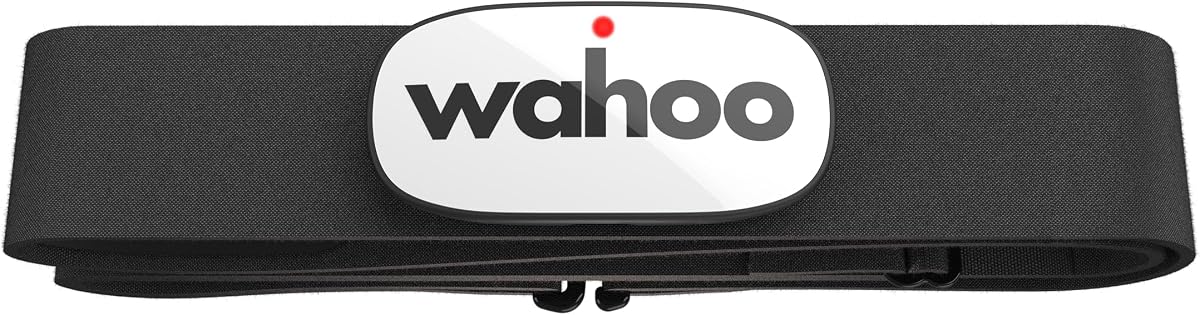
The Wahoo TRACKR is designed for athletes who prioritize comfort and quick connectivity. Rated 4.2 stars, it features a slim, soft strap that feels secure without being restrictive during intense physical activity or rough terrain riding.
We may earn a commission when you buy through this link, at no additional cost to you.
It includes an intuitive LED indicator to confirm heart rate detection and battery status, making it easy to check connectivity before starting a ride. The rechargeable battery offers over 100 hours of active life, reducing the hassle of swapping small button cells.
While the battery life is shorter than some long-life disposable models, the convenience of recharging often outweighs this trade-off for active users. It connects via ANT+ and Bluetooth, ensuring compatibility with a broad range of apps and devices.
This is a great choice for riders who want a modern, easy-to-use monitor that integrates well with the Wahoo ecosystem. It balances performance with user-friendly features effectively.
The slim strap ensures the sensor stays in place comfortably without adding bulk to your chest area.
Clear LED lights allow you to verify heart rate detection and battery levels instantly before a workout.
We may earn a commission when you buy through this link, at no additional cost to you.
The Polar H9 brings Polar's decades of scientific research to an affordable daily-use model. With a 4.0 star rating, it is recognized globally as a trusted choice for high-quality heart rate tracking suitable for everyday training needs.
We may earn a commission when you buy through this link, at no additional cost to you.
It works with all HRM compatible equipment, meaning you can use it across different platforms without worrying about proprietary restrictions. The battery life is solid for daily use, utilizing a standard CR2025 button cell that is easy to replace.
While it may lack advanced metrics found in premium models, it provides reliable accuracy that satisfies most casual and intermediate riders. The strap comes in two sizes to ensure a comfortable fit for various body types.
Pick this if you want the reliability of a major brand at a reasonable price. It is a practical, no-nonsense option for consistent heart rate monitoring.
Built on scientific research, Polar sensors are a standard for accuracy in sports performance technology.
Ensure you can use your monitor with any device or app that supports standard heart rate protocols.
We may earn a commission when you buy through this link, at no additional cost to you.
The GEOID HS500 introduces new hardware and algorithms to minimize noise interference caused by movement and sweating. Rated 4.2 stars, it aims to maximize exercise results by providing accurate tracking during dynamic activities like mountain biking.
We may earn a commission when you buy through this link, at no additional cost to you.
Its impressive 800-hour battery life means you can train daily for over two years before replacing the battery. The LED light flashes to confirm the connection, offering visual feedback so you know the data is flowing correctly.
While it is not recommended for swimming, it is fully waterproof for rain and sweat. The thinner design reduces energy consumption, though some users might prefer a slightly thicker build for a firmer feel on the chest.
Choose this if you want a high-efficiency monitor that prioritizes battery life and data stability. It is a strong option for budget-conscious riders who need reliable long-term performance.
With a battery life lasting 800 hours, you save money and waste by replacing the battery less often.
The LED indicator provides immediate visual confirmation that the monitor is active and paired correctly.
We may earn a commission when you buy through this link, at no additional cost to you.
The CYCPLUS H2Pro uses an ECG algorithm to reduce interference from movement and muscle tension. Rated 3.9 stars, it aims to deliver stable, accurate data that helps users stay connected to their heart's rhythm during every beat.
We may earn a commission when you buy through this link, at no additional cost to you.
Its ability to identify R-wave peaks and capture instantaneous heartbeat changes makes it suitable for scientific training and HRV monitoring. This feature is valuable for users who adjust training loads to prevent overtraining or optimize recovery.
The strap is adjustable and made of soft, breathable materials, ensuring comfort during long rides. While the battery life is solid at 500 hours, users may need to replace the coin-cell battery more often than the longest-lasting options.
Pick this if you are interested in HRV tracking and want a lightweight, comfortable strap. It offers advanced algorithmic features at an accessible price point.
Advanced algorithms help identify R-wave peaks for more precise heart rate variability analysis.
Weighing just 21 grams, the sensor is barely noticeable, allowing you to forget you are wearing it.
We may earn a commission when you buy through this link, at no additional cost to you.
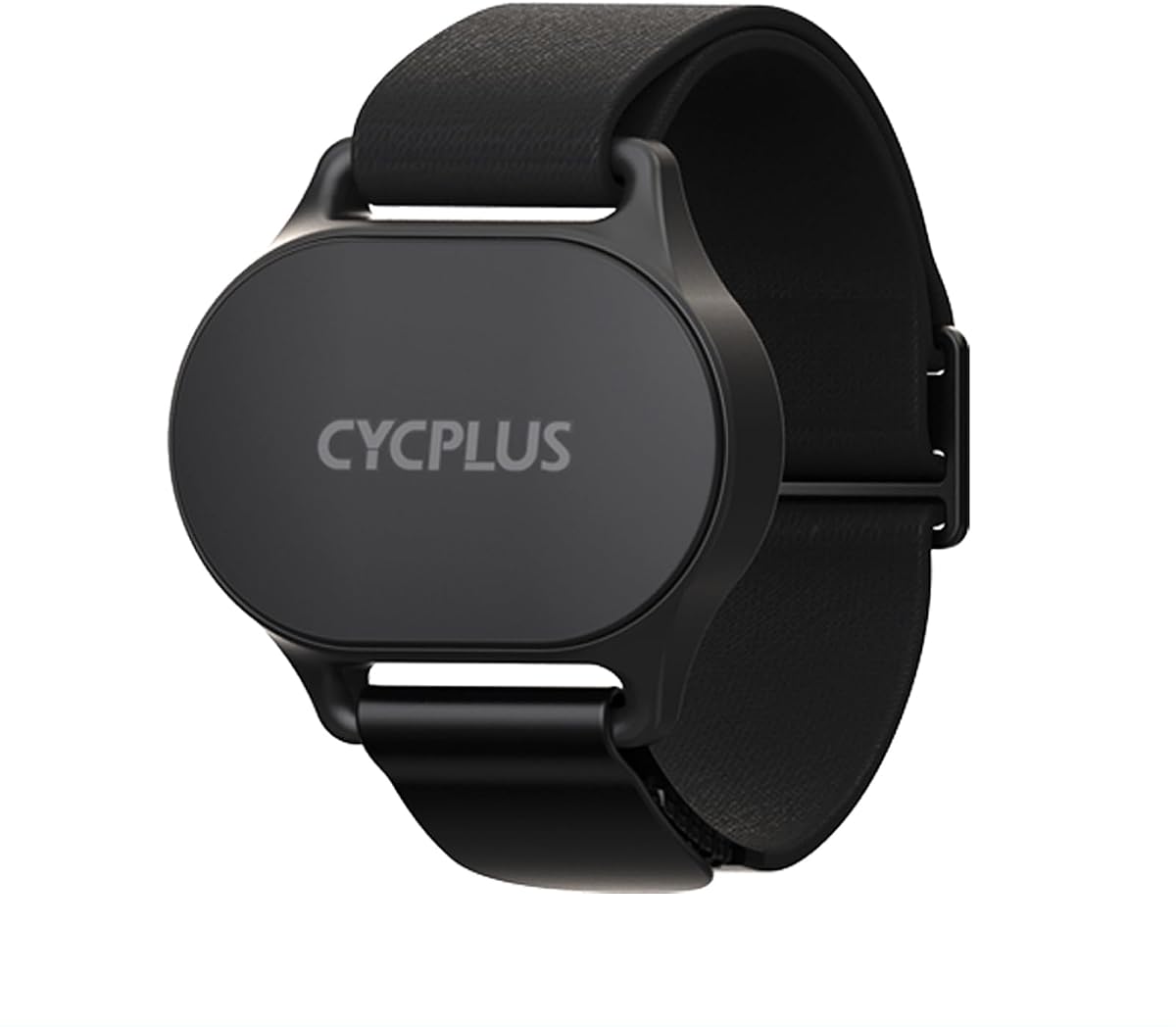
The CYCPLUS H1 Armband offers a chest-free alternative for those who find straps uncomfortable. Rated 3.8 stars, it uses patented optical sensor technology to measure real-time heart rate data with high accuracy for exercise.
We may earn a commission when you buy through this link, at no additional cost to you.
It features color-coded LED lights to show your heart rate zone instantly, helping you visualize your effort levels during rides. The magnetic charging takes only 30 minutes, providing over 110 hours of use between charges.
While optical sensors generally have slightly lower accuracy than chest straps during high-intensity bursts, this model performs well for most fitness activities. It keeps your wrist free and allows for maximum freedom of movement.
Choose this if you dislike chest straps and want a convenient, easy-to-use device. It is a solid option for riders prioritizing comfort and visual feedback over ultimate precision.
LED lights change color to show when you are in fat burn, aerobic, or peak zones during exercise.
A single button and magnetic charging make setup and usage incredibly straightforward and hassle-free.
We may earn a commission when you buy through this link, at no additional cost to you.
Selecting the right heart rate monitor involves balancing accuracy, comfort, and compatibility with your existing gear.
Chest strap sensors generally provide more accurate data than optical ones during high-intensity intervals due to direct measurement of electrical signals. For mountain biking where rapid heart rate changes occur, a quality chest strap is often preferred for reliable training zones.
Prioritize models with proven track records like Polar or Garmin if precision is critical for your performance goals.
Look for monitors that support both Bluetooth and ANT+ to ensure compatibility with a wide range of bike computers, smartphones, and watches. Dual protocol support gives you the flexibility to stream data to multiple devices simultaneously if needed.
Always verify that your primary bike computer or app supports the specific protocol the monitor uses to avoid connection issues.
Battery life varies from a few months to several years depending on whether the device uses replaceable cells or rechargeable batteries. Rechargeable models save money long-term but require charging downtime, while disposable batteries are convenient but generate waste.
Choose a model that fits your maintenance preferences—long-life disposable batteries are great for riders who hate charging cables.
A comfortable strap is essential for long rides, so look for soft, breathable materials and adjustable sizing options that fit your body type. Silicone dots or textured grips can prevent slippage when you are sweating heavily during climbs.
Machine-washable straps are a bonus for hygiene, allowing you to clean the device after muddy or sweaty sessions easily.
Mountain biking exposes gear to rain, mud, and sweat, so an IP67 or higher water resistance rating is necessary to ensure longevity. Durable construction ensures the sensor survives impacts from crashes or rough terrain without malfunctioning.
Always check the specific waterproof rating to confirm it can handle the conditions you typically ride in.
If you already own a specific brand of watch or bike computer, stick to a heart rate monitor from the same brand to maximize feature integration. Proprietary protocols might unlock extra data points like running dynamics or specific ride metrics.
Universal compatibility is key if you plan to switch devices or use multiple platforms for tracking your progress.
Some monitors offer extra features like internal memory to record workouts without a paired device or heart rate variability tracking for recovery insights. These features can add value but may come with a higher price tag depending on the technology involved.
Assess which advanced features actually support your training style before paying extra for capabilities you might not use.
Heart rate monitors range from budget-friendly options to premium models, with pricing often reflecting build quality and sensor accuracy. Determine your budget early, but remember that a reliable device that lasts years can be a better investment than a cheap one that needs replacing.
Consider long-term value including battery costs and durability rather than just the upfront purchase price when deciding.
Before wearing your chest strap, lightly moisten the sensor electrodes with water or saliva to ensure good electrical contact with your skin for accurate data. This simple step prevents signal loss due to dry skin or poor conductivity.
Pair the device with your bike computer or smartphone app before starting your ride to ensure data streams correctly from the very beginning. Check the LED indicator if available to confirm a successful connection before hitting the trail.
Rinse the strap with fresh water after each ride to remove sweat and dirt, then let it air dry completely to extend its lifespan. Avoid harsh detergents or machine drying if the manufacturer advises, and store the sensor in a cool, dry place when not in use.
Yes, chest strap monitors are specifically designed to handle high-intensity activities by measuring electrical signals directly. Unlike optical wrist devices, they remain accurate even when your arm moves wildly or you are breathing heavily on steep climbs.
Most modern heart rate monitors support ANT+ or Bluetooth protocols that are compatible with Garmin devices. Always check the product specs to confirm it lists Garmin specifically as a supported brand to avoid pairing errors.
Replacement frequency depends on usage and battery type, but many models last several months to a year on a single charge. Rechargeable batteries may last years before needing replacement, while disposable ones depend on how many hours you train weekly.
Erratic readings often result from dry sensor electrodes or a loose fit on your chest. Moisten the contact areas and tighten the strap slightly to ensure consistent skin contact and a stable signal transmission.
Yes, most models have at least an IP67 rating, which means they can withstand sweat, rain, and brief submersion. This level of protection ensures the electronics survive the wet conditions common in mountain biking.
Many advanced models like the Garmin HRM 600 or CYCPLUS H2Pro offer HRV tracking to monitor recovery. However, basic models might only track current heart rate without analyzing variability metrics for long-term health trends.
The Garmin HRM 600, COOSPO H6, and Polar H10 represent the top choices for their balance of accuracy, features, and reliability in mountain biking scenarios.
Prioritize connectivity and comfort above all else to ensure your monitoring device supports your rides without distraction. Choose a model that fits your budget while meeting the specific data requirements of your training plan.
Prices and availability change regularly so double-check current deals before finalizing your purchase. Investing in the right heart rate monitor now can significantly improve your future training efficiency.