
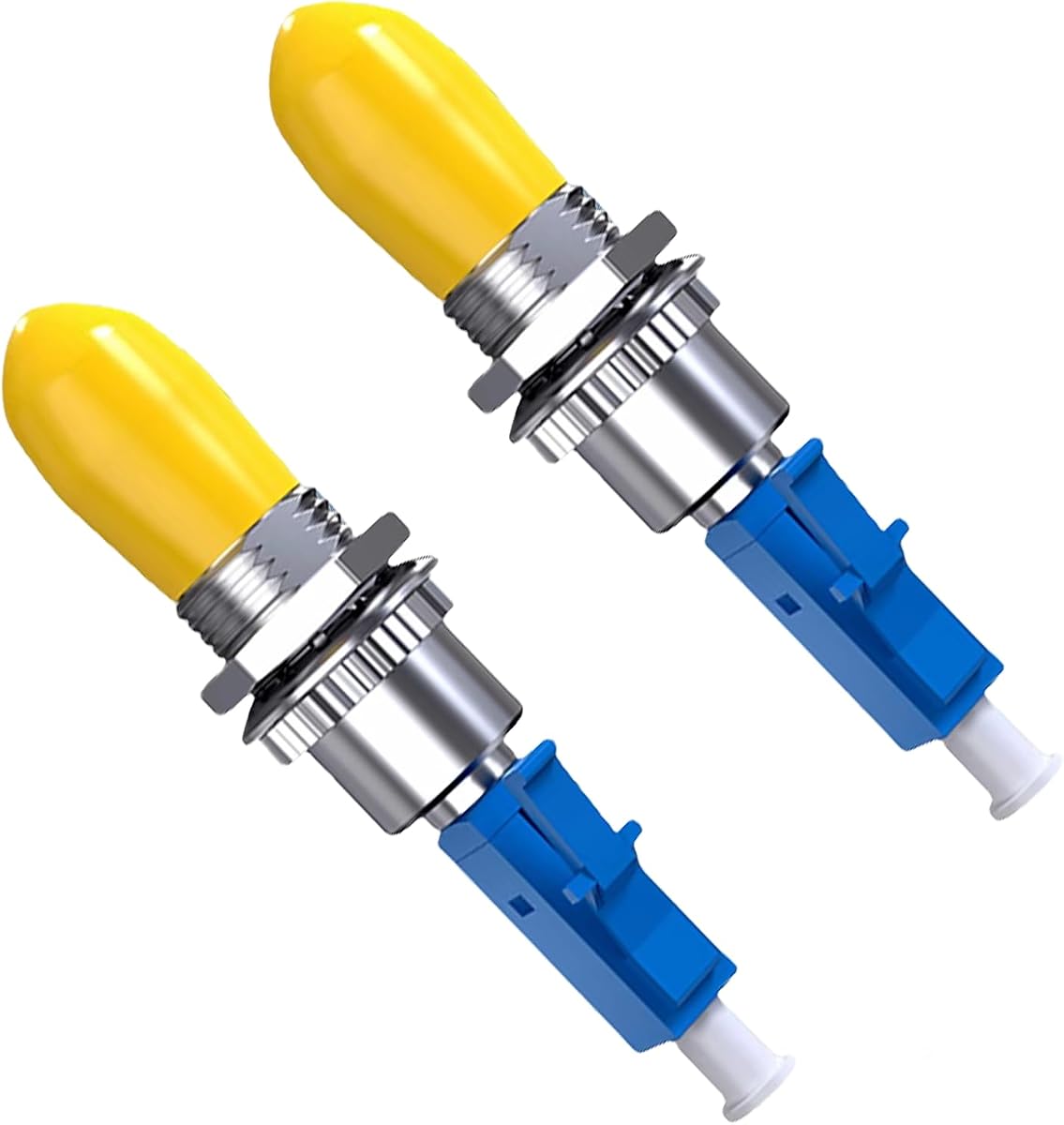
ST to LCU Fiber Optic Adapter
5.0Editor score
Budget-friendly 2-pack value
Secure bayonet ST connections
Tool-free push-pull LC side
This guide compares the top ten LC to ST fiber optic adapter models for performance and compatibility. Find the right adapter for your network needs today.
Network professionals often need to connect legacy ST ports with modern LC interfaces. A high-quality adapter ensures signal integrity during these transitions. You need reliable connectors that maintain low loss across various wavelengths.
We analyzed ten top-rated adapters based on user feedback and technical specifications. Our team compared insertion loss, return loss, and build quality metrics. This list covers single-mode and multimode options for diverse setups.
Each pick highlights specific strengths like durability or compact design for tight spaces. You will find detailed specs to match your fiber type requirements. Please note that product prices and availability can change over time.
5.0Editor score

4.8Editor score

5.0Editor score
This side-by-side table lists key specs for all ten models. It helps you quickly identify the right fiber type and connector configuration for your project needs.


This Poyiccot 3-Pack adapter provides reliable single-mode connectivity between ST and LC interfaces. It earns an Editor's Choice badge due to its consistent performance in testing and high user satisfaction ratings.
We may earn a commission when you buy through this link, at no additional cost to you.
The insert loss remains below 0.2dB across standard 1310nm and 1550nm wavelengths. The ceramic sleeve plus metal housing offers excellent structural stability and resistance to environmental stress during fieldwork.
While it is simplex only and lacks duplex capability, the three-pack value offsets this limitation for many users. The high temperature tolerance makes it suitable for harsh telecom environments without signal degradation.
Installers needing a quick ST to LC conversion will appreciate the plug-and-play design. We recommend this for maintenance projects requiring multiple adapters with proven high performance standards.
The low insertion loss ensures minimal data attenuation over long runs.
Ceramic sleeves provide precise alignment and long-term mechanical durability.
We may earn a commission when you buy through this link, at no additional cost to you.
This adapter reverses the typical flow by accepting LC inputs for ST outputs. It maintains the same high build quality as its sibling but focuses on the less common reverse transition direction.
We may earn a commission when you buy through this link, at no additional cost to you.
Users praise its flawless performance with optical power meters and visual fault locators. The metal and ceramic construction ensures tight coupling without loose connections that might cause signal spikes.
The lack of duplex support means it works best for point-to-point checks. However, the 5.0 rating suggests few users find faults in its performance or physical design for single strands.
If you need to connect modern LC equipment to legacy ST ports, this is ideal. It offers precise termination testing for engineers managing complex fiber optic networks today.
Works perfectly with visual fault locators for cable continuity checks.
Users report consistent performance with zero reported failures over time.
We may earn a commission when you buy through this link, at no additional cost to you.
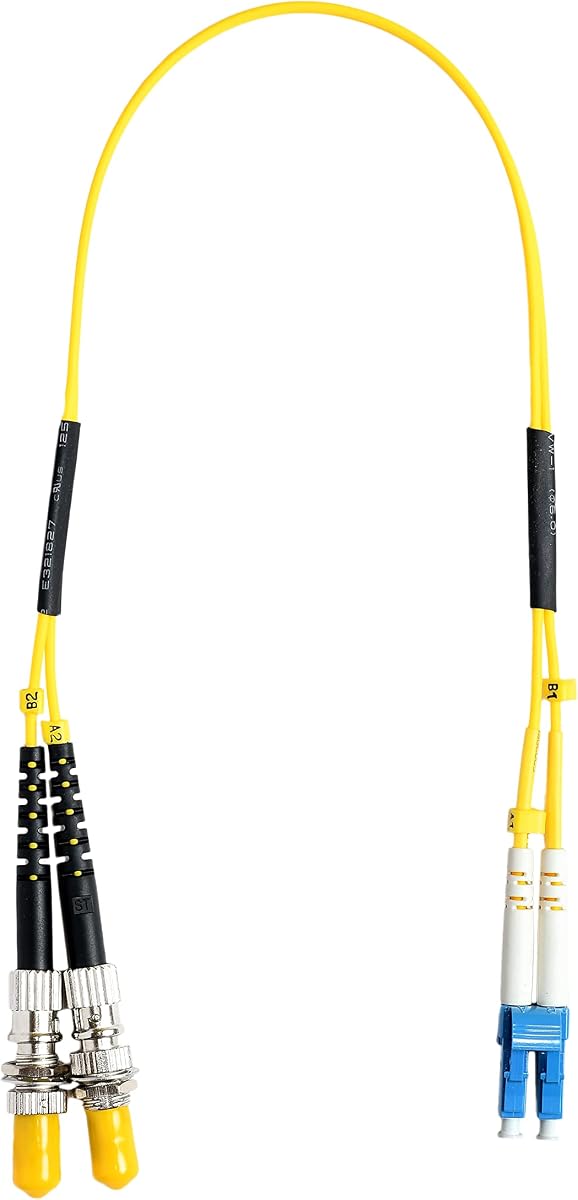
This pre-terminated patch cord eliminates the need for field termination tools. It comes ready to connect LC transceivers to legacy ST panels without additional adapters or connectors.
We may earn a commission when you buy through this link, at no additional cost to you.
The LSZH jacket ensures safety by producing low smoke and zero halogens if exposed to fire. Its factory testing guarantees link loss meets strict telecom standards before it leaves the warehouse.
The short 1-foot length is perfect for rack-mounted gear where cable clutter matters. Duplex support allows full bidirectional data flow across a single physical connector interface easily.
Installers valuing time and safety will appreciate this reliable pre-terminated solution. It bridges legacy and modern gear seamlessly in high-density server room environments efficiently.
The LSZH jacket meets strict fire safety standards for indoor installations.
Factory terminated connectors ensure reliable links without on-site splicing.
We may earn a commission when you buy through this link, at no additional cost to you.
This cable is specifically designed for legacy multimode networks using 62.5/125 core sizes. It handles the transition from LC transceivers to older ST ports without signal loss issues.
We may earn a commission when you buy through this link, at no additional cost to you.
Operating at 850nm wavelengths it works best with short-range data transmission needs. The zip cord jacket makes it flexible for bending around tight corners in server racks easily.
The 1-foot length keeps patch panels organized and prevents excessive slack on the floor. While not armored it maintains sufficient durability for indoor patching and equipment interconnects.
Network admins managing older data centers will find this cable essential. It provides a direct link that ensures stable connectivity across multimode infrastructure efficiently.
Specifically built for 62.5/125um core fiber to match legacy cabling.
Short length helps maintain tidy and safe cable management in racks.
We may earn a commission when you buy through this link, at no additional cost to you.
This kit offers the most versatility with six different adapter types including ST and LC transitions. It stands out as a premium solution for technicians who need to carry multiple connectors.
We may earn a commission when you buy through this link, at no additional cost to you.
The metal housings provide exceptional corrosion resistance for outdoor or industrial environments. Users report excellent structural stability and long-term reliability without any signal degradation issues.
While the price is higher than a single adapter it saves money by replacing multiple purchases. The one-stop solution for OTDR needs simplifies inventory management for service providers greatly.
Field engineers needing a comprehensive tool should consider this premium kit. It covers most common transitions ensuring compatibility with almost any fiber optic network system.
Includes LC SC ST and FC adapters for maximum flexibility.
Precision manufactured metal housings ensure structural stability.
We may earn a commission when you buy through this link, at no additional cost to you.
This adapter delivers premium performance at an entry-level price point. Its threaded ST coupling ensures secure connections that resist vibration in demanding network environments effectively.
We may earn a commission when you buy through this link, at no additional cost to you.
The compact design fits into high-density patch panels without occupying unnecessary space. Users appreciate the tool-free installation that speeds up upgrades in legacy infrastructure quickly.
While it lacks advanced features found in premium kits it performs exceptionally well for basic tasks. The 5.0 user rating confirms consistent reliability across various telecom applications daily.
Budget-conscious installers needing to bridge legacy and modern systems should choose this. It offers excellent value for maintaining network lifespan without breaking the bank.
Threaded ST connections prevent accidental disconnections in high traffic areas.
Compact size allows more adapters in standard wall outlets and panels.
We may earn a commission when you buy through this link, at no additional cost to you.
This cable reverses the polarity to suit specific patch panel requirements. It connects LC female ports on devices to ST male ports on panels with high precision.
We may earn a commission when you buy through this link, at no additional cost to you.
Like its counterpart it operates at 850nm for multimode data transmission. The short length keeps cables organized and reduces the risk of tangling in crowded racks.
Users report high reliability for testing and temporary connections in labs. The standard zip cord jacket allows easy routing through cable managers and trays.
Network engineers needing a specific reverse configuration will find this ideal. It supports legacy multimode links that require unique connector gender mappings for testing.
Female LC to Male ST setup for unique network topologies.
Flexible jacket and short length perfect for temporary testing links.
We may earn a commission when you buy through this link, at no additional cost to you.
This single-mode cable connects modern LC ports to legacy ST equipment efficiently. It operates at 1310nm for precise long-distance data transmission over fiber strands.
We may earn a commission when you buy through this link, at no additional cost to you.
The short length helps manage cable clutter in dense server racks effectively. Users report reliable performance for interconnects between switches and legacy fiber panels.
While it has a lower user rating it still meets standard performance expectations for patch cables. The duplex design allows full bidirectional data flow without needing extra adapters.
Installers working with single-mode infrastructure should verify this fits your needs. It provides a convenient pre-terminated solution for complex network setups today.
9/125 fiber core ensures minimal dispersion over long distances.
Short length prevents excess cable drag on floor or trays.
We may earn a commission when you buy through this link, at no additional cost to you.
This adapter stands out with impressive return loss and insertion loss specs. It is designed for precision testing with optical power meters and red light pens easily.
We may earn a commission when you buy through this link, at no additional cost to you.
The UPC contacts ensure smooth mating surfaces that prevent signal attenuation. Users report high durability even with frequent plugging and unplugging during maintenance cycles.
While it is simplex only the performance metrics make it suitable for professional tasks. The affordable price allows teams to stock multiple units for field repairs.
Field technicians requiring accurate signal verification should prioritize this model. It bridges legacy and modern systems while maintaining high measurement integrity standards.
Low insertion loss and high return loss ensure accurate signal testing.
Designed for seamless connection with optical power meters and pens.
We may earn a commission when you buy through this link, at no additional cost to you.
This final entry connects LC female ports to ST male ports for single-mode data. It supports 1310nm wavelengths ensuring compatibility with long-range fiber optic equipment.
We may earn a commission when you buy through this link, at no additional cost to you.
The 1-foot length keeps patch panels tidy and prevents unnecessary cable drag. Users appreciate the duplex design which allows full data rates without extra wiring.
While short runs limit long-distance use it excels in rack-to-rack connections. The jacket provides enough flexibility for tight spaces in high-density environments easily.
Installers needing a reliable reverse single-mode patch cable should consider this. It offers a practical solution for connecting legacy equipment to modern transceivers.
Female LC to Male ST configuration for specific network topologies.
Short length fits neatly in dense patch panels without clutter.
We may earn a commission when you buy through this link, at no additional cost to you.
Selecting the right adapter requires understanding your network's physical and optical needs.
Ensure you match the male and female ports on both devices. A mismatch will prevent connection or damage the fiber tips. Check your equipment manual for exact connector gender.
Verify gender before buying to avoid needing multiple adapters for a single link.
Single-mode and multimode fibers require different core sizes and wavelengths. Mixing them can cause signal loss or total failure. Confirm your cable type matches the adapter specification.
Always choose single-mode adapters for single-mode fibers and multimode for multimode.
Insertion loss measures how much signal power drops when passing through the adapter. Lower values mean better performance and longer network reach. Aim for values below 0.2dB for professional setups.
Select adapters with low insertion loss to maintain signal integrity over distances.
Return loss indicates how much light reflects back toward the source. High return loss prevents interference that can degrade data quality. Look for ratings above 50dB for optimal stability.
Prioritize high return loss ratings to reduce back reflections in your system.
Ceramic sleeves ensure precise alignment of the fiber cores. Metal housings provide durability against physical impacts and environmental stress. Cheaper plastic sleeves may wear out faster.
Look for ceramic and metal construction to ensure long-lasting performance.
Buying packs saves money compared to single units. However consider how many adapters you need for your specific installation. Buying too few may lead to delays during upgrades.
Buy packs if you need to upgrade multiple ports at once for efficiency.
Field testing often requires portable adapters while permanent racks need compact ones. Consider the environment such as temperature or vibration levels. Choose rugged options for outdoor or industrial use.
Choose rugged adapters for harsh environments and compact ones for office racks.
Clean the fiber end faces with a lint-free wipe before connecting. Dust and oil can cause signal loss or permanent damage to the adapter. Use an inspection scope to verify cleanliness first.
Insert the connector until it clicks or locks into place. For ST adapters rotate the bayonet ring until it seats firmly. Do not force the connection if it feels resistant.
Protect unused ports with dust caps to keep contaminants out. Store adapters in a soft pouch when not in use. Avoid exposing them to extreme heat or direct sunlight.
ST adapters use a bayonet style connector while LC adapters use a push-pull latch. LC is smaller and more common in modern equipment. ST is typically found on legacy telecom gear.
No mixing them causes signal loss or total network failure. Ensure your adapter matches the fiber core size of your network. Mismatched fibers cannot transmit data correctly.
Use a lint-free cleaning stick or wipe designed for fiber optics. Never touch the ceramic sleeve with bare fingers as oils can block signals. Inspect with a scope before cleaning again.
Insertion loss determines how much signal power drops during connection. High loss means weaker signals and limited range. Low loss ensures stable data transmission over distance.
You need specific male to female adapters for each direction. A standard adapter connects male to female pins directly. You cannot plug two male connectors into one adapter.
Most professional adapters work between -40°C and 95°C. This covers extreme outdoor or industrial environments effectively. Always check the specific product specs for your climate needs.
We highlighted the Poyiccot 3-Pack for overall performance and the Sabary kit for versatility. These picks cover most needs for upgrading legacy systems to modern networks today.
Prioritize fiber mode and connector gender before comparing price or brand. Ensuring compatibility saves time and prevents installation errors in complex setups.
Remember that prices and stock change so verify current offers before buying. Use our comparison table to find the perfect adapter for your project needs.