
Canon EF 50mm f/1.8 STM Lens
4.8Editor score
Bright f/1.8 aperture for low light
Stepping motor for silent autofocus
Lightweight design for easy handling
This guide compares the top 10 camera lenses for product photography, covering zoom primes and manual options to help you choose the best fit.
Choosing the right camera lens for product photography is essential for capturing sharp, detailed images that showcase your items effectively. Whether you are shooting jewelry or larger goods, the lens you select impacts depth of field and lighting requirements significantly.
We compared ten real products based on their optical quality, compatibility, and specific features relevant to commercial shoots. Each option offers unique advantages for different budget levels and camera systems, from professional RF mounts to affordable DSLR choices.
Each pick highlights key strengths and trade-offs to help you decide quickly. Note that availability and pricing can change over time, so checking current listings ensures you get the most up-to-date information before purchasing any gear.
4.8Editor score

4.8Editor score
4.7Editor score
This side-by-side comparison lists all ten lenses to help you evaluate their specifications and compatibility at a glance.


This RF mount lens stands out as a top choice for professional product photography due to its exceptional optical quality and versatile zoom range. With a bright f/2.8 aperture, it delivers sharp results even in lower light conditions. Its 4.8-star rating reflects consistent performance across various shooting scenarios.
We may earn a commission when you buy through this link, at no additional cost to you.
The optical image stabilization provides up to 5 stops of correction, which is invaluable for handheld shots of products on tables. The Nano USM autofocus ensures smooth and quiet focus transitions, making it suitable for video content as well. The control ring allows direct access to settings like aperture without diving into menus.
While the price is higher than many competitors, the build quality and image sharpness justify the investment for serious photographers. The weight might be a consideration for all-day handheld shooting, but it remains manageable for most studio setups. Users appreciate the compatibility with modern Canon mirrorless bodies like the EOS R5 and R6.
Photographers seeking a reliable, high-performance lens for diverse product types will find this model excellent. It balances flexibility and quality better than fixed focal length options. If your workflow demands consistent sharpness and speed, this lens should be your primary investment for product shoots.
The lens uses high-grade glass elements to minimize distortion and chromatic aberration, ensuring clean product edges.
From wide angles for group shots to tighter framing, the 24-70mm range covers most product photography needs without changing lenses.
We may earn a commission when you buy through this link, at no additional cost to you.
This lens is a classic favorite for beginners and budget-conscious photographers who need sharp results without breaking the bank. Its f/1.8 aperture allows for creative shallow depth of field, isolating products from busy backgrounds effectively. The 4.8-star rating confirms its reliability and optical performance for the price.
We may earn a commission when you buy through this link, at no additional cost to you.
The STM motor ensures smooth continuous autofocus during video recording, which is useful for product demos. It weighs very little, making it easy to handle for long periods. On APS-C cameras, it acts like an 80mm lens, which is perfect for detailed product shots requiring magnification.
Build quality is primarily plastic, so it may feel less robust than professional glass, but it still delivers excellent image clarity. You will not find weather sealing here, so keep it safe from rain or dust. However, for indoor product photography, these limitations are rarely an issue.
If you are starting out or need a secondary lens for specific angles, this is an ideal choice. It is often the first prime lens photographers buy for its balance of cost and performance. For those focusing on small items, its magnification capability is a distinct advantage.
The wide aperture naturally blurs out distracting backgrounds, keeping the focus strictly on your product details.
The stepping motor provides near-silent operation, ensuring quiet recording of product videos without mechanical noise.
We may earn a commission when you buy through this link, at no additional cost to you.
This telephoto zoom offers a longer focal length that is useful when you cannot get close to your product subject. It is particularly helpful for photographing larger items or avoiding camera shake in tight studio corners. The renewed status makes it more accessible financially while still providing reliable performance.
We may earn a commission when you buy through this link, at no additional cost to you.
The zoom range allows you to compress perspective, which can be flattering for certain product shapes. However, the aperture narrows as you zoom, which may require more lighting in darker environments. The autofocus uses a DC motor, which is functional but not as fast as modern ultrasonic options.
Optical quality is decent for casual use, though it may show some softness at the longest focal lengths. It is a practical choice if you need reach without spending a premium on newer optics. Many users find it a good secondary lens for specific angles.
Photographers working in small spaces where physical distance is limited will appreciate the zoom capability. It allows you to frame details without moving too close to potentially sensitive items. For budget setups, it adds versatility to your gear collection significantly.
Up to 300mm allows you to shoot from a distance, useful for large products or restricted studio areas.
Buying renewed often saves money while ensuring the lens is tested and functional for general photography needs.
We may earn a commission when you buy through this link, at no additional cost to you.
This manual focus lens is ideal for photographers who want complete control over their settings. It offers a classic design that encourages careful composition and focusing. With a f/1.8 aperture, it produces nice bokeh for product isolation. The compatibility with many Canon DSLR models makes it versatile.
We may earn a commission when you buy through this link, at no additional cost to you.
Manual focusing allows for precise adjustments which are often needed for high-detail product shots. You can control exactly where the focus falls without relying on automatic systems that might hunt. The lens is robust and feels sturdy in the hand, which is a plus for longevity.
Users must switch to manual mode on the camera to avoid errors, which can be a hurdle for some. The lack of electronic contacts means you cannot track aperture data on newer cameras. However, for static product photography, this limitation is manageable with practice.
If you enjoy the manual process and want to save money while getting sharp images, this is a strong candidate. It helps improve photographic skills by forcing attention to focus. For studio work where tripod use is common, manual focus is a standard and effective approach.
Manual focus rings allow for exact placement of focus points, critical for sharp product edges.
Works with many older and newer Canon DSLR bodies, extending its utility across different setups.
We may earn a commission when you buy through this link, at no additional cost to you.
Designed specifically for Canon mirrorless cameras, this lens brings modern convenience to the classic 50mm focal length. It is significantly lighter than many older DSLR equivalents, making it easy to carry. The control ring adds a useful layer of direct control during product shoots.
We may earn a commission when you buy through this link, at no additional cost to you.
The STM motor provides smooth and quiet focusing which is excellent for video. Its compact size means it does not add bulk to your kit. Optically, it performs well for both stills and motion, offering sharp results at f/1.8. This is great for small studio setups where weight matters.
As a prime lens, you must physically move to change framing which limits flexibility. The build is largely plastic, so care is needed when handling. However, for everyday use and light product work, these trade-offs are minimal.
Photographers with EOS R series cameras looking for a prime lens for product details will find this ideal. It balances weight and optical quality effectively. If you prioritize portability and ease of use, this lens serves well in a range of conditions.
The ring allows direct adjustment of settings like aperture without removing hands from the camera body.
Its small size fits easily into bags, making it perfect for travel or smaller studio spaces.
We may earn a commission when you buy through this link, at no additional cost to you.
This ART series lens is renowned for its exceptional clarity and sharpness, making it a top tier choice for detailed work. The 135mm focal length allows for significant compression and isolation. It features a dust and splash-proof mount which adds durability for varied environments.
We may earn a commission when you buy through this link, at no additional cost to you.
The HSM motor delivers ample torque for fast focus adjustments. This is helpful when working with moving subjects or when speed is essential. The lens is handcrafted in Japan, ensuring high standards in production quality. Many professionals rely on it for its consistent performance.
The weight is substantial, so it is better suited for tripod use or short handheld sessions. The price reflects its premium build and optics. For those needing the sharpest possible images for commercial catalogues, this cost is often worth it.
If you need a long focal length to isolate products and maintain high resolution, this lens excels. It is robust and built to last. For critical product photography where image quality is paramount, this is a strong contender.
Art series optics minimize aberrations, ensuring clean edges and true color representation in your products.
The motor provides high torque for quick focus acquisition even at wider apertures.
We may earn a commission when you buy through this link, at no additional cost to you.
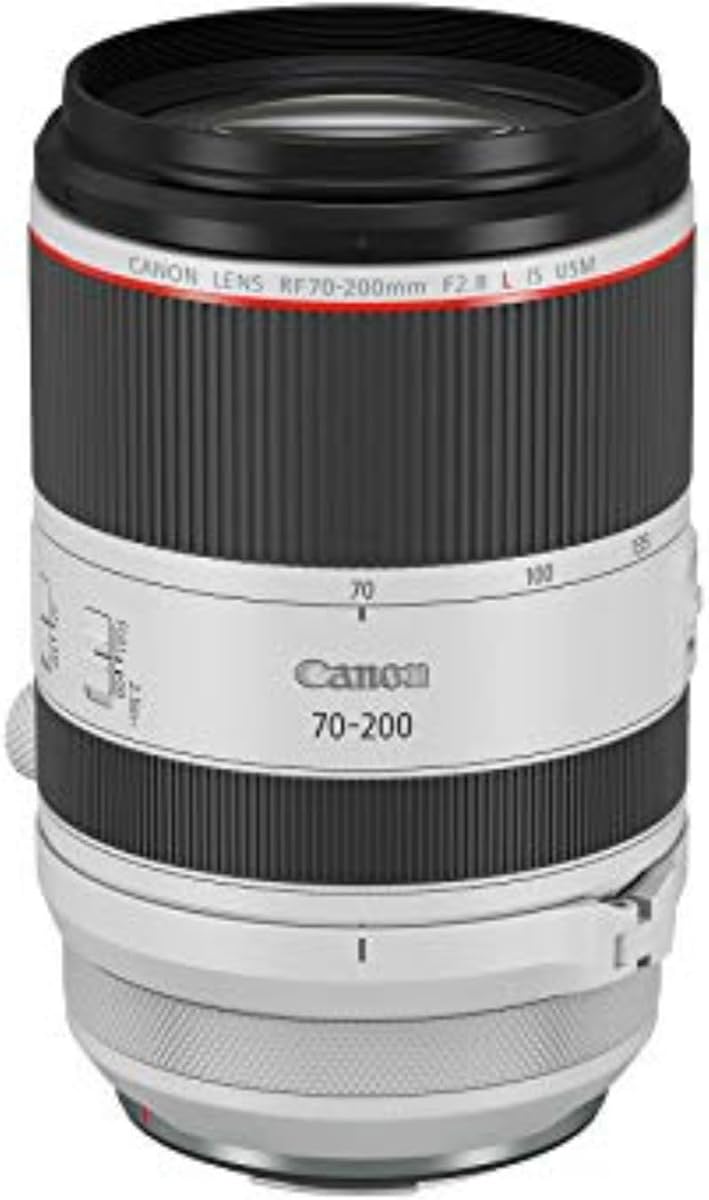
This lens delivers professional-grade telephoto performance with a focus on mobility and speed. Its compact design is a major improvement over previous generations. The dual Nano USM ensures that autofocus is both fast and silent, ideal for both photo and video work.
We may earn a commission when you buy through this link, at no additional cost to you.
Optical image stabilization helps counteract camera shake, allowing for sharper handheld shots. The constant f/2.8 aperture ensures consistent light intake throughout the zoom range. It is well-suited for full-frame mirrorless cameras like the EOS R and R5. The build quality is robust and reliable.
The price is high compared to entry-level lenses, but the performance justifies it for professionals. Focus distance might be slightly long for close-up detail shots. However, the overall versatility makes it a favorite for versatile product shoots.
For those who need reach and quality in a manageable size, this lens is a top choice. It supports high-end workflows with consistent results. If you value speed and stabilization in a telephoto zoom, this is the best option available.
Stabilization reduces shake significantly, allowing for sharper results even when shooting handheld in tight lighting.
Reduces bulk compared to similar lenses, making it easier to transport and carry during long sessions.
We may earn a commission when you buy through this link, at no additional cost to you.
This kit offers a great way for mobile users to enhance their photography without heavy gear. It includes a macro lens for detailed shots and a wide angle for larger items. The included LED light helps in darker environments to improve exposure. It is highly portable for on-the-go shoots.
We may earn a commission when you buy through this link, at no additional cost to you.
The macro lens allows you to get close to small objects to see texture and details. The clip mechanism is sturdy and holds lenses in place well. It works with most smartphones, making it versatile across devices. The case keeps everything organized and protected.
While not replacing DSLR optics, it serves well for social media and small e-commerce needs. Users should expect some vignetting or distortion at wider angles. For the price, it offers significant functional value for beginners or mobile users.
If you use your phone for product content, this kit expands what you can shoot easily. It is a practical solution for low budgets. The added lighting feature makes it a complete set for quick product photos.
The macro lens allows for 15x magnification to capture fine textures on products effectively.
The included LED clip light helps illuminate subjects evenly without relying on harsh flash.
We may earn a commission when you buy through this link, at no additional cost to you.
This kit is a comprehensive entry point for those looking to start product photography with a dedicated camera. It comes with two lenses covering a wide range of focal lengths. The WiFi feature allows you to transfer images directly to your phone for quick sharing. It includes an optical viewfinder which aids composition.
We may earn a commission when you buy through this link, at no additional cost to you.
The 18-55mm and 75-300mm lenses provide flexibility for different shot sizes. The 24.1 megapixel sensor delivers clear images suitable for online stores. Its lightweight body makes it easy to handle for beginners who are new to DSLRs. The kit is designed to be user-friendly.
While the autofocus is basic with 9 points, it is sufficient for static product photography. You may find limitations as you advance, but it is great for learning. The value proposition is strong since you get the camera and lenses together.
New photographers wanting a full system without buying parts separately will find this valuable. It offers a solid foundation to practice skills. If your goal is to start shooting products immediately, this bundle is an excellent choice.
Includes both standard and telephoto zooms, covering versatile focal lengths for most product needs.
Easy image transfer allows you to post photos to social media or websites instantly.
We may earn a commission when you buy through this link, at no additional cost to you.
This fixed focal length lens provides exceptional sharpness at a competitive price. The constant f/2.8 aperture ensures you get enough light in various conditions. It is known for being lightweight relative to its focal length. Many users appreciate the clarity and detail it captures in static shots.
We may earn a commission when you buy through this link, at no additional cost to you.
The build quality is consistent with Canon's L series, offering durability and reliability. It lacks a zoom feature, meaning you must move physically to adjust framing. For detailed product work where distance is managed, this is a minor issue. The focus is reliable and smooth.
Users should note it is not zoomable so it requires more setup time to frame shots. However, once set up, the image quality is consistently high. The weight allows for easy handling during long shoots on a tripod.
If you want a fixed lens for high-quality product shots at a distance, this is a great option. It delivers professional results without the weight of larger zoom lenses. For photographers who prefer primes, it offers excellent optical value.
Fixed optics often yield sharper images at specific focal lengths compared to zooms, aiding high detail work.
The L series build ensures the lens can withstand regular use in various environments effectively.
We may earn a commission when you buy through this link, at no additional cost to you.
Selecting the right lens requires considering your camera system, budget, and the type of products you shoot. This guide breaks down key factors to help you decide.
Ensure the lens mount matches your camera body. Canon offers RF for mirrorless and EF for DSLR. Using an adapter may allow cross-use but can affect autofocus speed or image quality.
Always check your specific camera model's mount type before purchasing to avoid incompatibility issues.
Prime lenses like 50mm or 85mm are popular for standard product shots due to their natural perspective. Zoom lenses provide flexibility to frame items without moving.
Choose a focal length that allows you to shoot comfortably without distorting the product shape.
Wider apertures like f/1.8 allow for more light and background blur. This is useful for isolating subjects on busy surfaces.
If you often shoot in low light, prioritize a lens with a lower f-number for better performance.
Stabilization helps reduce camera shake during handheld shooting. This is vital if you do not use a tripod for every shot.
Look for lenses with IS or Image Stabilization labels for sharper results in motion or low light.
Professional lenses often have weather sealing and durable materials. This helps protect your investment from dust and spills.
Check if the lens construction feels robust if you plan to use it frequently or outdoors.
Modern autofocus motors like STM or Nano USM are quieter and faster. This is important if you record video content alongside stills.
Silent autofocus prevents unwanted noise in your footage and ensures quick focus acquisition.
Budget options may lack build quality but still offer sharp images. Professional lenses cost more but provide reliability and advanced features.
Balance your budget with the quality needed for your specific product type and market.
Full-frame and APS-C sensors see different fields of view. A 50mm lens on APS-C acts like 80mm which is often useful for product detail.
Consider your camera sensor size to understand the effective focal length you will achieve.
Clean your lens glass regularly with a soft microfiber cloth and lens fluid. Dust can reduce image clarity and cause flare on products.
Store your lens in a dry, cool place with the rear cap on to prevent internal damage and dust accumulation.
Use a tripod whenever possible to ensure stability and allow for slower shutter speeds without blur.
The best focal length depends on your camera and space. A 50mm lens is often considered standard for product photography as it offers a natural perspective. For close-ups, an 85mm lens provides nice detail without distortion.
Both types work well depending on your needs. Mirrorless cameras are lighter and often have better autofocus. DSLRs offer longer battery life. Choose based on your comfort and existing gear.
It depends on your workflow. Prime lenses often have better optical quality and larger apertures. Zoom lenses offer flexibility to change framing without moving. Both are suitable if chosen correctly.
Use a blower brush to remove loose dust first. Then wipe gently with a lens microfiber cloth and specific lens fluid. Avoid touching the glass with your fingers.
Smartphone lenses are good for social media or quick previews. For professional quality, dedicated camera lenses offer better resolution and control. Use smartphone kits for casual needs.
Image stabilization helps keep images sharp when shooting handheld. It prevents blur caused by small hand movements. This is useful when you cannot use a tripod for every shot.
For most products, f/5.6 to f/8 is ideal as it provides enough sharpness across the product. Use wider apertures like f/1.8 if you want a blurred background effect.
The top picks include the Canon RF24-70mm for versatility and the Canon EF 50mm for budget value. Each option offers distinct benefits for different camera systems and workflows.
Prioritize features like aperture and mount compatibility when making your choice. These factors impact your ability to capture sharp and detailed product images effectively.
Prices and availability change frequently so always check current listings before purchasing. This ensures you get the best deal for your current gear setup.