
Handheld Fish Finder Portable Fishing
4.2Editor score
Portable with neck strap
Works in fresh and salt water
4-5 hour battery life
Finding the right tool to measure water depth can transform your fishing experience. A good depth finder provides accurate readings and helps locate fish efficiently.
We analyzed ten highly rated models based on performance, features, and user feedback to create this comprehensive list for budget-conscious anglers.
Each pick highlights key strengths and ideal use cases. Remember that availability and pricing may vary over time as manufacturers update their product lines.
4.2Editor score
4.6Editor score
4.2Editor score
As an Amazon Associate we earn from qualifying purchases.
This table offers a side-by-side overview of the top ten affordable depth finding solutions available today for various fishing environments.


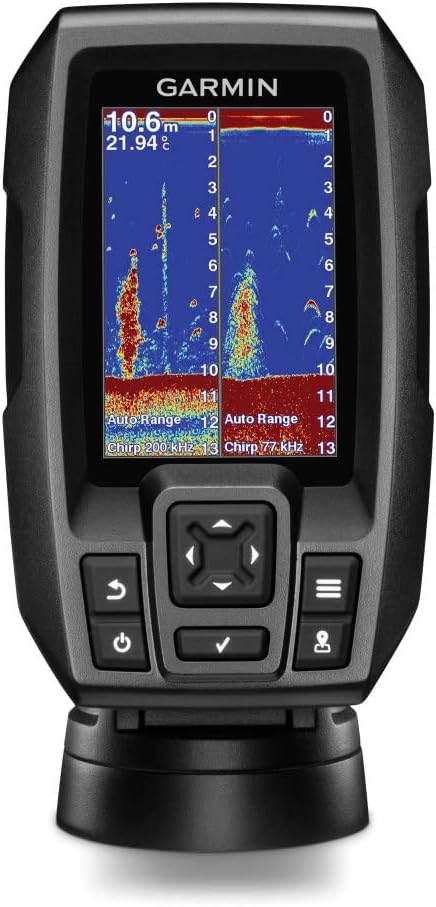
The Garmin Striker 4 stands out as a top performer in the budget category. It receives high praise for its Chirp Sonar which delivers crisp images.
We may earn a commission when you buy through this link, at no additional cost to you.
Its Clear Vu scanning Sonar provides near photographic images of objects and fish below the boat. The included GPS helps mark spots easily.
While the screen is compact, the interface remains intuitive. Users appreciate the dedicated buttons that simplify operation while on the water.
This model suits beginners and experienced anglers alike who want reliable depth data without complex setups. It is a strong recommendation for most boats.
The Chirp Sonar sweeps frequencies to provide wider data ranges and better target separation than traditional sonars.
Waypoint maps allow you to mark brush piles, stumps, and docks for easy return during future fishing trips.
We may earn a commission when you buy through this link, at no additional cost to you.
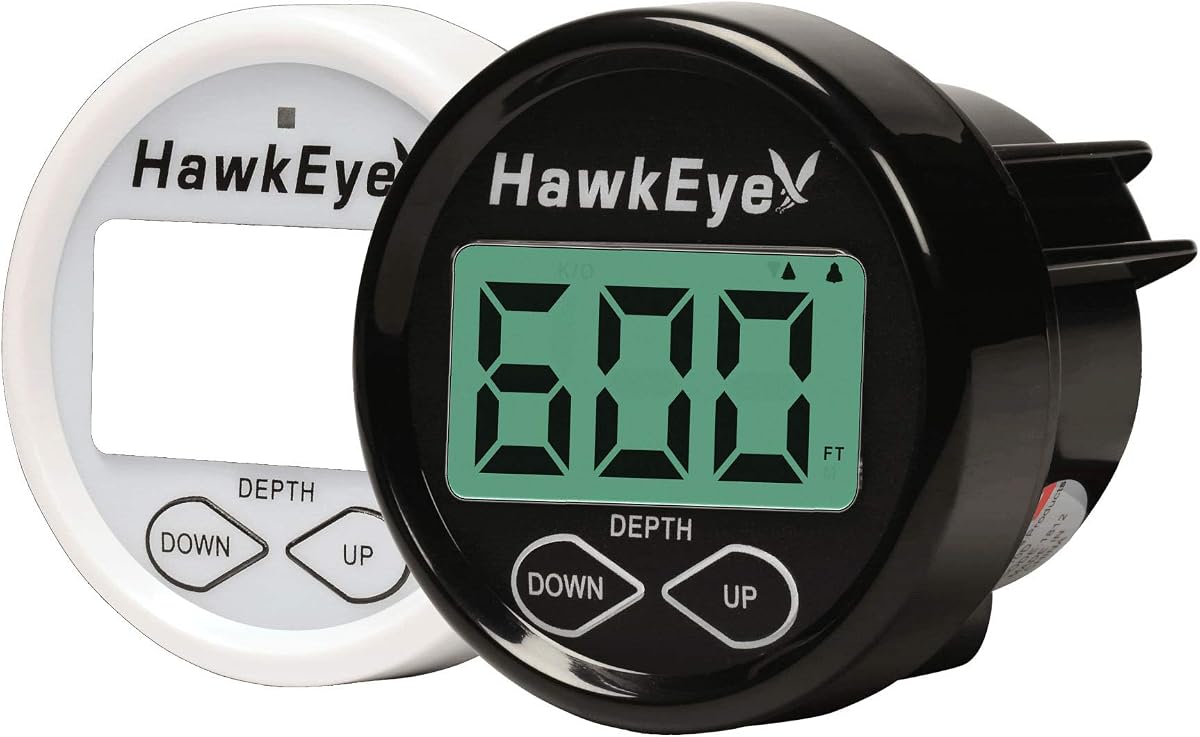
The DepthTrax 2B is designed for serious boat owners needing a permanent dashboard solution. It offers one of the largest displays in its class.
We may earn a commission when you buy through this link, at no additional cost to you.
Its polarized LCD ensures visibility even in bright sunlight without sunglasses. The advanced warning system signals alarms with lights and sound.
Installation involves mounting a transducer through the hull which may require professional help. The glue-in option works for specific hull types only.
This depth finder is ideal for fixed installations on fiberglass or aluminum boats where speed and readability are priorities over portability.
The polarized icon display with sun cover allows spot free viewing with or without sunglasses in bright conditions.
Readings remain uninterrupted even when traveling at speeds up to 60 mph thanks to algorithmic programming.
We may earn a commission when you buy through this link, at no additional cost to you.
The Hawkeye DT1H delivers essential depth and temperature data in a small handheld package. It is perfect for quick checks while casting or wading.
We may earn a commission when you buy through this link, at no additional cost to you.
Users value the inclusion of temperature which helps identify water conditions that affect fish activity. The depth range covers most freshwater and coastal areas.
It lacks the advanced imaging features of larger units but remains reliable for basic needs. Its simplicity makes it easy to use for all ages.
This device suits anglers who prioritize simplicity and temperature data over complex fish arches or GPS integration for their daily trips.
Knowing the exact water temperature helps you locate thermoclines and fish that prefer specific thermal environments.
We may earn a commission when you buy through this link, at no additional cost to you.
This portable fish finder is ideal for kayakers and shore anglers who need a lightweight solution. It shows depth, fish location, and bottom structure clearly.
We may earn a commission when you buy through this link, at no additional cost to you.
The included neck strap allows for easy carrying while busy on the water. It runs on standard AAA batteries providing hours of continuous use.
While the screen is small, it offers enough detail for identifying schools of fish and bottom composition. The transducer can be cast or mounted easily.
It represents excellent value for entry-level users seeking functional depth and fish detection without the cost of larger integrated systems.
The device fits easily in a tackle box and can be worn around the neck for hands-free operation on the kayak.
It performs reliably in both fresh water and salt sea water environments without requiring adjustments to the settings.
We may earn a commission when you buy through this link, at no additional cost to you.
The LUCKY FFC1108 is built for versatility allowing you to cast the sensor directly into promising water. It reveals depth, fish, and weeds effectively.
We may earn a commission when you buy through this link, at no additional cost to you.
Its alarm feature notifies you immediately when fish schools pass by the sensor. You can adjust sensitivity to suit clear or turbid water conditions.
A bright backlight ensures visibility in sunlight or darkness which is vital for early morning or evening fishing sessions on the water.
This portable unit is perfect for anglers who need a mobile solution that can transition from kayak to shore or ice fishing easily.
The sensor can be tied to your fishing line and cast like a bobber to reach spots inaccessible from your current position.
Five sensitivity levels help you filter out noise in rough water or detect subtle fish movement in calm conditions.
We may earn a commission when you buy through this link, at no additional cost to you.
The PiranhaMAX 4 brings trusted Humminbird technology to a compact affordable package. Dual beam sonar lets you choose between detail or coverage area.
We may earn a commission when you buy through this link, at no additional cost to you.
A tilt and swivel mount allows quick adjustments to your viewing angle while on the boat. The included transducer is easy to install on the transom.
While it lacks modern color screens its reliable performance earns it high marks for accuracy. It suits those who prefer straightforward fish finding.
This unit is best for anglers who value brand reliability and dual beam flexibility over extra bells and whistles in their budget device.
You can select a narrow beam for detailed structure views or a wide beam to cover a larger area below the boat.
We may earn a commission when you buy through this link, at no additional cost to you.
The Lowrance Eagle offers a crisp IPS screen that remains visible from wide angles even in bright sun. Auto-Tuning Sonar reduces the need for manual adjustments.
We may earn a commission when you buy through this link, at no additional cost to you.
Its 200 kHz Bullet Skimmer delivers broad coverage ideal for small boats and kayaks. Fish icons appear on the screen with clear depth markers.
The twist-lock connector makes setup and removal simple compared to older models. It fits compactly in limited spaces on smaller vessels.
This model is recommended for users seeking modern screen clarity and automated sonar features without investing in a full chartplotter system.
The 4-inch portrait IPS screen stays clear in sunlight and through polarized sunglasses for effortless reading while casting.
We may earn a commission when you buy through this link, at no additional cost to you.
This depth finder combines contour readout with temperature data to give a clearer picture of the lake bottom. It updates depth four times per second.
We may earn a commission when you buy through this link, at no additional cost to you.
The two-color lure lamp may attract light sensitive fish though results vary by species. It is water resistant enough to withstand splashing.
You can use it for ice, river, or kayak fishing as it is versatile enough for diverse conditions. The rugged design ensures durability outdoors.
It suits anglers who value bottom structure details and temperature information in a portable device for varied fishing scenarios around the region.
The contour readout helps visualize underwater hills and valleys where fish often hide or feed throughout the day.
Its 100 feet waterproof rating allows for use as a range finder while snorkeling or diving in shallow waters safely.
We may earn a commission when you buy through this link, at no additional cost to you.
The LUCKY MT-202 offers a massive 853-foot wireless range allowing you to cast the sensor far from the shore or boat freely. It is truly portable.
We may earn a commission when you buy through this link, at no additional cost to you.
Its display scrolls to show a continuous history of what passed under the sensor helping you track fish movement over time easily.
The rechargeable battery eliminates the need for disposable batteries and the sensor floats so it is safe during casting. It fits easily in a pocket.
This device is ideal for tech savvy anglers seeking maximum freedom of movement without wiring constraints on their fishing adventures today.
The sensor operates up to 853 feet away which provides unprecedented freedom to explore distant structures from shore.
The screen scrolls right to left showing a continuous history of depth and fish to help track movement patterns.
We may earn a commission when you buy through this link, at no additional cost to you.
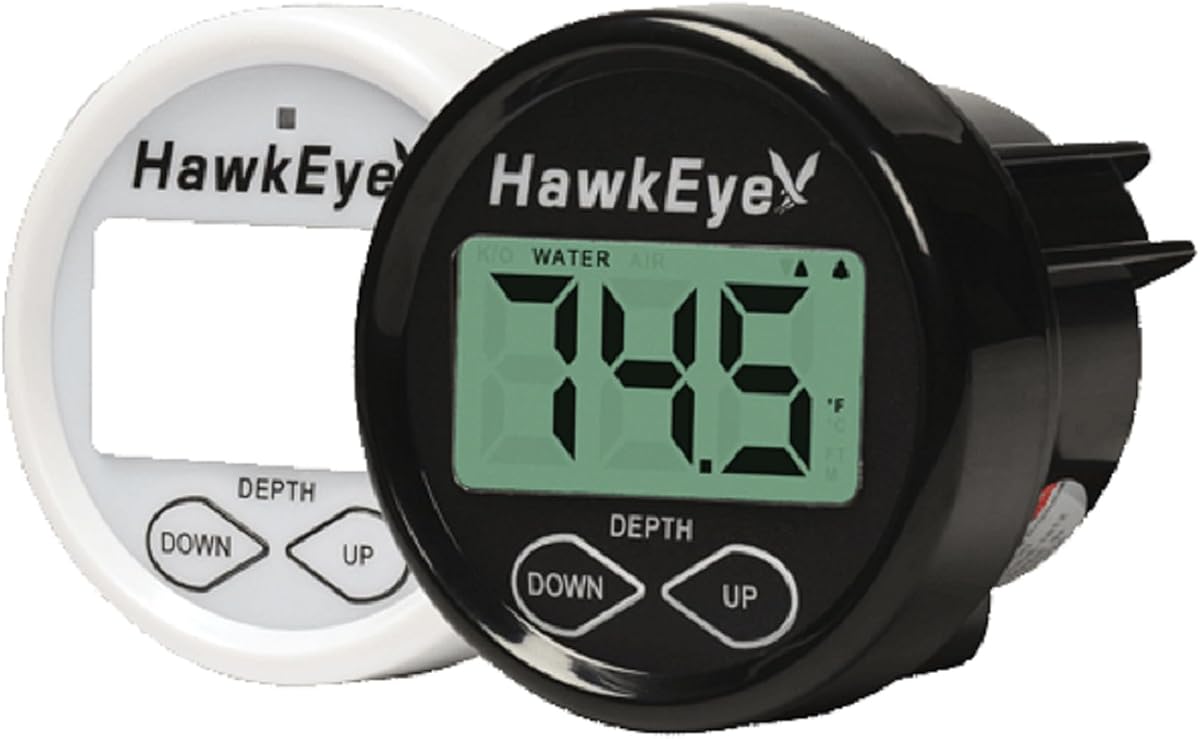
The HawkEye DT2BX-TM is a comprehensive solution for boats needing detailed temperature and depth data. It offers air and water temperature readings on a soft glow display.
We may earn a commission when you buy through this link, at no additional cost to you.
A 3-stage warning system provides audible and visual alarms when shallow depth or low temperature is detected. It works well even while boat speeds reach 60 mph.
Installation requires a 2-inch flush mount hole but the included transom transducer connects easily with ample cable length. It is a complete kit.
This model is best for boat owners wanting a professional dashboard look and reliable temperature data alongside essential depth readings for navigation.
You can monitor both air and water temperature on the display to better understand environmental conditions affecting fish behavior.
The 3-stage warning system uses sound, LED lights and LCD indicators to alert you instantly to dangerous conditions.
We may earn a commission when you buy through this link, at no additional cost to you.
Selecting the right depth finder depends on your vessel type and typical fishing conditions. Consider these key factors to find the best value.
Larger screens provide better visibility in bright sunlight but add bulk to your setup. Look for displays with backlights if you fish at night or in low light.
Prioritize high contrast screens that are readable with polarized sunglasses for clear views while on the water.
Chirp or Dual Beam Sonars offer better target separation and clearer images than standard sonars. They help distinguish fish from debris effectively.
Choose a frequency around 200 kHz for general purpose use in most freshwater and coastal environments.
Handheld units are ideal for kayakers and shore anglers who need mobility and easy storage in a tackle box. Boat owners might prefer in-dash models.
Consider how often you move between boats or fishing spots to decide between portable and fixed installation depth finders.
Most budget finders cover up to 300 feet which suffices for lakes and rivers. If you fish deep ocean waters check models with higher depth ratings.
Ensure the device supports your specific water type such as salt water compatibility if needed for coastal fishing.
Features like temperature sensors and GPS waypoint maps add value by providing more data about your fishing environment. Alarms help avoid shallow hazards.
Evaluate if extra features justify the cost or if basic depth readings are enough for your specific fishing style needs.
Battery life varies significantly between models so check how long it runs on standard or rechargeable batteries. Portable units may drain batteries quickly with continuous use.
Hardwired units provide uninterrupted power but require installation while battery operated ones offer easier setup and removal.
Some models include the transducer while others sell it separately. Check if you need a thru-hull or transom mount based on your vessel.
Ensure the transducer matches the hull material such as aluminum or fiberglass for optimal signal transmission and accuracy.
A waterproof rating like IPX7 protects against rain and splashes during fishing. Look for rugged builds that withstand drops and harsh weather conditions.
Choose a device designed for outdoor use that can survive accidental submersion or exposure to salt water.
Install the transducer according to the manufacturer instructions ensuring it is clean and securely mounted on the hull. Verify all connections are tight before powering on.
Turn on the unit and allow it to acquire a signal. Calibrate settings like sensitivity and depth range based on current water conditions and weather.
Rinse the device with fresh water after each use especially in saltwater to prevent corrosion. Store in a dry place away from extreme temperatures for longevity.
Yes many affordable models are designed to work in both fresh and salt water. Always check the product specifications to confirm saltwater compatibility before purchasing.
No handheld depth finders are perfect for shore anglers waders and kayakers. Some can be cast directly into the water to measure depth without a boat.
Budget finders generally provide reliable depth readings within a few feet. Accuracy may vary based on water conditions and transducer placement on the vessel.
Most handheld units run for 4 to 5 hours on new batteries. Some rechargeable models offer longer runtime which is useful for all day fishing sessions.
Sonar technology in these devices can detect fish arches and schools effectively. Higher frequencies and chirp technology improve target separation and accuracy.
Many models carry IPX7 or similar ratings for water resistance. Check the specific rating to ensure it withstands rain and splashes during use.
Basic depth finders do not need GPS. Some premium budget models include built-in GPS for waypoints but depth measurement works independently of satellites.
Our top picks cover various needs from handheld portability to permanent boat mounts. The Garmin Striker 4 offers a strong balance of features and performance.
Prioritize the features that matter most for your fishing style such as temperature data or wireless operation. Consider your vessel type before buying.
Prices and availability change frequently so check current listings before making a final decision to ensure you get the best deal available.